
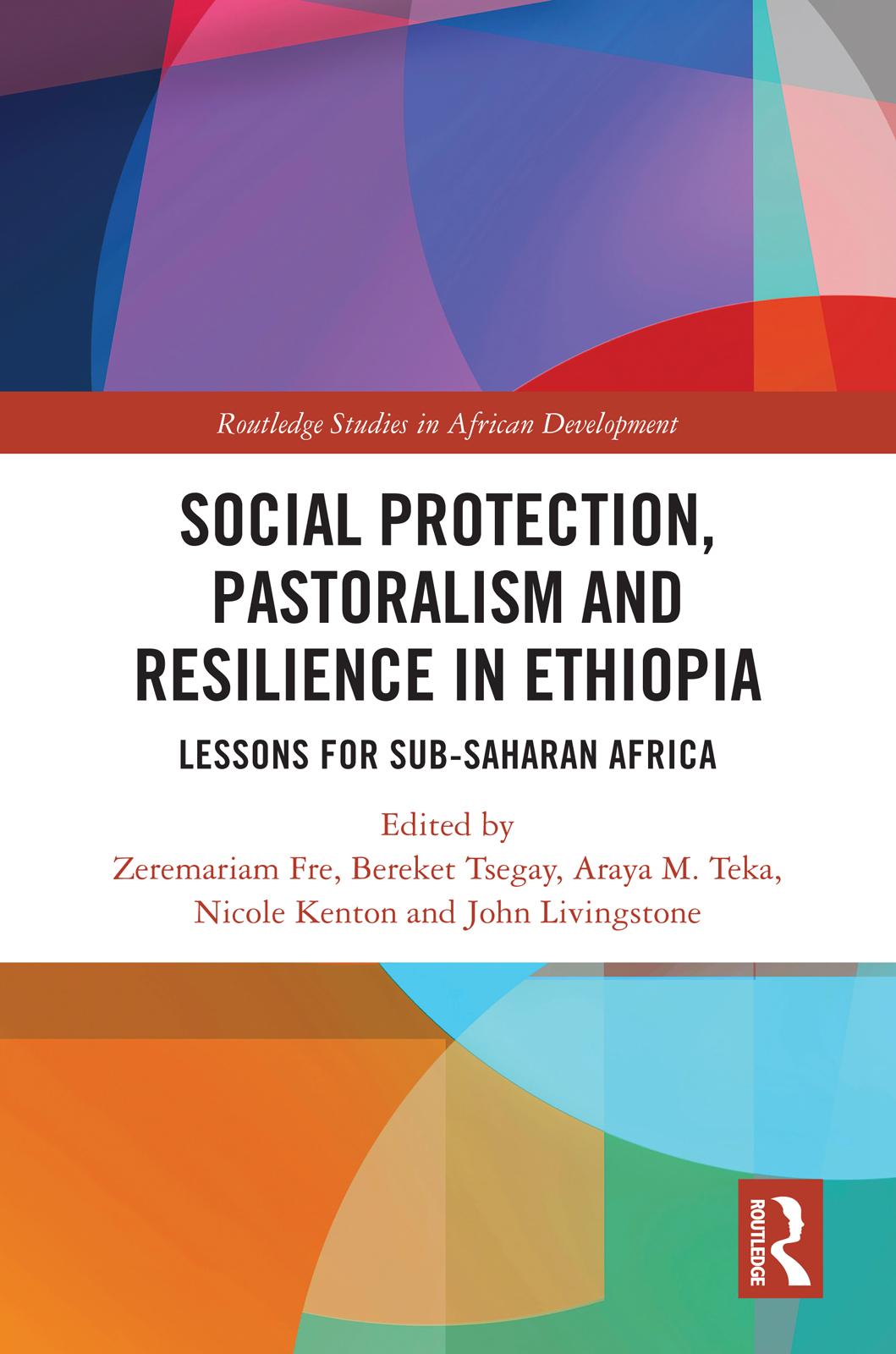
This book investigates the role of social protection amongst African pastoral and agro-pastoral communities, with a particular focus on Ethiopia.
Based on rigorous empirical research, this book assesses the successes, failures, prospects and lessons learned from Africa’s largest social security intervention: Ethiopia’s Productive Safety Net Programme. It goes beyond an analysis of immediate impacts, exploring factors such as highland-lowland interactions, rural-urban linkages, economic diversification, the role of youth, indigenous safety nets and social capital. Special attention is given to gender-responsive social protection measures and to the circumstances brought about by the COVID-19 pandemic. Overall, the book demonstrates the value of indigenous knowledge systems and local institutions in contributing to the design of more effective safety net programmes and disaster responses and in helping people to build resilience and cope with shocks.
At a time when social protection is gaining prominence in contemporary development discourse, this book will be of interest to development practitioners.
Betal nemt med kort, Klarna, Apple Pay eller Google Pay. Ikke tilfreds? Du har altid 14 dages fortrydelsesret. Læs mere i vores vilkår. Har du spørgsmål, så send os en mail på hello@memmo.org.
Memmo gør det nemmere at studere – uanset hvor du er i verden. Hos os samler du dine kursusbøger og smarte studieværktøjer ét sted: resuméer, quizzer, podcasts og flashcards. Og så er der Ted, din studieven, der svarer på alt, du undrer dig over. Over 50 000 studerende studerer allerede her – bygget til at hjælpe dig med at lære hurtigere og stresse mindre.