
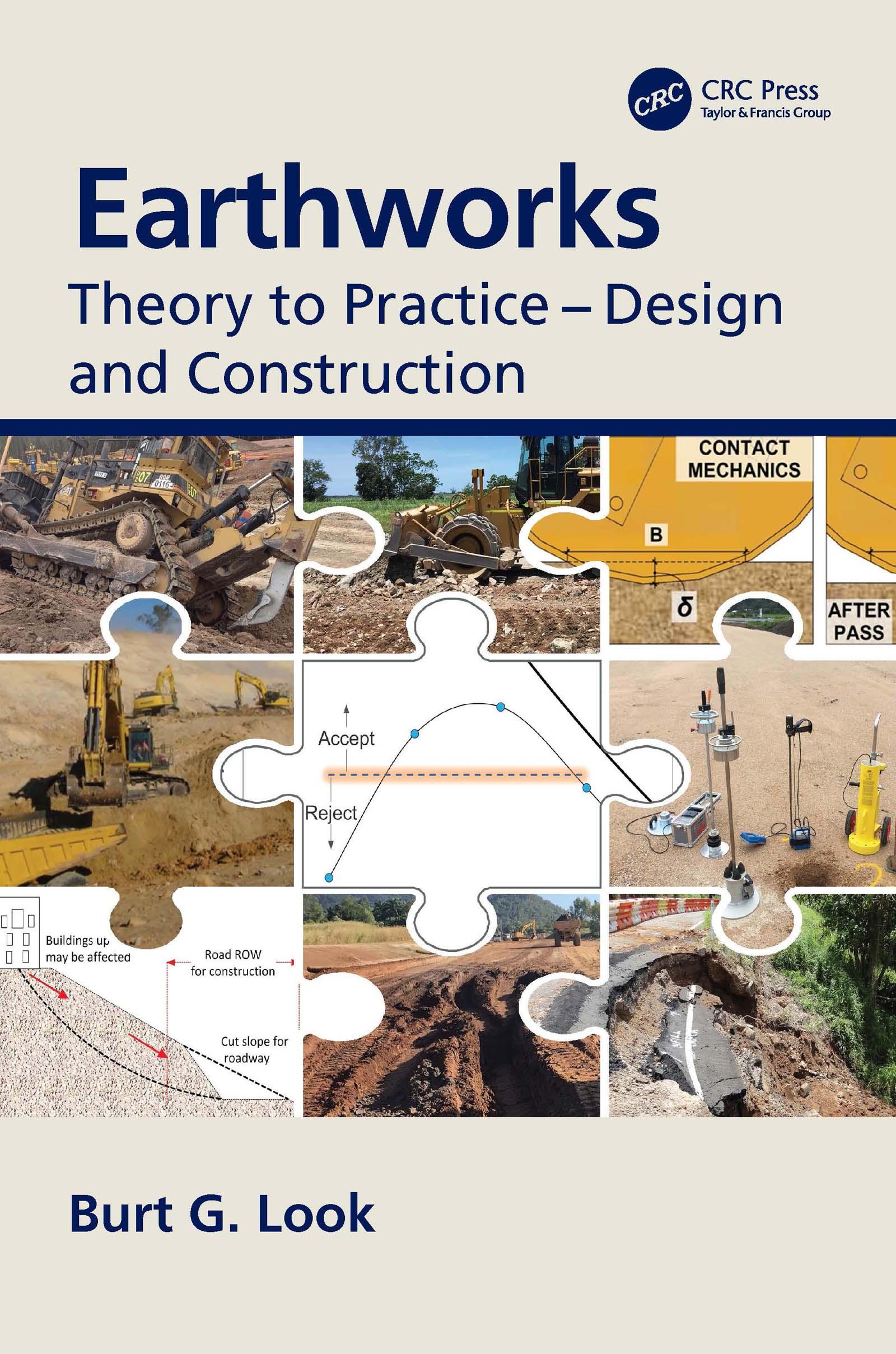
Case studies are used to show how theory is applied in practice. In the design and construction process, various models are used – geotechnical, laboratory, analytical, delivery, and economic models as the project is developed from planning to construction. This book explores the use and limitations of these earthwork models to be understood and appropriately applied.
This book evolved from an earthworks course to practicing engineers over a 10-year period. Theory alone is not enough. Experience alone without relating back to theory can sometimes be misleading if transferred without understanding the fundamentals. The book benefited from the experiences of those many practicing engineers and the author’s experience in multi-disciplinary consulting companies as well as specialist geotechnical companies and government departments.
The basics of soil, rock and compaction mechanics as applied to field conditions are covered. Material typically not covered in other textbooks, include the applications and limitations of associated "standard" laboratory and field testing. Specific chapters are dedicated to excavation, subgrade and expansive clay assessment and treatment. Useful design practices as well as the development and application of specifications is covered. A specification, test or design in one climatic condition or geology may not apply in another.
Betal nemt med kort, Klarna, Apple Pay eller Google Pay. Ikke tilfreds? Du har altid 14 dages fortrydelsesret. Læs mere i vores vilkår. Har du spørgsmål, så send os en mail på hello@memmo.org.
Memmo gør det nemmere at studere – uanset hvor du er i verden. Hos os samler du dine kursusbøger og smarte studieværktøjer ét sted: resuméer, quizzer, podcasts og flashcards. Og så er der Ted, din studieven, der svarer på alt, du undrer dig over. Over 50 000 studerende studerer allerede her – bygget til at hjælpe dig med at lære hurtigere og stresse mindre.