
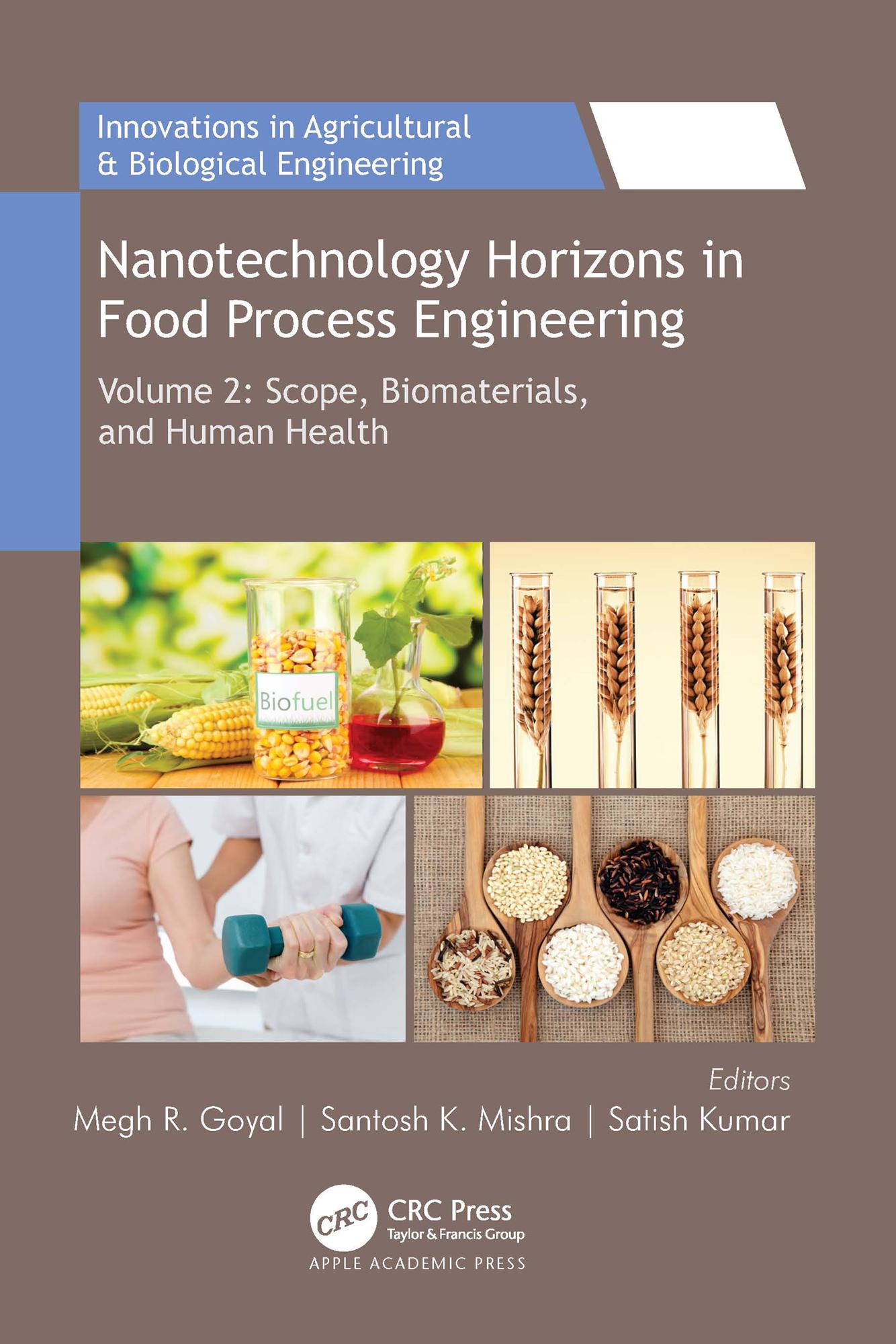
Although nanotechnology has revolutionized fields such as medicine, genetics, biology, bioengineering, mechanics, and chemistry, its increasing application in the food industry is relatively recent in comparison. Nanotechnology in the food industry is now being explored for creating new flavors, extending food shelf life, and improving food protection and nutritional value, as well as for intelligent nutrient delivery systems, “smart” foods, contaminant detection nanodevices and nanosensors, advanced food processing, antimicrobial chemicals, encapsulation, and green nanomaterials.
This new three-volume set addresses a multitude of topical issues and new developments in the field. Volume 1 focuses on food preservation, food packaging and sustainable agriculture, while Volume 2 looks at nanotechnology in food process engineering, applications of biomaterials in food products, and the use of modern nanotechnology for human health. The third volume explores the newest trends in nanotechnology for food applications and their application for improving food delivery systems.
Together, these three volumes provide a comprehensive and in-depth look at the emerging status of nanotechnology in the food processing industry, explaining the benefits and drawbacks of various methodologies that will aid in the improvement and development of food product sourcing and food hygiene monitoring methods.
Volume 2 discusses nanotechnology use in non-thermal techniques such as high-pressure processing (HPP), pulsed electric fields (PEFs), pulsed light, ultraviolet, microwave, ohmic heating, electrospinning, and nano- and microencapsulation. This volume looks at the role and application of minimal processing techniques such as ozone treatment, vacuum drying, osmotic dehydration, dense phase carbon dioxide treatment, and high-pressure assisted freezing. The successful applications of nanotechnologies on juices, meat and fish, fruits and vegetable slices, food surface, purees, milk and milk products, extraction, drying enhancement, and encapsulation of micro-macro nutrients are also considered. The volume also presents several computer-aided techniques that are emerging in the food processing sector, such as robotics, radio frequency identification (RFID), three-dimensional food printing, artificial intelligence, etc. Significant role of food properties in design of specific food and edible packaging films have been elucidated.
Betal nemt med kort, Klarna, Apple Pay eller Google Pay. Ikke tilfreds? Du har altid 14 dages fortrydelsesret. Læs mere i vores vilkår. Har du spørgsmål, så send os en mail på hello@memmo.org.
Memmo gør det nemmere at studere – uanset hvor du er i verden. Hos os samler du dine kursusbøger og smarte studieværktøjer ét sted: resuméer, quizzer, podcasts og flashcards. Og så er der Ted, din studieven, der svarer på alt, du undrer dig over. Over 50 000 studerende studerer allerede her – bygget til at hjælpe dig med at lære hurtigere og stresse mindre.