
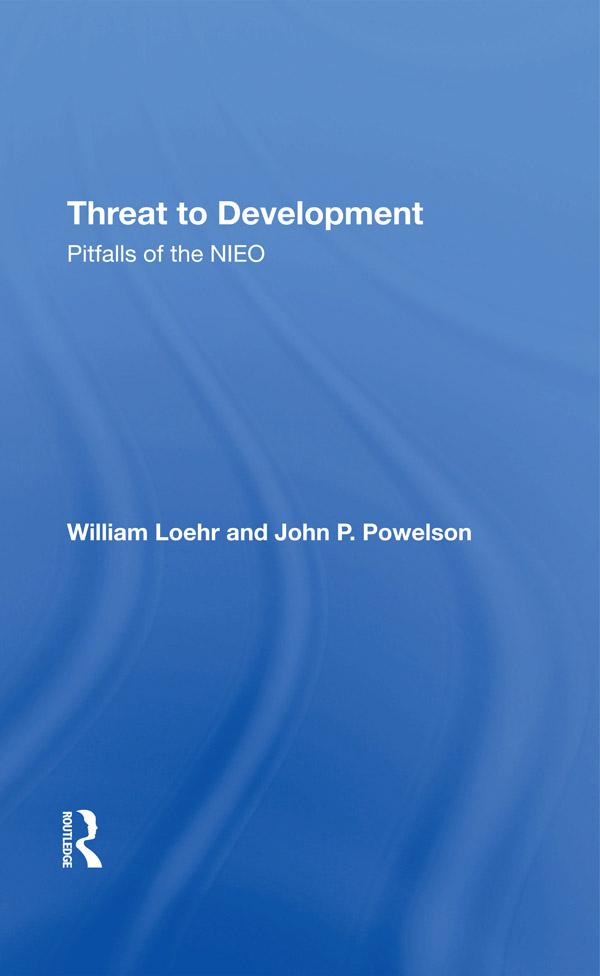
Far from transferring resources from the rich to the poor, as intended, the New International Economic Order (NIEO)—if fully implemented—is more likely to transfer them from the poor to the rich. Thus assert the authors, who present their analysis of trade and investment data in support of their conclusions. The NIEO, a program adopted by the United Nations, proposes increased prices of primary products, tariff preferences for exports of less developed countries to the industrial world, a code of conduct for multinational corporations, international monetary reform, debt forgiveness or rescheduling for the third world, plus a number of other provisions designed to help third world countries. But, the authors contend, all these provisions will further enrich the already rich within the third world, while adding to the poverty of the already poor. Higher prices for primary products would benefit the rich producers at the expense of the poor who buy them. Debt rescheduling would help only those rich enough to incur debt in the first place; because aid is available in finite quantities, this help might be at the expense of the poor. Likewise, trade preferences would also help the rich, who are the major exporters. The NIEO has been widely acclaimed in industrialized as well as in third world countries; this book demonstrates how the effects of the NIEO could well be the opposite from what is widely believed.
Betal nemt med kort, Klarna, Apple Pay eller Google Pay. Ikke tilfreds? Du har altid 14 dages fortrydelsesret. Læs mere i vores vilkår. Har du spørgsmål, så send os en mail på hello@memmo.org.
Memmo gør det nemmere at studere – uanset hvor du er i verden. Hos os samler du dine kursusbøger og smarte studieværktøjer ét sted: resuméer, quizzer, podcasts og flashcards. Og så er der Ted, din studieven, der svarer på alt, du undrer dig over. Over 50 000 studerende studerer allerede her – bygget til at hjælpe dig med at lære hurtigere og stresse mindre.
Du kan måske også lide
Køb bogen0