
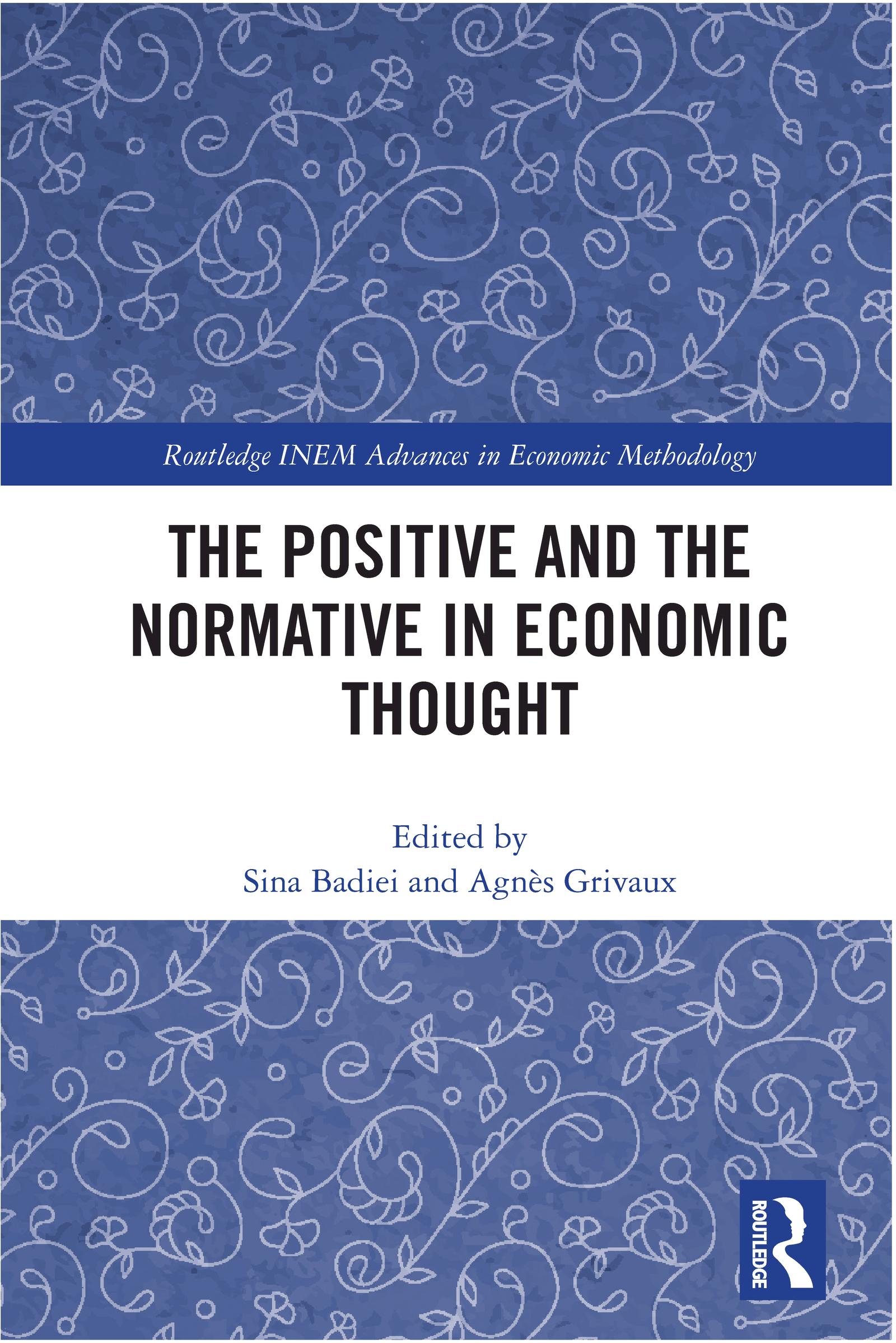
The book responds to the need for greater clarity regarding the relationship between descriptive, evaluative and prescriptive approaches within positive and normative economics. It also analyses the entanglement between evaluative and prescriptive perspectives within several theoretical frameworks in normative economics such as social choice theory, the capability approach, behavioural welfare economics and various theories of justice.
It provides a forum for discussion between various schools of economic thought and several theoretical frameworks on the relationship between the study of facts, norms and values, with particular emphasis on classical political economy, the Marxian school of economics, the Frankfurt School, the Austrian school, the Chicago school, rational choice theory, expected utility theory, behavioural economics, experimental economics, development economics, welfare economics, public economics, constitutional political economy, the capability approach and politico-economic theories of justice.
Given the scope of questions treated in this book, it will be of interest to economists, historians of economic thought, political philosophers and philosophers of science, especially those interested in the philosophy and epistemology of economics.
Betal nemt med kort, Klarna, Apple Pay eller Google Pay. Ikke tilfreds? Du har altid 14 dages fortrydelsesret. Læs mere i vores vilkår. Har du spørgsmål, så send os en mail på hello@memmo.org.
Memmo gør det nemmere at studere – uanset hvor du er i verden. Hos os samler du dine kursusbøger og smarte studieværktøjer ét sted: resuméer, quizzer, podcasts og flashcards. Og så er der Ted, din studieven, der svarer på alt, du undrer dig over. Over 50 000 studerende studerer allerede her – bygget til at hjælpe dig med at lære hurtigere og stresse mindre.