
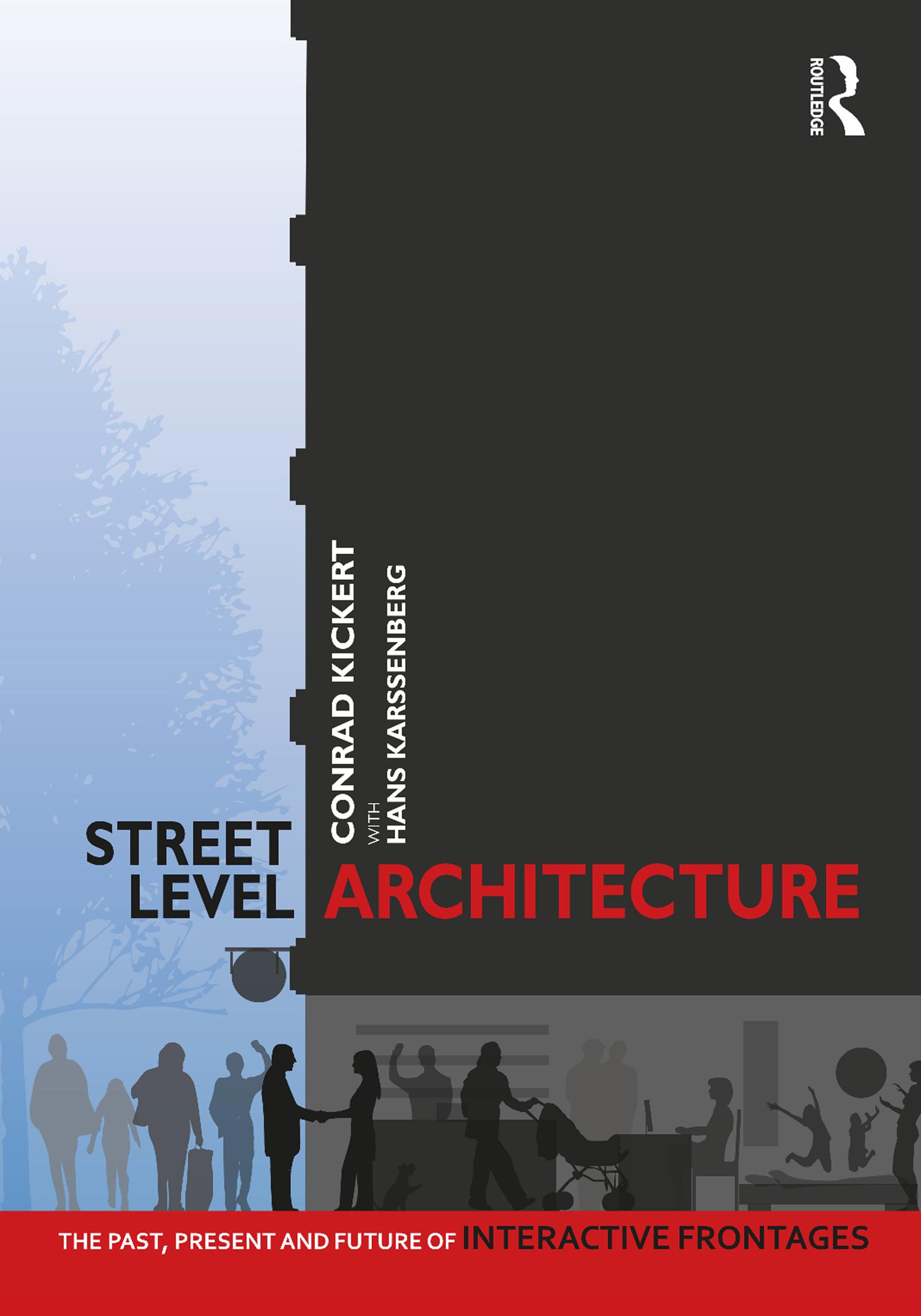
This book provides the tools to maintain and rebuild the interaction between architecture and public space. Despite the best intentions of designers and planners, interactive frontages have dwindled over the past century in Europe and North America. This book demonstrates why even our best intentions for interactive frontages are currently unable to turn a swelling tide of economic and technological evolution, land consolidation, introversion, stratification, and contagious decline. It uses these lessons to offer concrete locational, programming, design, and management strategies to maximize street-level interaction and trust between street-level architecture, its inhabitants, and the city.
This book demonstrates that designers, developers, planners, and managers ultimately have to create the right preconditions for inhabitants and passersby to bring frontages to life. These preconditions connect architecture to its urban, social, economical, and technological context. Only the right frontage in the right context, with the right design, the right inhabitation, and the right attitude to the city will become part of the ecosystem of trust and interaction that supports public life. This book empowers the many participants in this ecosystem to build, inhabit, and enjoy truly urbane architecture.
Betal nemt med kort, Klarna, Apple Pay eller Google Pay. Ikke tilfreds? Du har altid 14 dages fortrydelsesret. Læs mere i vores vilkår. Har du spørgsmål, så send os en mail på hello@memmo.org.
Memmo gør det nemmere at studere – uanset hvor du er i verden. Hos os samler du dine kursusbøger og smarte studieværktøjer ét sted: resuméer, quizzer, podcasts og flashcards. Og så er der Ted, din studieven, der svarer på alt, du undrer dig over. Over 50 000 studerende studerer allerede her – bygget til at hjælpe dig med at lære hurtigere og stresse mindre.