
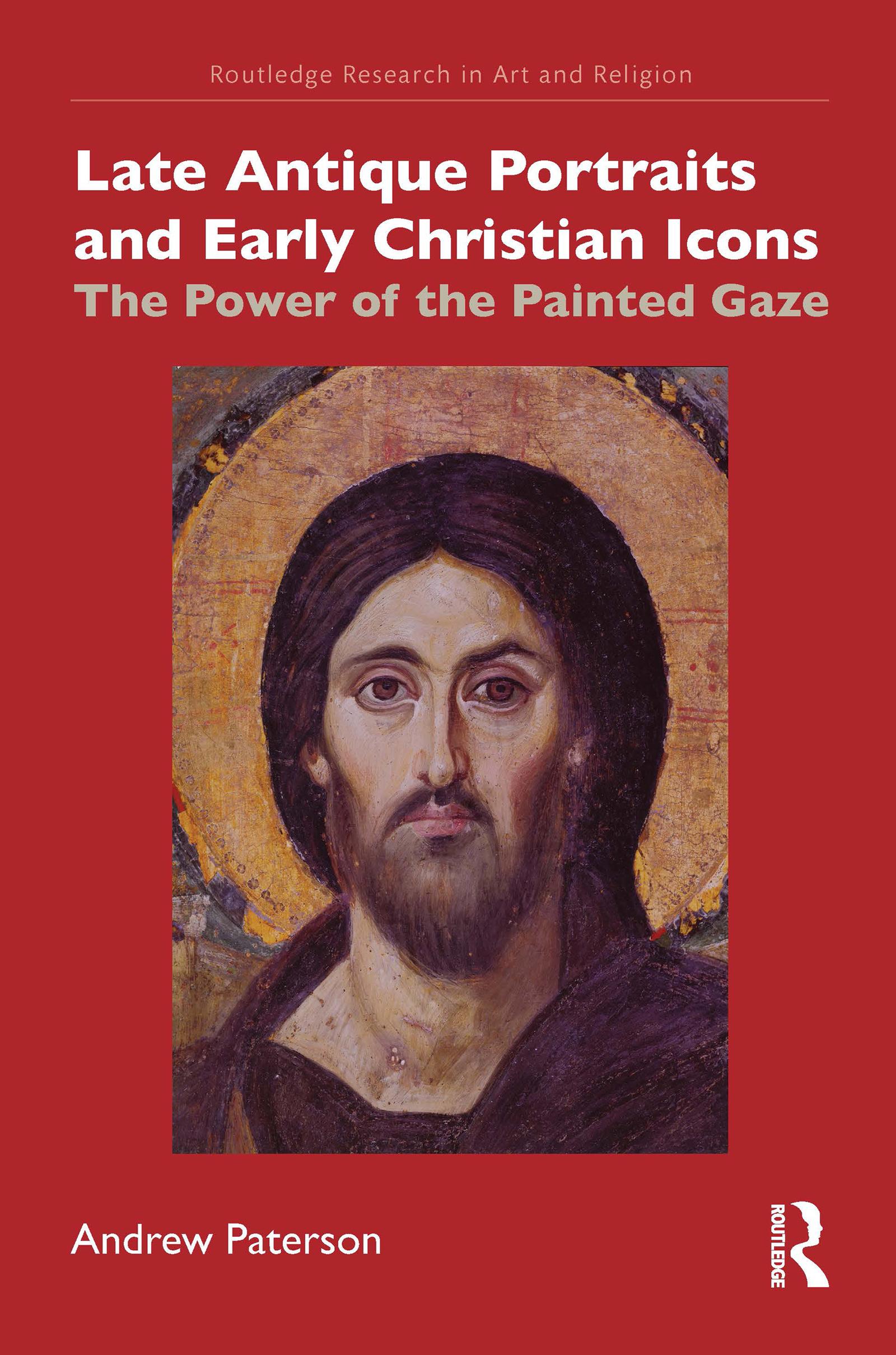
This book focuses on the earliest surviving Christian icons, dated to the sixth and seventh centuries, which bear many resemblances to three other well-established genres of ‘sacred portrait’ also produced during late antiquity, namely Roman imperial portraiture, Graeco-Egyptian funerary portraiture and panel paintings depicting non-Christian deities.
Andrew Paterson addresses two fundamental questions about devotional portraiture – both Christian and non-Christian – in the late antique period. Firstly, how did artists visualise and construct these images of divine or sanctified figures? And secondly, how did their intended viewers look at, respond to, and even interact with these images? Paterson argues that a key factor of many of these portrait images is the emphasis given to the depicted gaze, which invites an intensified form of personal encounter with the portrait’s subject.
The book will be of interest to scholars working in art history, theology, religion and classical studies.
Betal nemt med kort, Klarna, Apple Pay eller Google Pay. Ikke tilfreds? Du har altid 14 dages fortrydelsesret. Læs mere i vores vilkår. Har du spørgsmål, så send os en mail på hello@memmo.org.
Memmo gør det nemmere at studere – uanset hvor du er i verden. Hos os samler du dine kursusbøger og smarte studieværktøjer ét sted: resuméer, quizzer, podcasts og flashcards. Og så er der Ted, din studieven, der svarer på alt, du undrer dig over. Over 50 000 studerende studerer allerede her – bygget til at hjælpe dig med at lære hurtigere og stresse mindre.