
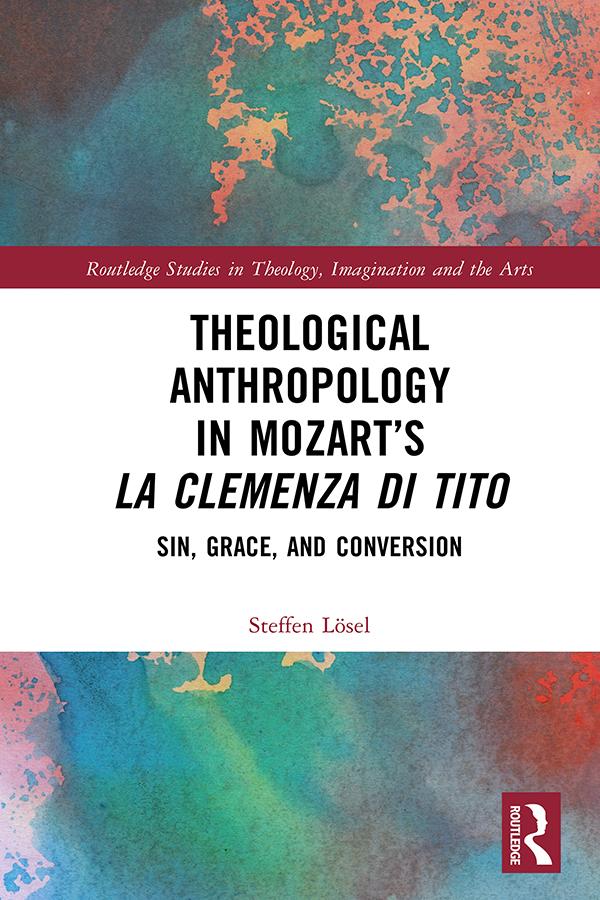
This book asks what theological messages theologically educated Catholics in late-eighteenth-century Prague might have perceived in Mozart’s late opera seria La clemenza di Tito. The book’s thesis is two-fold: first, that Catholics might have heard the opera’s advocacy of enlightened absolutism as a celebration of a distinctly Catholic understanding of political governance; and second, that they might have found in the opera a metaphor for the relationship between a gracious God and humanity caught up in sin, expressed as sexual concupiscence, pride, and lust for power. The book develops its interpretation of the opera through narrative character analyses of the main protagonists, an examination of their dramatic development, and by paying attention to the biblical and theological associations they may have evoked in a Catholic audience. The book is geared towards academic readers interested in opera, theologians, historians, and those who work at the intersection of theology and the arts. It contributes to a better understanding of the theological implications of Mozart’s operatic work.
Betal nemt med kort, Klarna, Apple Pay eller Google Pay. Ikke tilfreds? Du har altid 14 dages fortrydelsesret. Læs mere i vores vilkår. Har du spørgsmål, så send os en mail på hello@memmo.org.
Memmo gør det nemmere at studere – uanset hvor du er i verden. Hos os samler du dine kursusbøger og smarte studieværktøjer ét sted: resuméer, quizzer, podcasts og flashcards. Og så er der Ted, din studieven, der svarer på alt, du undrer dig over. Over 50 000 studerende studerer allerede her – bygget til at hjælpe dig med at lære hurtigere og stresse mindre.