
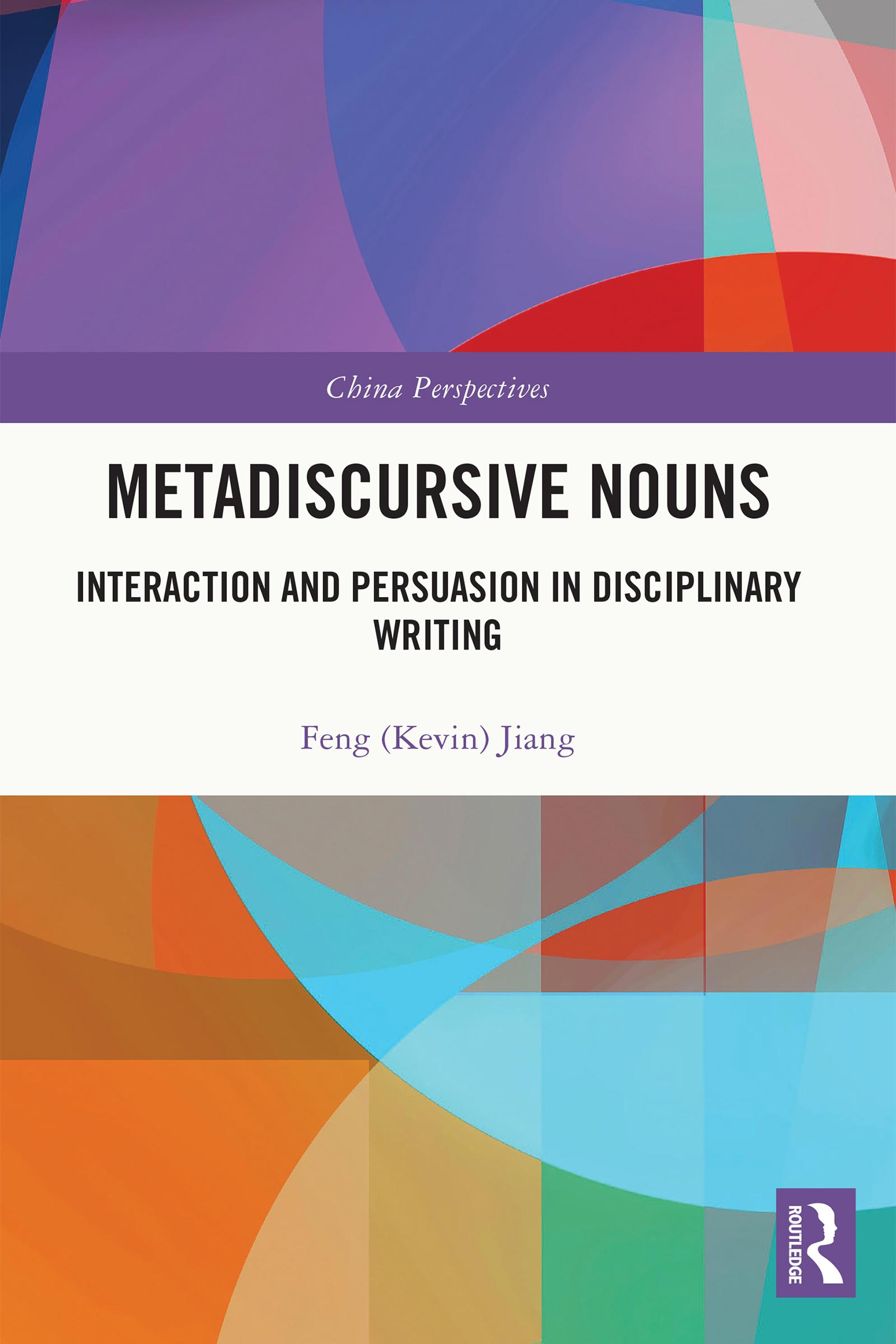
Based on a 1.7-million-word corpus of 160 research articles from both soft and hard knowledge fields, this book sets out to explore how a particular type of noun – namely, the metadiscursive noun – is rhetorically used to mediate writer-reader interaction in disciplinary writing.
Analysts of academic discourse have come to regard hedges, reporting verbs, directives and so on as forming part of a wide repertoire of interactive features available to authors, suggesting a variety of terms, including evaluation, stance, appraisal, and metadiscourse. One aspect which has been less fully explored, however, is the rhetorical role nouns play in achieving writers’ persuasive goals. This book fills the gap by proposing a particular type of nouns as metadiscursive nouns (as in “this supports our hypotheses that youth are more likely to co-offend when neighbourhoods are less disadvantaged”). The author aims to find out how writers employ metadiscursive nouns to engage and interact with readers in academic prose, raising theoretical and pedagogical implications and how they can be applied in the teaching of academic writing.
This book will be of particular interest to students and scholars working in the areas of English for academic purposes, corpus studies, academic writing, and linguistics in general.
Betal nemt med kort, Klarna, Apple Pay eller Google Pay. Ikke tilfreds? Du har altid 14 dages fortrydelsesret. Læs mere i vores vilkår. Har du spørgsmål, så send os en mail på hello@memmo.org.
Memmo gør det nemmere at studere – uanset hvor du er i verden. Hos os samler du dine kursusbøger og smarte studieværktøjer ét sted: resuméer, quizzer, podcasts og flashcards. Og så er der Ted, din studieven, der svarer på alt, du undrer dig over. Over 50 000 studerende studerer allerede her – bygget til at hjælpe dig med at lære hurtigere og stresse mindre.