
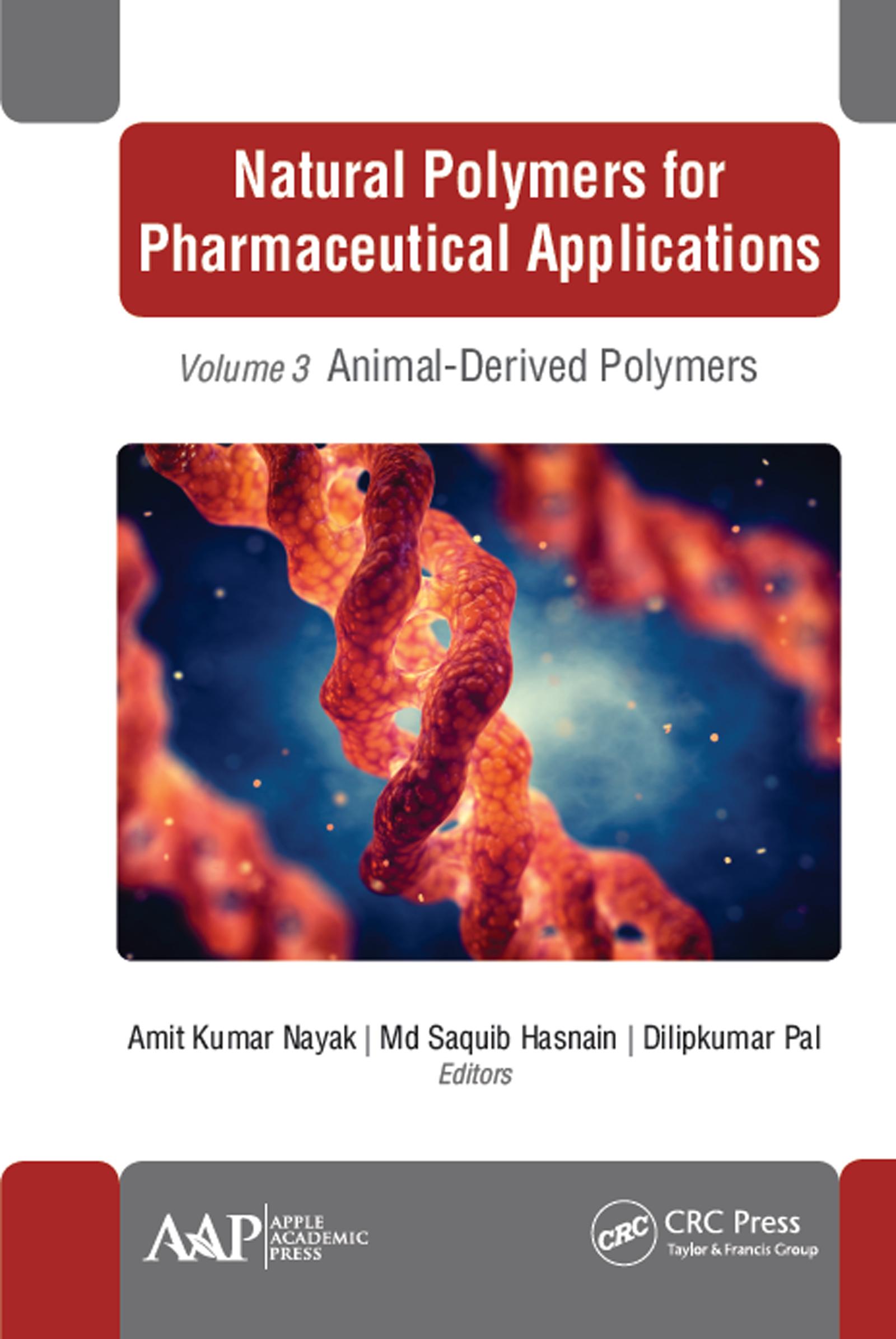
In recent years, many animal-derived polymers have emerged as an attractive category of naturally derived polymers because of their advantageous physicochemical, chemical, and biological properties. The important biological properties of these natural polymers derived from animals are biocompatibility and biodegradation. These polymers are generally composed of repeated units of amino acids. Moreover, these polymers can be modified physically and/or chemically to improve their biomaterial properties.
Natural Polymers for Pharmaceutical Applications, Volume 3: Animal-Derived Polymers looks at how these polymers can be exploited as pharmaceutical excipients in various pharmaceutical dosage forms, like microparticles, nanoparticles, ophthalmic preparations, gels, implants, etc. The commonly used animal-derived polymers used as pharmaceutical excipients are hyaluronic acid (hyaluronan), albumin, collagen, gelatin, chondroitin, etc.
Betal nemt med kort, Klarna, Apple Pay eller Google Pay. Ikke tilfreds? Du har altid 14 dages fortrydelsesret. Læs mere i vores vilkår. Har du spørgsmål, så send os en mail på hello@memmo.org.
Memmo gør det nemmere at studere – uanset hvor du er i verden. Hos os samler du dine kursusbøger og smarte studieværktøjer ét sted: resuméer, quizzer, podcasts og flashcards. Og så er der Ted, din studieven, der svarer på alt, du undrer dig over. Over 50 000 studerende studerer allerede her – bygget til at hjælpe dig med at lære hurtigere og stresse mindre.