
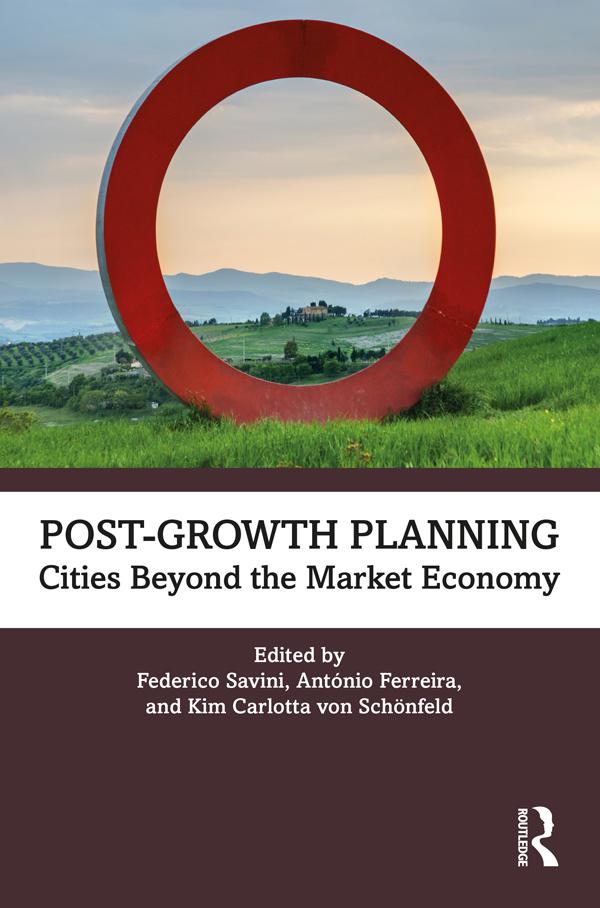
This book draws on a wide range of conceptual and empirical materials to identify and examine planning and policy approaches that move beyond the imperative of perpetual economic growth. It sketches out a path towards planning theories and practices that can break the cyclical process of urban expansion, crises, and recovery that negatively affect ecosystems and human lives.
To reduce the dramatic social and environmental impact of urbanization, this book offers both a critique of growth-led urban development and a prefiguration of ecologically regenerative and socially just ways of organizing cities and regions. It uncovers emerging possibilities for post-growth planning in the fields of collective housing, mobility, urban commoning, ecological land-use, urban–rural symbiosis, and alternative planning worldviews. It provides a toolkit of concepts and real-life examples for urban scholars, urbanists, activists, architects, and designers seeking to make cities prosper within planetary boundaries.
This book speaks to both experts and beginners in post-growth thinking. It concludes with a manifesto and glossary of key terms for urban scholars, students, and practitioners.
Betal nemt med kort, Klarna, Apple Pay eller Google Pay. Ikke tilfreds? Du har altid 14 dages fortrydelsesret. Læs mere i vores vilkår. Har du spørgsmål, så send os en mail på hello@memmo.org.
Memmo gør det nemmere at studere – uanset hvor du er i verden. Hos os samler du dine kursusbøger og smarte studieværktøjer ét sted: resuméer, quizzer, podcasts og flashcards. Og så er der Ted, din studieven, der svarer på alt, du undrer dig over. Over 50 000 studerende studerer allerede her – bygget til at hjælpe dig med at lære hurtigere og stresse mindre.