
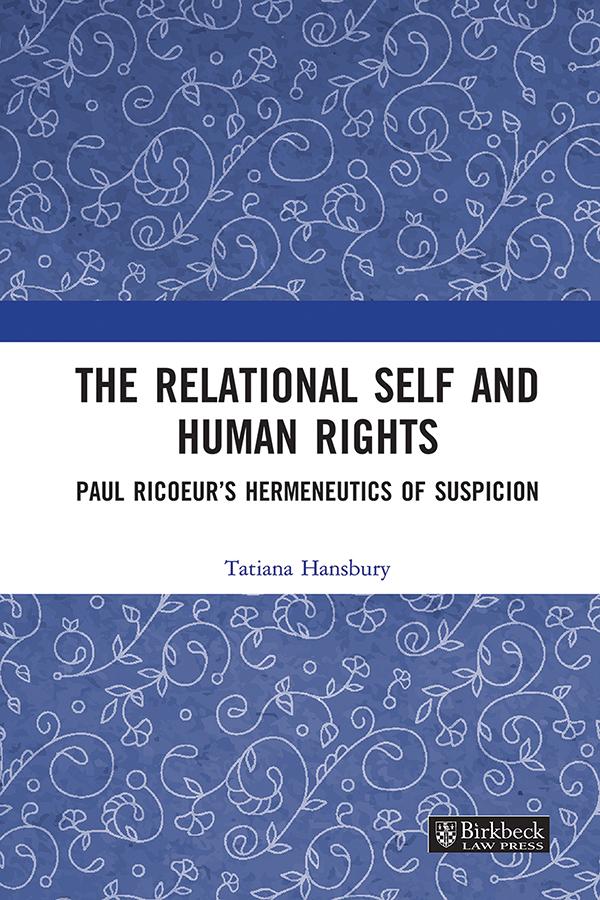
This book takes up Paul Ricoeur’s relational idea of the self in order to rethink the basis of human rights.
Many schools of critical theory argue that the idea of human rights is based on a problematic conception of the human subject and the legal person. For liberals, the human is a possessive and self-interested individual, such that others are either tools or hurdles in their projects. This book offers a novel reading of subjectivity and rights based on Paul Ricœur’s re-interpretation of human subjectivity as a relational concept. Taking up Ricoeur’s idea of recognition as a ‘reciprocal gift’, it argues that gift exchange is the relation upon which authentic, non-abstract, human subjectivity is based. Seen in this context, human rights can be understood as tokens of mutual recognition, securing a genuinely human life for all. The conception of human rights as gift effectively counters their moral individualism and possessiveness, as the philosophical anthropology of an isolated ego is replaced by that of a related, dependent and embedded self.
This original reinterpretation of human rights will appeal to scholars of legal theory, jurisprudence, politics and philosophy.
Betal nemt med kort, Klarna, Apple Pay eller Google Pay. Ikke tilfreds? Du har altid 14 dages fortrydelsesret. Læs mere i vores vilkår. Har du spørgsmål, så send os en mail på hello@memmo.org.
Memmo gør det nemmere at studere – uanset hvor du er i verden. Hos os samler du dine kursusbøger og smarte studieværktøjer ét sted: resuméer, quizzer, podcasts og flashcards. Og så er der Ted, din studieven, der svarer på alt, du undrer dig over. Over 50 000 studerende studerer allerede her – bygget til at hjælpe dig med at lære hurtigere og stresse mindre.