
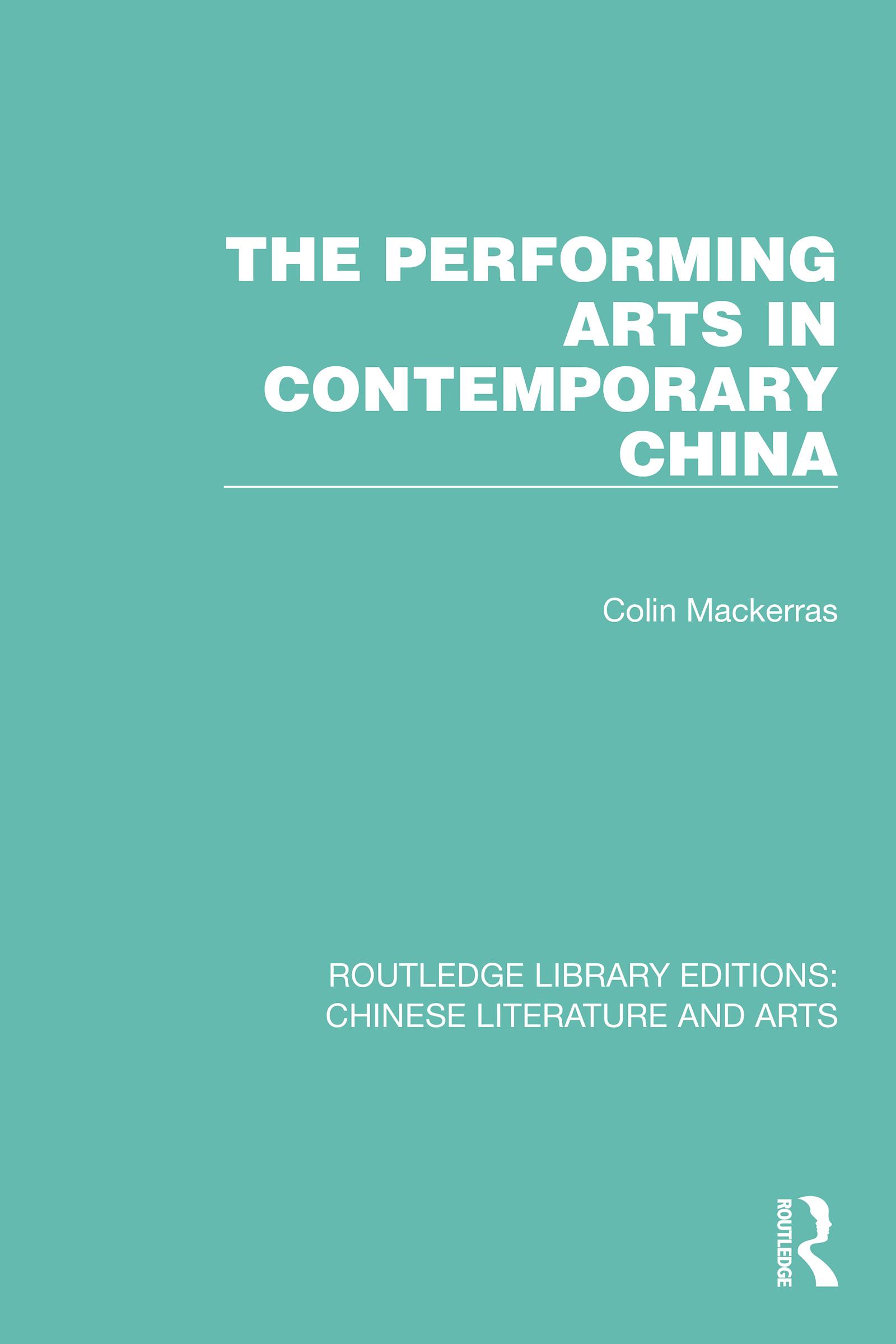
The overthrow of the ‘gang of four’ in 1976 had profound effects in all areas of Chinese society, and probably nowhere can this be seen more clearly than in the performing arts. Jiang Qing, Mao Zedong’s widow, was strongly interested in the performing arts and exercised great influence over them. Professor Mackerras describes this influence and the effects its removal had on the arts in the years after Mao’s death, as well as in the years following the Cultural Revolution.
This book, first published in 1981, deals not only with opera, the spoken play, music and dance but also with cinema, describing how in all these cases the Chinese have adapted traditional art forms for political, social and propagandist purposes, both domestic and international. It charts the transformations that have taken place in all the multiple aspects of the performing arts and sets them against the development of Chinese society as a whole. It also looks at the role of the actor and performer in society, including their training, social status and livelihood.
Betal nemt med kort, Klarna, Apple Pay eller Google Pay. Ikke tilfreds? Du har altid 14 dages fortrydelsesret. Læs mere i vores vilkår. Har du spørgsmål, så send os en mail på hello@memmo.org.
Memmo gør det nemmere at studere – uanset hvor du er i verden. Hos os samler du dine kursusbøger og smarte studieværktøjer ét sted: resuméer, quizzer, podcasts og flashcards. Og så er der Ted, din studieven, der svarer på alt, du undrer dig over. Over 50 000 studerende studerer allerede her – bygget til at hjælpe dig med at lære hurtigere og stresse mindre.