
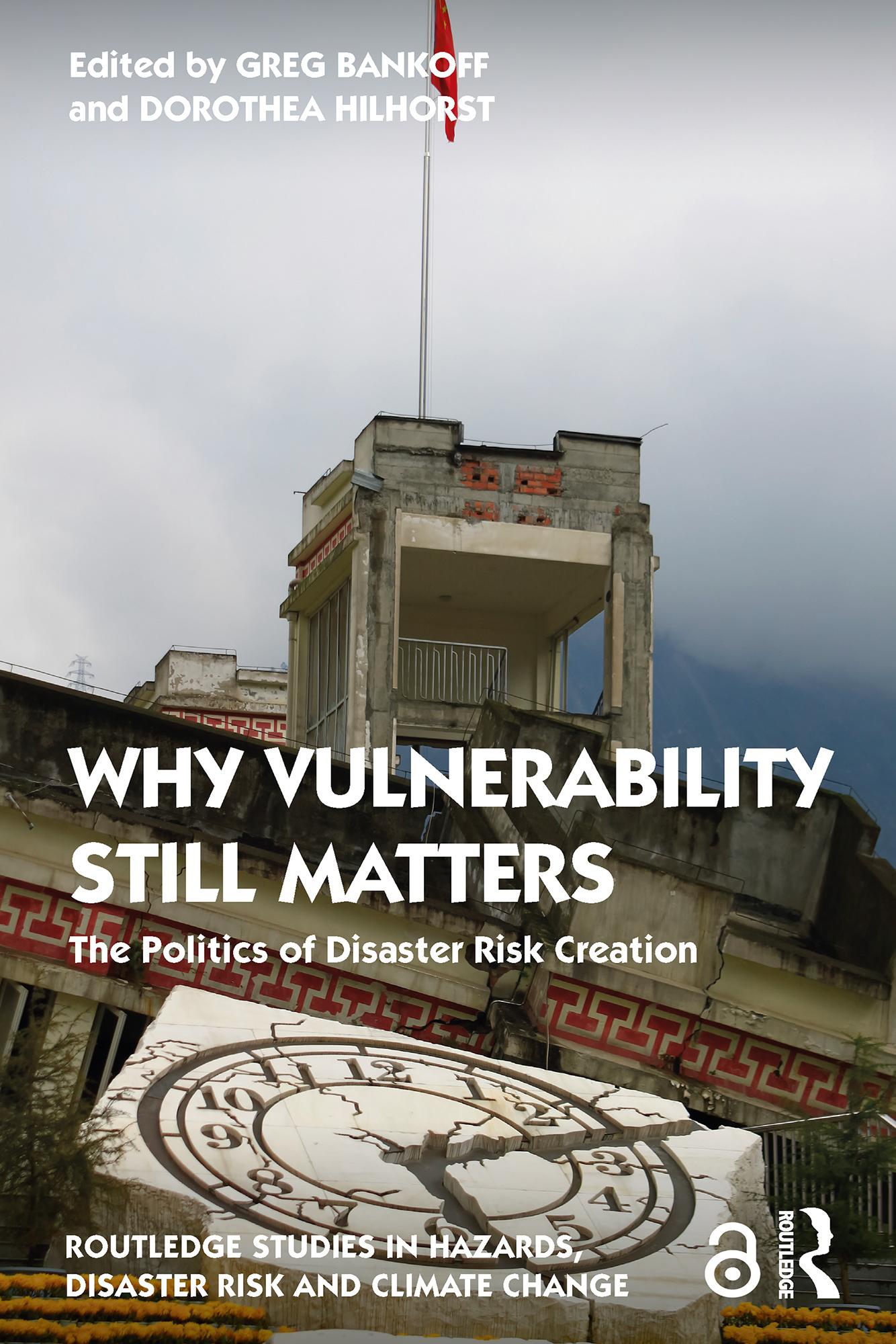
We think vulnerability still matters when considering how people are put at risk from hazards and this book shows why in a series of thematic chapters and case studies written by eminent disaster studies scholars that deal with the politics of disaster risk creation: precarity, conflict, and climate change.
The chapters highlight different aspects of vulnerability and disaster risk creation, placing the stress rightly on what causes disasters and explaining the politics of how they are created through a combination of human interference with natural processes, the social production of vulnerability, and the neglect of response capacities. Importantly, too, the book provides a platform for many of those most prominently involved in launching disaster studies as a social discipline to reflect on developments over the past 50 years and to comment on current trends.
The interdisciplinary and historical perspective that this book provides will appeal to scholars and practitioners at both the national and international level seeking to study, develop, and support effective social protection strategies to prevent or mitigate the effects of hazards on vulnerable populations. It will also prove an invaluable reference work for students and all those interested in the future safety of the world we live in.
The Open Access version of this book, available at http://www.taylorfrancis.com, has been made available under a Creative Commons Attribution-NonCommercial-ShareAlike (CC-BY-NC-SA) 4.0 International license.
Betal nemt med kort, Klarna, Apple Pay eller Google Pay. Ikke tilfreds? Du har altid 14 dages fortrydelsesret. Læs mere i vores vilkår. Har du spørgsmål, så send os en mail på hello@memmo.org.
Memmo gør det nemmere at studere – uanset hvor du er i verden. Hos os samler du dine kursusbøger og smarte studieværktøjer ét sted: resuméer, quizzer, podcasts og flashcards. Og så er der Ted, din studieven, der svarer på alt, du undrer dig over. Over 50 000 studerende studerer allerede her – bygget til at hjælpe dig med at lære hurtigere og stresse mindre.