
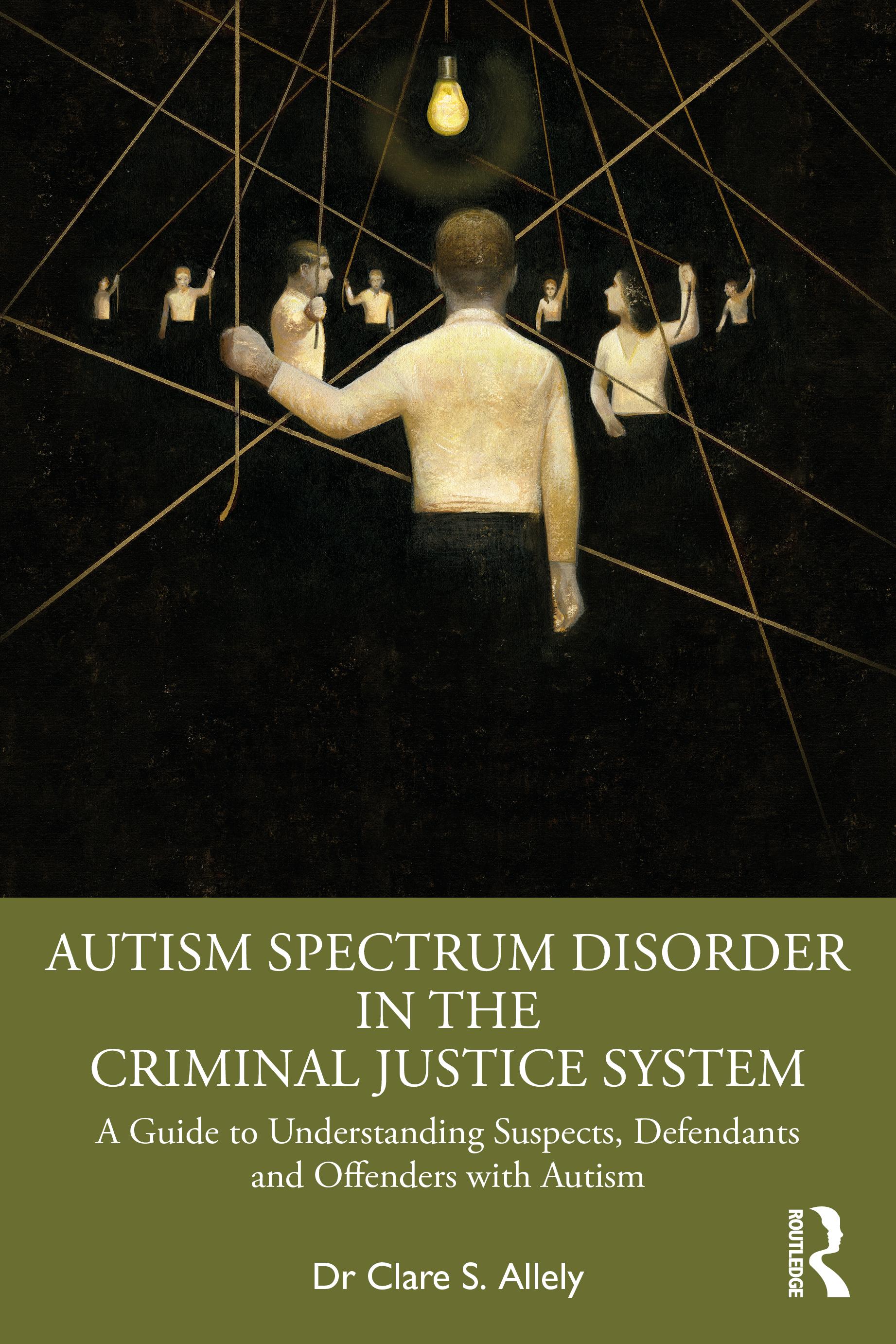
This book focuses on autism spectrum disorder (ASD) in the criminal justice system. Rather than being the perpetrators of offending behaviour, individuals with ASD are more likely to be the victims of crime. However, there is nevertheless a small subset of individuals with ASD who do offend, and this book provides an in-depth understanding of how certain features of ASD may provide the context of vulnerability to engaging in a number of types of offending behaviours.
Chapters focus on arson or fire-setting; cybercrime (e.g., hacking); online sexual offending such as the viewing of indecent child imagery; offline sexual offending; violent crime; stalking; terroristic behaviour (including radicalisation and extremism); bestiality or zoophilia; and also extreme violence such as mass shooting and serial homicide. This book also outlines the ways in which a defendant with ASD may present in court and how they may exhibit behaviour which could be misinterpreted and perceived negatively, leading to an unfair trial. Lastly, it discusses the need to identify the impact that ASD can have on the capacity to form the requisite criminal intent and offers appropriate court adaptions to support individuals with ASD during court proceedings.
This book is ideal for criminal defence lawyers and practitioners in psychology, psychiatry, and social work as well as policy makers and reformers.
Betal nemt med kort, Klarna, Apple Pay eller Google Pay. Ikke tilfreds? Du har altid 14 dages fortrydelsesret. Læs mere i vores vilkår. Har du spørgsmål, så send os en mail på hello@memmo.org.
Memmo gør det nemmere at studere – uanset hvor du er i verden. Hos os samler du dine kursusbøger og smarte studieværktøjer ét sted: resuméer, quizzer, podcasts og flashcards. Og så er der Ted, din studieven, der svarer på alt, du undrer dig over. Over 50 000 studerende studerer allerede her – bygget til at hjælpe dig med at lære hurtigere og stresse mindre.