
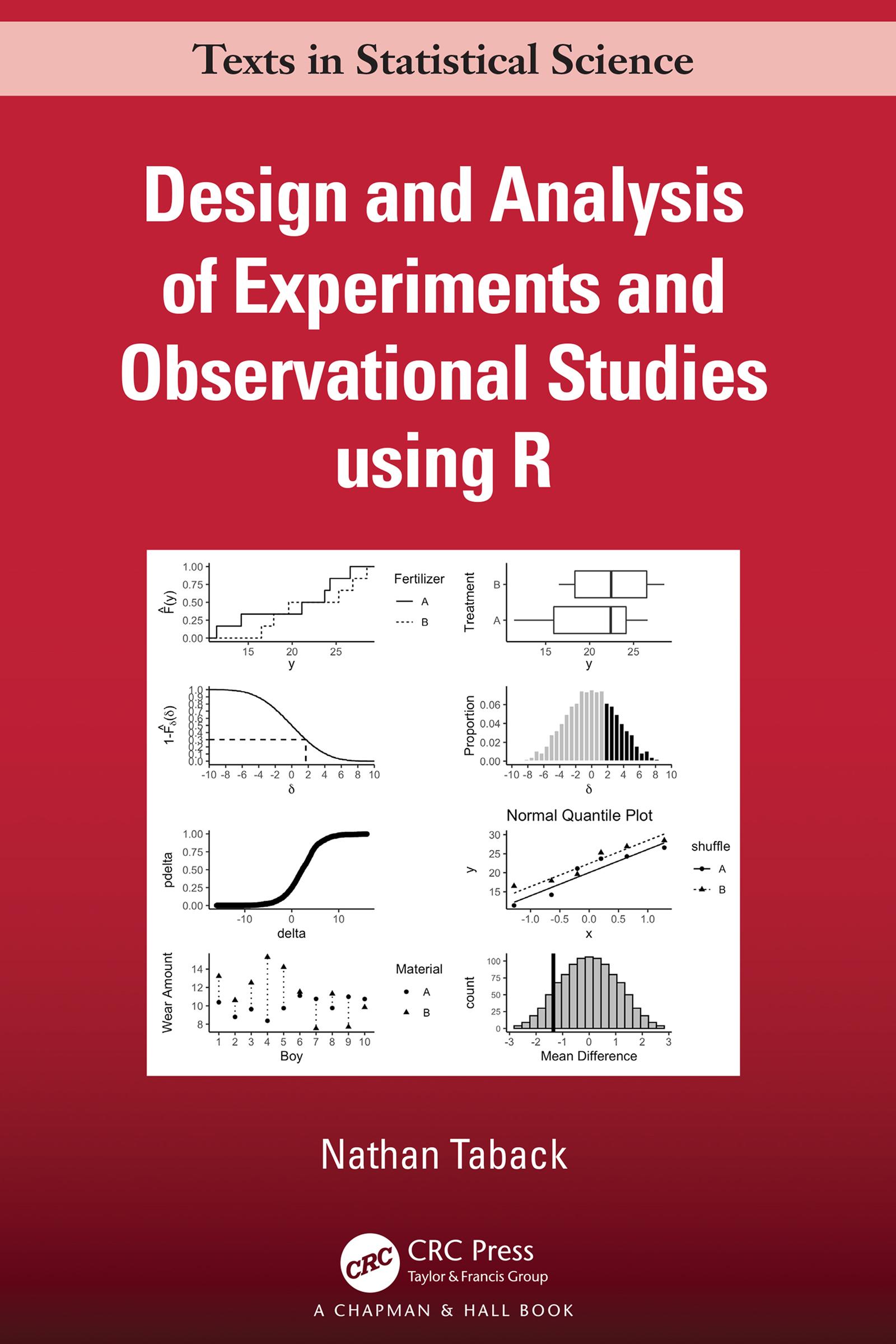
Introduction to Design and Analysis of Scientific Studies exposes undergraduate and graduate students to the foundations of classical experimental design and observational studies through a modern framework - The Rubin Causal Model. A causal inference framework is important in design, data collection and analysis since it provides a framework for investigators to readily evaluate study limitations and draw appropriate conclusions. R is used to implement designs and analyse the data collected.
Features:
- Classical experimental design with an emphasis on computation using tidyverse packages in R.
- Applications of experimental design to clinical trials, A/B testing, and other modern examples.
- Discussion of the link between classical experimental design and causal inference.
- The role of randomization in experimental design and sampling in the big data era.
- Exercises with solutions.
Instructor slides in RMarkdown, a new R package will be developed to be used with book, and a bookdown version of the book will be freely available. The proposed book will emphasize ethics, communication and decision making as part of design, data analysis, and statistical thinking.
Betal nemt med kort, Klarna, Apple Pay eller Google Pay. Ikke tilfreds? Du har altid 14 dages fortrydelsesret. Læs mere i vores vilkår. Har du spørgsmål, så send os en mail på hello@memmo.org.
Memmo gør det nemmere at studere – uanset hvor du er i verden. Hos os samler du dine kursusbøger og smarte studieværktøjer ét sted: resuméer, quizzer, podcasts og flashcards. Og så er der Ted, din studieven, der svarer på alt, du undrer dig over. Over 50 000 studerende studerer allerede her – bygget til at hjælpe dig med at lære hurtigere og stresse mindre.