
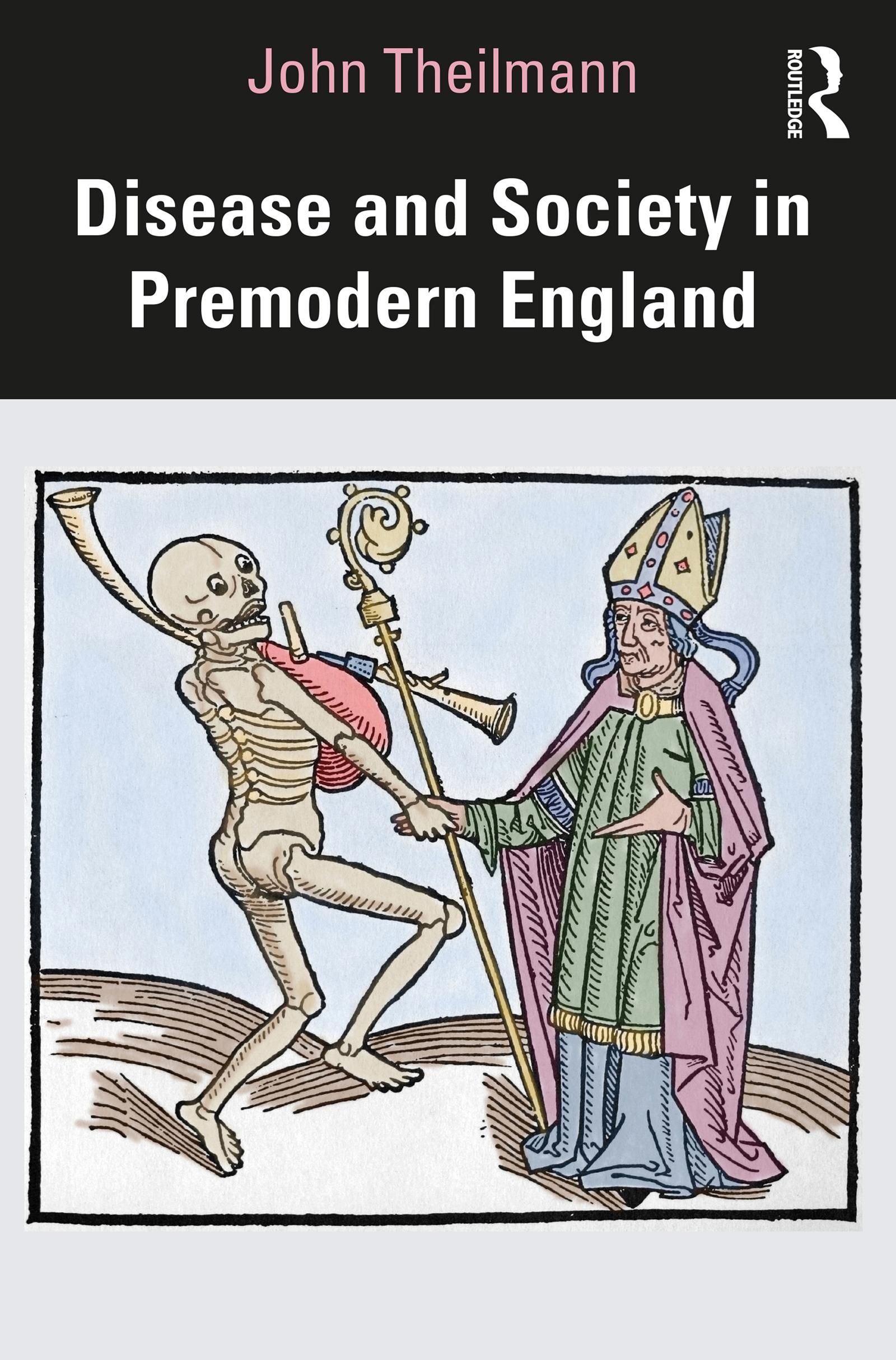
Disease and Society in Premodern England examines the impact of infectious disease in England from the everyday to pandemics in the period c. 500–c. 1600, with the major focus from the eleventh century onward.
Theilmann blends historical research, using a variety of primary sources, with an understanding of disease drawn from current scientific literature to enable a better understanding of how diseases affected society and why they were so difficult to combat in the premodern world. The volume provides a perspective on how society and medicine reacted to "new" diseases, something that remains an issue in the twenty-first century. The "new" diseases of the Late Middle Ages, such as plague, syphilis, and the English Sweat, are viewed as helping to lead to a change in how people viewed disease causation and treatment. In addition to the biology of disease and its relationship with environmental factors, the social, economic, political, religious, and artistic impacts of various diseases are also explored.
With discussions on a variety of diseases including leprosy, tuberculosis, malaria, measles, typhus, influenza, and smallpox, this volume is an essential resource for all students and scholars interested in the history of medicine and disease in premodern England.
Betal nemt med kort, Klarna, Apple Pay eller Google Pay. Ikke tilfreds? Du har altid 14 dages fortrydelsesret. Læs mere i vores vilkår. Har du spørgsmål, så send os en mail på hello@memmo.org.
Memmo gør det nemmere at studere – uanset hvor du er i verden. Hos os samler du dine kursusbøger og smarte studieværktøjer ét sted: resuméer, quizzer, podcasts og flashcards. Og så er der Ted, din studieven, der svarer på alt, du undrer dig over. Over 50 000 studerende studerer allerede her – bygget til at hjælpe dig med at lære hurtigere og stresse mindre.