
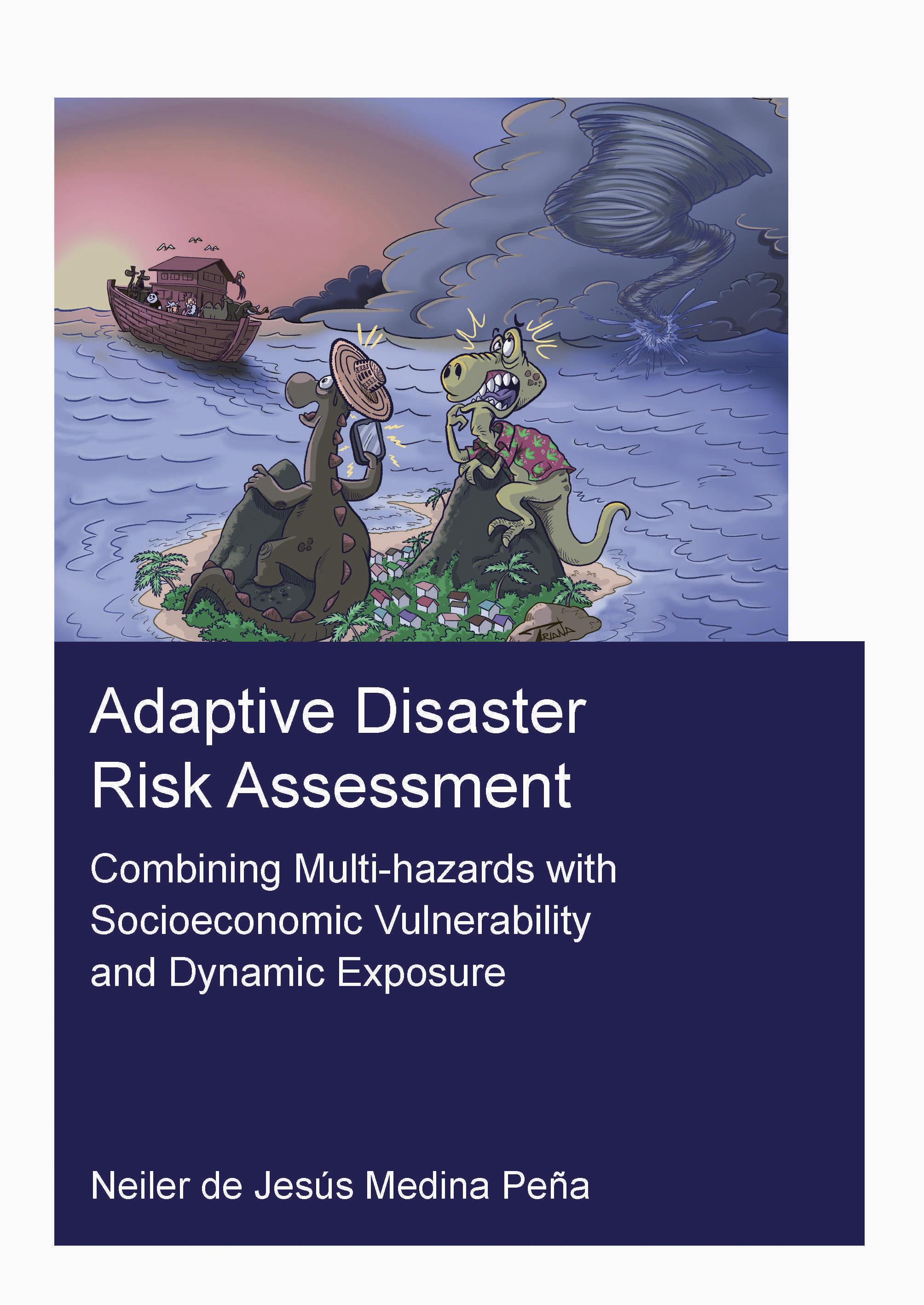
Climate change, combined with the rapid and often unplanned urbanisation trends, is associated with a rising trend in the frequency and severity of disasters triggered by natural hazards. In order to face the impacts of such threats, it is necessary to have an appropriate Disaster Risk Assessment (DRA). Traditional DRA approaches for disaster risk reduction (DRR) have focused mainly on the hazard component of risk, with little attention to the vulnerability and the exposure components. To address this issue, this dissertation’s main objective is to develop and test a disaster risk modelling framework that incorporates socioeconomic vulnerability and the adaptive nature of exposure associated with human behaviour in extreme hydro-meteorological events in the context of SIDS. To achieve the objective, an Adaptive Disaster Risk Assessment (ADRA) framework is proposed. ADRA uses an index-based approach (PeVI) to assess the socioeconomic vulnerability using three components: susceptibility, lack of coping capacities, and lack of adaptation. Furthermore, ADRA explicitly incorporates the exposure component using two approaches; first, a logistic regression model was built using the actual evacuation rates observed during Hurricane Irma, and second, an Agent-based model is used to simulate how households change their exposure levels in relation to different sources of information
Betal nemt med kort, Klarna, Apple Pay eller Google Pay. Ikke tilfreds? Du har altid 14 dages fortrydelsesret. Læs mere i vores vilkår. Har du spørgsmål, så send os en mail på hello@memmo.org.
Memmo gør det nemmere at studere – uanset hvor du er i verden. Hos os samler du dine kursusbøger og smarte studieværktøjer ét sted: resuméer, quizzer, podcasts og flashcards. Og så er der Ted, din studieven, der svarer på alt, du undrer dig over. Over 50 000 studerende studerer allerede her – bygget til at hjælpe dig med at lære hurtigere og stresse mindre.