
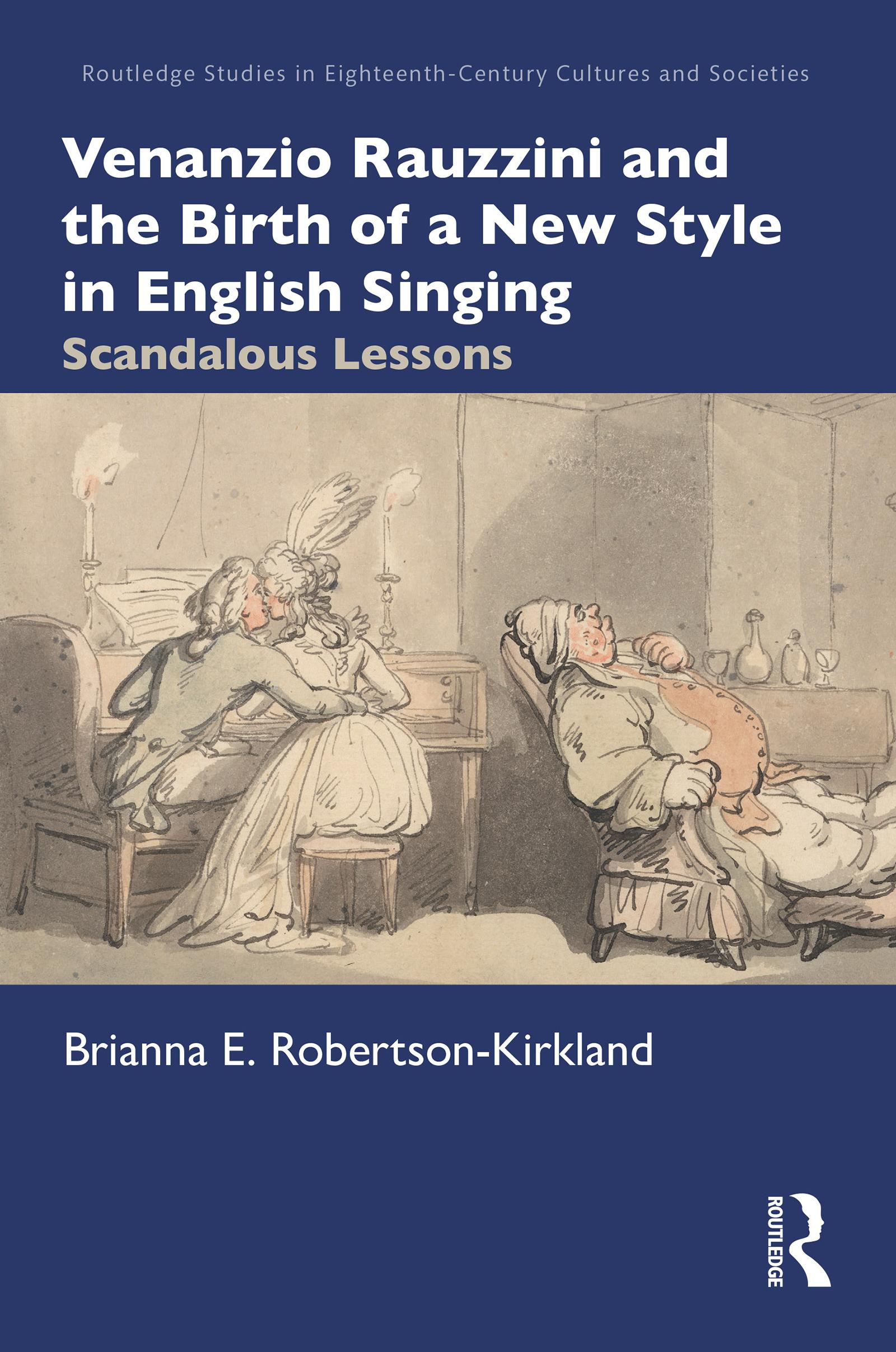
Since the eighteenth century, the one-to-one singing lesson has been the most common method of delivery. The scenario allows the teacher to familiarise and individualise the lesson to suit the needs of their student; however, it can also lead to speculation about what is taught. More troubling is the heightened risk of gossip and rumour with the private space generating speculation about the student–teacher relationship. Venanzio Rauzzini (1746–1810), an Italian castrato living in England who became a highly sought-after singing master, was particularly susceptible since his students tended to be women, whose moral character was under more scrutiny than their male counterparts. Even so in 1792, The Bath Chronicle proclaimed the Italian castrato: 'the father of a new style in English singing'. Branding Rauzzini as a founder of an English style was not an error, but indicative of deep-seated anxieties about the Italian invasion on England’s musical culture. This book places teaching at the centre of the socio-historical narrative and provides unique insight into musical culture. Using a microhistory approach, this study is the first to focus in on the impact of teaching and casts new light on issues of celebrity culture, gender and nationalism in Georgian England.
Betal nemt med kort, Klarna, Apple Pay eller Google Pay. Ikke tilfreds? Du har altid 14 dages fortrydelsesret. Læs mere i vores vilkår. Har du spørgsmål, så send os en mail på hello@memmo.org.
Memmo gør det nemmere at studere – uanset hvor du er i verden. Hos os samler du dine kursusbøger og smarte studieværktøjer ét sted: resuméer, quizzer, podcasts og flashcards. Og så er der Ted, din studieven, der svarer på alt, du undrer dig over. Over 50 000 studerende studerer allerede her – bygget til at hjælpe dig med at lære hurtigere og stresse mindre.