
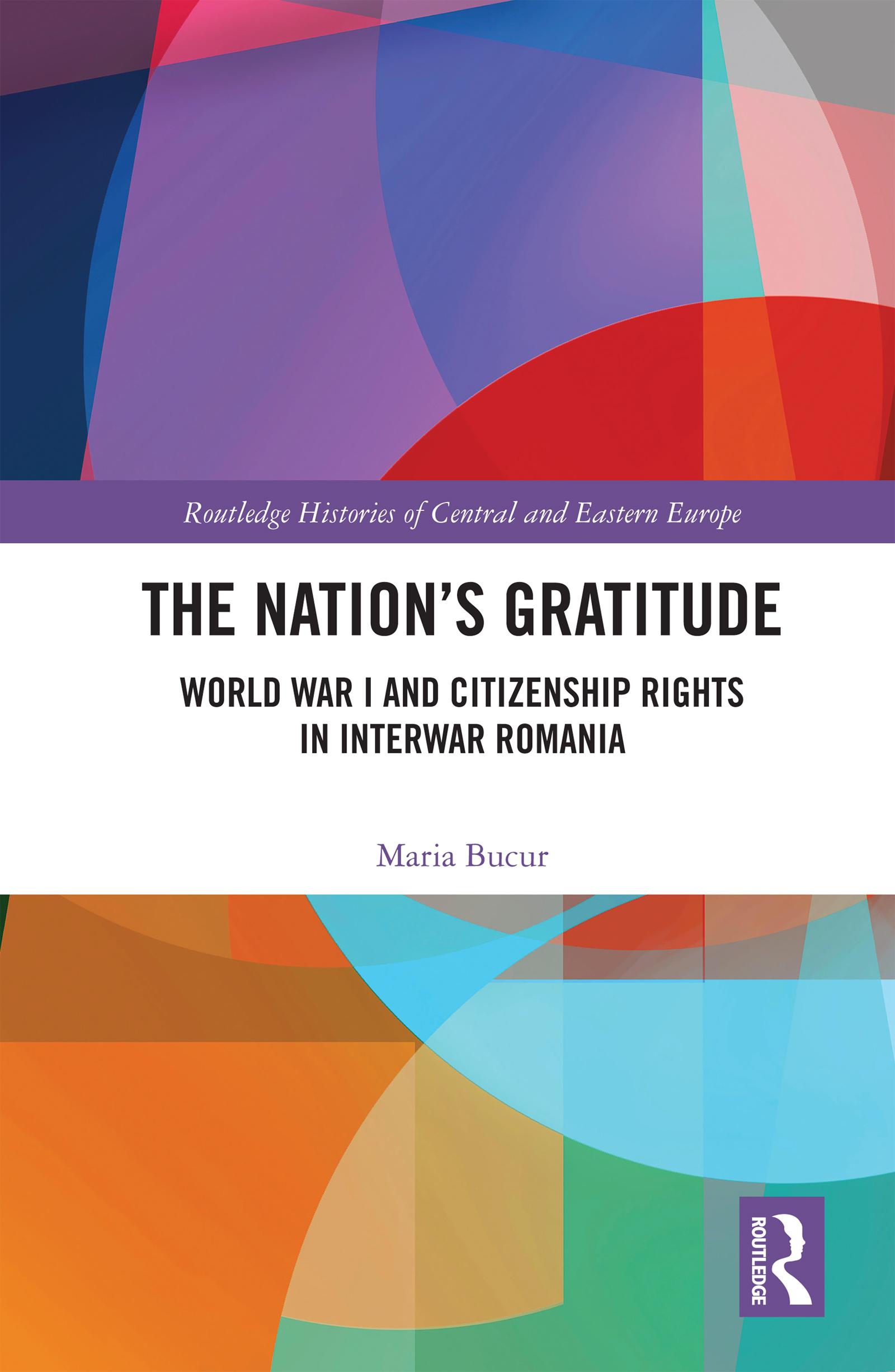
A pioneering work for the history of veterans’ rights in Romania, this study brings into focus the laws and policies the state developed in response to the unprecedented human losses in World War I. It features in lively and accessible language the varied responses of veterans, widows and orphans to those policies. The analysis emphasizes how ordinary citizens became educated about and used state institutions in ways that highlight the class, ethnic, religious and gender norms of the day. The book offers a vivid case study of how disability as a personal reality for many veterans became a point of policy making, a story that has seen little scholarly interest despite the enormous populations affected by these developments. Overall, the monograph shows how, in the postwar European states, citizenship as engaged practice was shaped by both government policies and the interpretation a large and varied group of beneficiaries gave to these policies. The analysis provides insights of great interest to scholars of these themes, while it offers examples of engaged citizenship useful for an undergraduate and nonspecialist audience.
Betal nemt med kort, Klarna, Apple Pay eller Google Pay. Ikke tilfreds? Du har altid 14 dages fortrydelsesret. Læs mere i vores vilkår. Har du spørgsmål, så send os en mail på hello@memmo.org.
Memmo gør det nemmere at studere – uanset hvor du er i verden. Hos os samler du dine kursusbøger og smarte studieværktøjer ét sted: resuméer, quizzer, podcasts og flashcards. Og så er der Ted, din studieven, der svarer på alt, du undrer dig over. Over 50 000 studerende studerer allerede her – bygget til at hjælpe dig med at lære hurtigere og stresse mindre.