
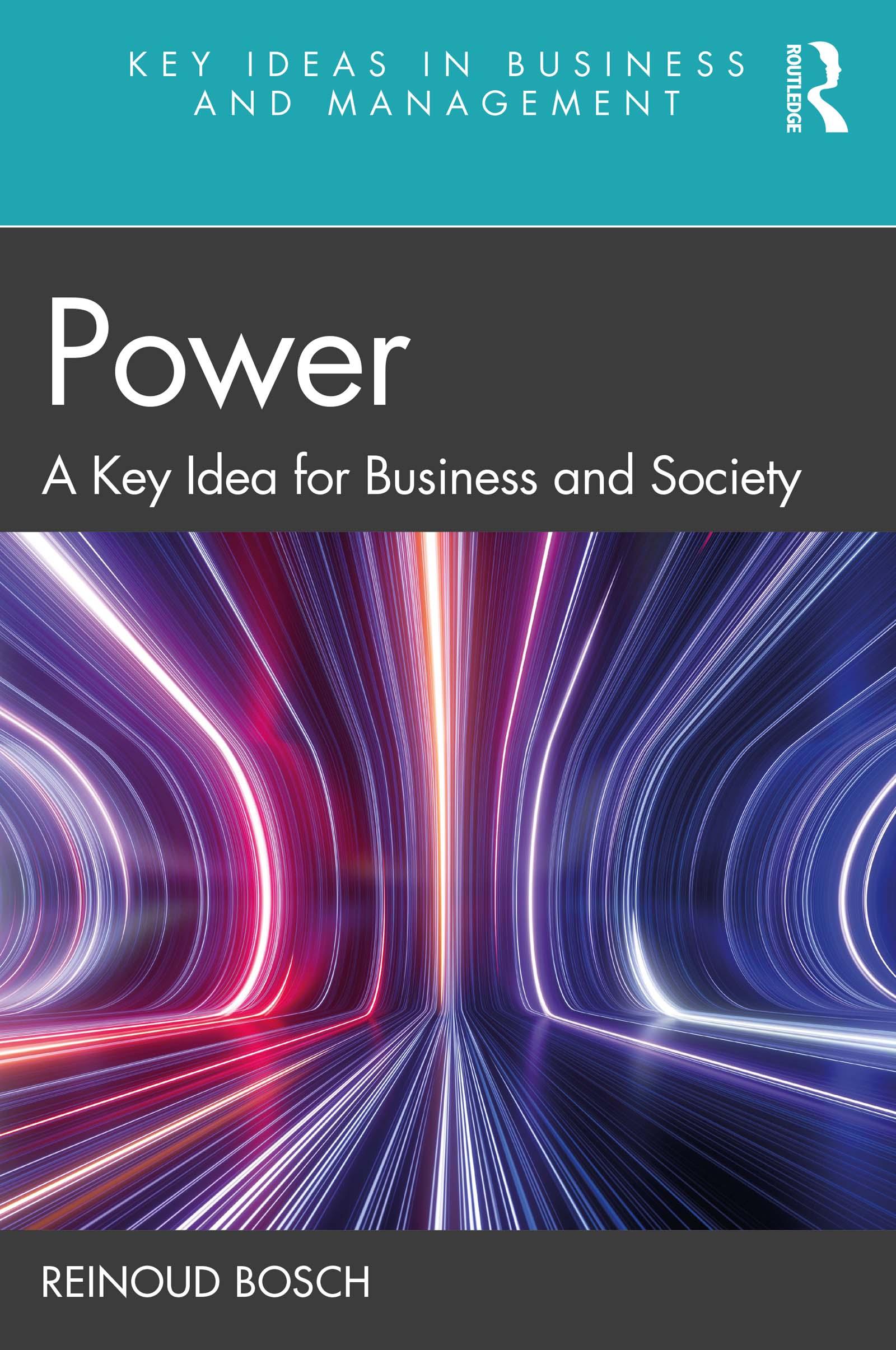
Power plays a central role in business and management. But what is power exactly, and what are key elements of this concept? Defining power as relative ability, this book discusses structures of power, individual power, the exercise of power, strategy, and collective power.
While discussing these key components, ideas of important thinkers about power, from Plato to Foucault, Weber to Lukes, Machiavelli to Kahneman, Sun to Kotter, and Barnard to Clegg, are discussed and interpretively categorized into a toolbox of conceptual elements – what Blumer referred to as sensitizing concepts. This toolbox of sensitizing concepts allows the selection of those elements of the concept of power that provide the most constructive and effective practical understanding in particular situations.
The core message behind the discussion is that knowledge of key components of the concept of power is empowering. It is empowering to learn about aspects of structures of power, individual power, the exercise of power, strategy, and collective power. Understanding such conceptual components empowers students, researchers, practitioners, and other readers to use their understanding in interpreting, theorizing about, and dealing with the complexities of power in their particular situations – without tying them to any preconceived general theories about power.
Betal nemt med kort, Klarna, Apple Pay eller Google Pay. Ikke tilfreds? Du har altid 14 dages fortrydelsesret. Læs mere i vores vilkår. Har du spørgsmål, så send os en mail på hello@memmo.org.
Memmo gør det nemmere at studere – uanset hvor du er i verden. Hos os samler du dine kursusbøger og smarte studieværktøjer ét sted: resuméer, quizzer, podcasts og flashcards. Og så er der Ted, din studieven, der svarer på alt, du undrer dig over. Over 50 000 studerende studerer allerede her – bygget til at hjælpe dig med at lære hurtigere og stresse mindre.