
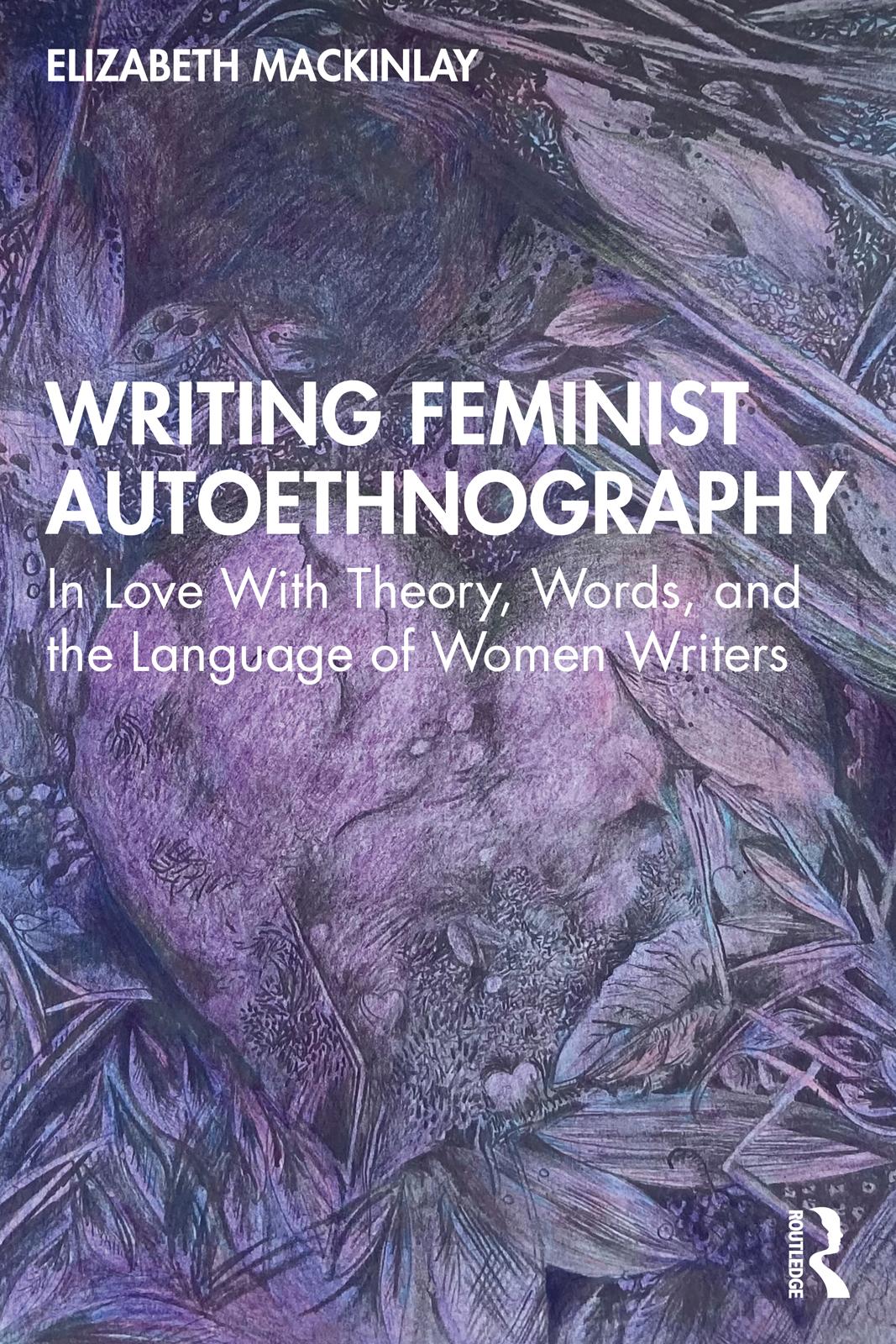
Writing Feminist Autoethnography explores the personal-is-political relationship between autoethnography and feminist theory and practice.
Each chapter introduces the lives and works of a range of feminist thinkers and writers and considers the ways in which their thinking and writing might come to be in relation with our own personal-is-political thinking and writing work as feminist autoethnographers. The book begins with an acknowledgement of the author’s positionality as a white-settler-colonial-woman in relation with Yanyuwa, Garrwa, Mara and Kudanji Aboriginal women. This positionality has continued to resonate deeply with the responses and sensibilities the author holds as a feminist autoethnographer to move beyond coloniality. She explores the writing of Virginia Woolf, Simone Weil, Simone de Beauvoir, Hélène Cixous, Kathleen Stewart, bell hooks and Ruth Behar, with critical affect to embrace, embody and engage with feminist thinking, wondering and feeling. The book creatively and performatively explores what it means to live a feminist life as an autoethnographer.
This book will define and conceptualize feminist autoethnography for all qualitative researchers, especially those interested in critical autoethnography, and scholars in gender studies and communication.
Betal nemt med kort, Klarna, Apple Pay eller Google Pay. Ikke tilfreds? Du har altid 14 dages fortrydelsesret. Læs mere i vores vilkår. Har du spørgsmål, så send os en mail på hello@memmo.org.
Memmo gør det nemmere at studere – uanset hvor du er i verden. Hos os samler du dine kursusbøger og smarte studieværktøjer ét sted: resuméer, quizzer, podcasts og flashcards. Og så er der Ted, din studieven, der svarer på alt, du undrer dig over. Over 50 000 studerende studerer allerede her – bygget til at hjælpe dig med at lære hurtigere og stresse mindre.