
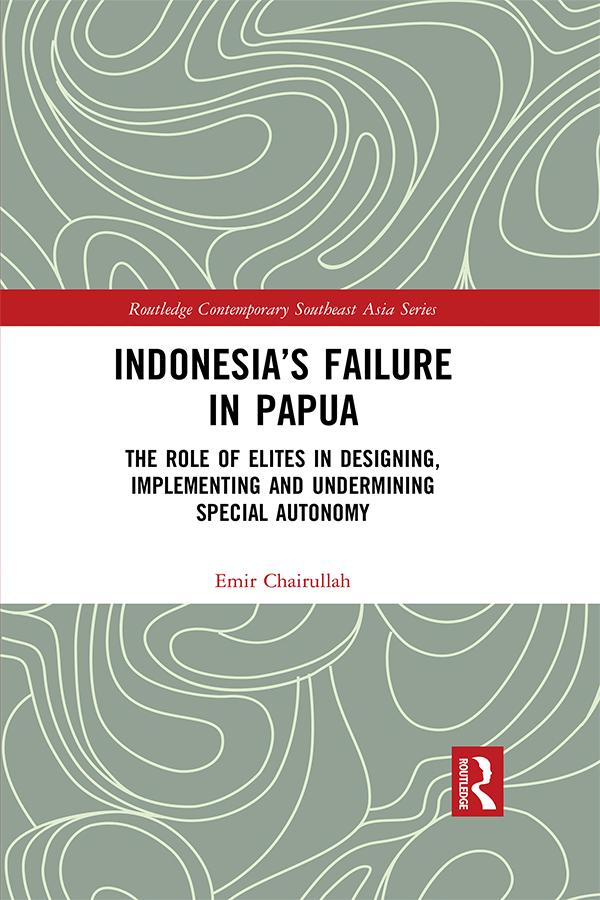
Chairullah investigates how the political, social, and economic interests of national and local elites were negotiated in the formulation and early stages of Special Autonomy in Papua Province, Indonesia.
The Papuan case lends support to the current conception of elite theory, which considers the influence of actors and dynamics beyond power elites in the decision-making process. The failure of the policy implementation as a conflict reduction strategy in the Papuan case can be attributed to the dynamics of elite configurations during the negotiation and early implementation stages. Chairullah presents two significant new findings for research on Papuan Special Autonomy. Firstly, that secret negotiations were held between Papuan and national elites during Abdurrahman Wahid’s presidency, and these were crucial in reducing separatist sentiment in Papua. Secondly, that the United States, through Freeport McMoRan, strongly influenced the Special Autonomy negotiation process. The actions of national elites in Jakarta led to widespread disappointment about the policy at all levels in Papua and the subsequent escalation of separatist sentiment based on Papuan ethnic identity.
An important book for scholars of Indonesian politics and society, and especially those with a particular interest in the Papuan conflict.
Betal nemt med kort, Klarna, Apple Pay eller Google Pay. Ikke tilfreds? Du har altid 14 dages fortrydelsesret. Læs mere i vores vilkår. Har du spørgsmål, så send os en mail på hello@memmo.org.
Memmo gør det nemmere at studere – uanset hvor du er i verden. Hos os samler du dine kursusbøger og smarte studieværktøjer ét sted: resuméer, quizzer, podcasts og flashcards. Og så er der Ted, din studieven, der svarer på alt, du undrer dig over. Over 50 000 studerende studerer allerede her – bygget til at hjælpe dig med at lære hurtigere og stresse mindre.