
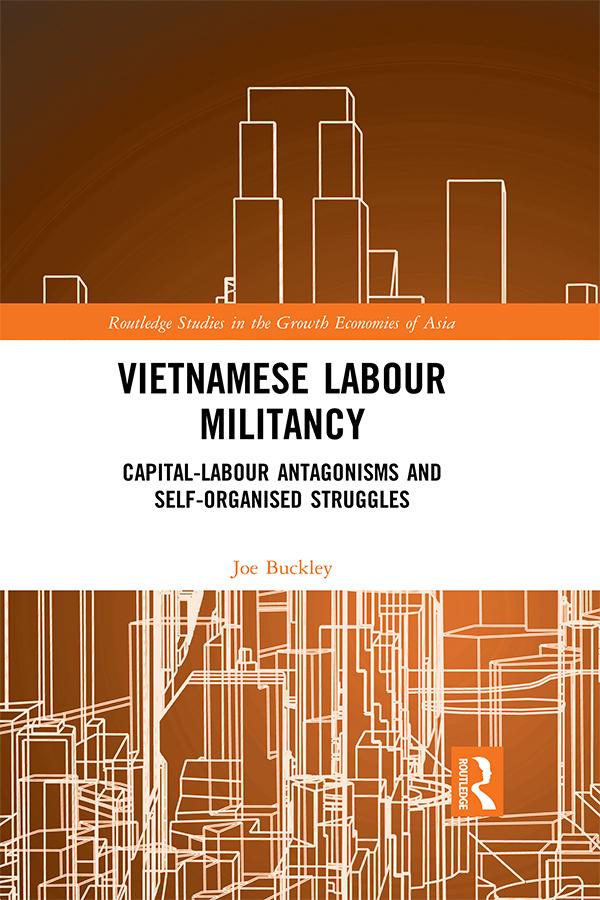
This book explores how capital-labour relations and antagonisms structure forms of militancy in Vietnam and shows that Vietnamese labour militancy is in line with global trends of worker activism.
Vietnamese labour politics is undergoing significant changes, with a new Labour code that became law in 2021 allowing workers to join ‘worker representative organisations’ not subordinate to the state-led union or the ruling Communist Party. This book reflects on the nature of Vietnamese labour politics on the cusp of reform. It focuses on nominally formal labour within the garment and footwear industry in the southern part of the country, the author argues that while employment in the formal economy is expanding in terms of the absolute numbers of people working in formally registered firms, capital employs various ways to make conditions inside these companies increasingly insecure. In response, workers organise in forms of decentralised resistance. The book analyses two of these in detail; wildcat strikes and ‘microstrikes’—short collective work stoppages that occur inside workplaces.
Arguing that labour resistance is structured in relation to capital’s behaviour, and not only because of weak labour relations institutions and mechanisms, this book makes a valuable contribution to the field of labour and social movement studies, development studies, sociology, and political economy and Southeast Asian Studies.
Betal nemt med kort, Klarna, Apple Pay eller Google Pay. Ikke tilfreds? Du har altid 14 dages fortrydelsesret. Læs mere i vores vilkår. Har du spørgsmål, så send os en mail på hello@memmo.org.
Memmo gør det nemmere at studere – uanset hvor du er i verden. Hos os samler du dine kursusbøger og smarte studieværktøjer ét sted: resuméer, quizzer, podcasts og flashcards. Og så er der Ted, din studieven, der svarer på alt, du undrer dig over. Over 50 000 studerende studerer allerede her – bygget til at hjælpe dig med at lære hurtigere og stresse mindre.