
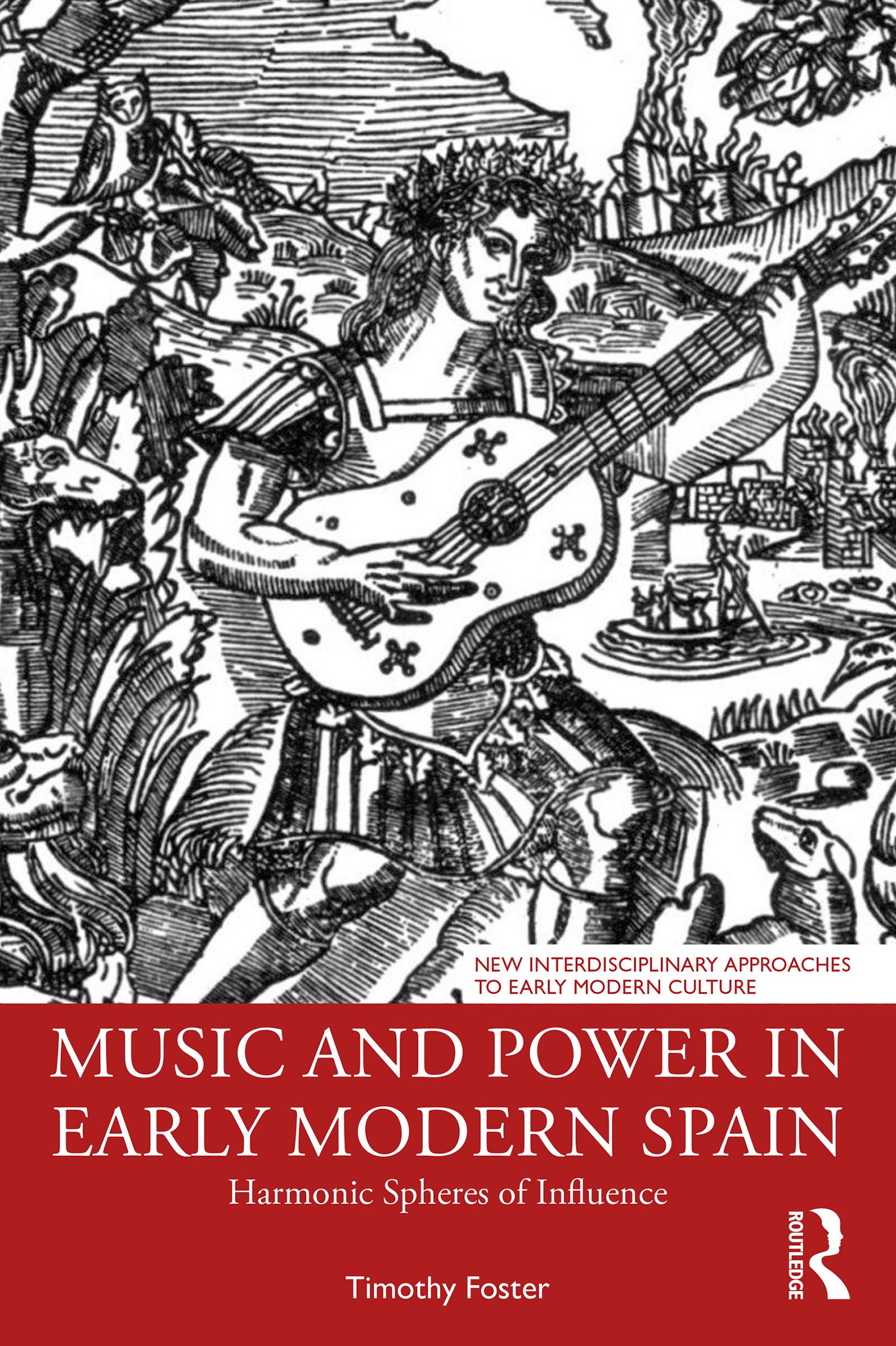
This book explores the representation of music in early modern Spanish literature and reveals how music was understood within the framework of the Harmony of the Spheres, emanating from cosmic harmony as directed by the creator.
The Harmony of Spheres was not ideologically neutral but rather tied to the earthly power structures of the Church, Crown, and nobility. Music could be "true," taking the listener closer to the divine, or "false," leading the listener astray. As such, music was increasingly seen as a potent weapon to be wielded in service of earthly centers of power, which can be observed in works such as vihuela songbooks, the colonial chronicle of the Inca Garcilaso de la Vega, and in the palace theater of Pedro Calderón de la Barca. While music could be a powerful metaphor mapping onto ideological currents of imperial Spain, this volume shows that it also became a contested site where diverse stakeholders challenged the Harmonic Spheres of Influence.
Music and Power in Early Modern Spain is a useful tool for upper-level undergraduates, postgraduates, and scholars interested in musicology, music history, Spanish literature, cultural studies, and transatlantic studies in the early modern period.
Betal nemt med kort, Klarna, Apple Pay eller Google Pay. Ikke tilfreds? Du har altid 14 dages fortrydelsesret. Læs mere i vores vilkår. Har du spørgsmål, så send os en mail på hello@memmo.org.
Memmo gør det nemmere at studere – uanset hvor du er i verden. Hos os samler du dine kursusbøger og smarte studieværktøjer ét sted: resuméer, quizzer, podcasts og flashcards. Og så er der Ted, din studieven, der svarer på alt, du undrer dig over. Over 50 000 studerende studerer allerede her – bygget til at hjælpe dig med at lære hurtigere og stresse mindre.