
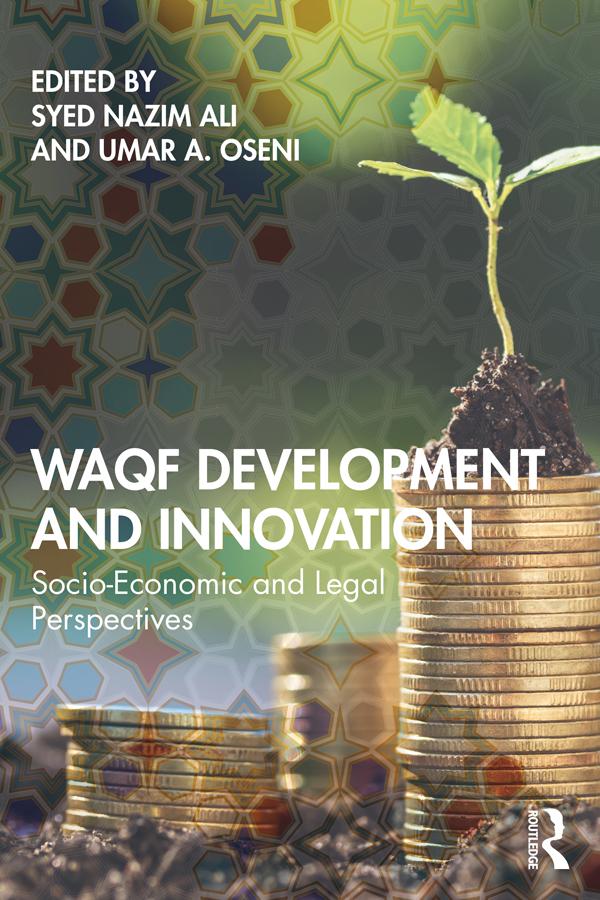
Waqf is one of the most potent socio-economic tools for reducing public sector deficit and breaking the chain of intergenerational poverty. Providing a high-level discussion on waqf development and innovation within the context of modern socio-economic and legal developments, this book examines the importance and potentials of waqf and the issues relating to its legal and regulatory framework.
The research delivers future directions for countries that plan to explore this socio-economic institution. Readers and policymakers will be able to replicate successful experiments and learn from some failed initiatives to seek alternative funding platforms to support the fiscal policies of developing countries. The volume discusses the relevance and novel application of waqf in the modern economic system and social development, it reviews applicable laws and regulations pertaining to waqf and trust laws and examines critical, cross-country case studies and experiences.
Setting an agenda for further researchers in the field of waqf, this comprehensive high-level analysis, with case studies from leading jurisdictions across the world, is a key resource for researchers, policymakers and institutions interested in charitable endowments, Islamic finance, and social finance.
Betal nemt med kort, Klarna, Apple Pay eller Google Pay. Ikke tilfreds? Du har altid 14 dages fortrydelsesret. Læs mere i vores vilkår. Har du spørgsmål, så send os en mail på hello@memmo.org.
Memmo gør det nemmere at studere – uanset hvor du er i verden. Hos os samler du dine kursusbøger og smarte studieværktøjer ét sted: resuméer, quizzer, podcasts og flashcards. Og så er der Ted, din studieven, der svarer på alt, du undrer dig over. Over 50 000 studerende studerer allerede her – bygget til at hjælpe dig med at lære hurtigere og stresse mindre.