
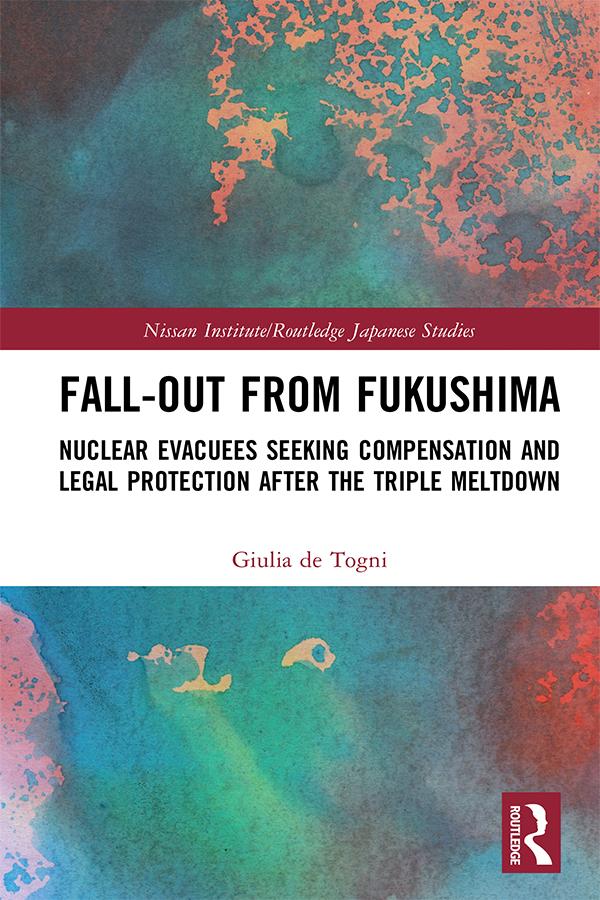
This book shows how the Fukushima plaintiffs have challenged narratives of safety and risk containment produced by TEPCO and the Japanese government through offering new empirical data on risk perceptions and life choices of some nuclear evacuees.
Considering the Fukushima evacuees’ disappearance from public discourse in Japan, the book engages with theoretical writings on risk, neoliberal governmentality and citizen science. Chapters draw on a wide range of anthropologically-related methodologies including socio-linguistics, participant observation, and qualitative interviews. Themes of self-governance, resistance, gender, kinship, class and social change surface throughout, setting the Fukushima experience in a broad historical, social, and comparative context. This is the first ethnographic account of the Fukushima litigation and the first extensive qualitative study documenting the worldviews and living conditions of nuclear evacuees who moved outside Fukushima Prefecture, with a particular focus on underrepresented groups (single mothers, elderly and disabled evacuees). The history of industrial disasters and the role of citizens in shaping environmental policy in Japan is also evaluated.
Fall-out from Fukushima sets out to be a manifesto for understanding and supporting post-nuclear disaster societies, and will appeal to students and scholars of social, legal, and linguistic anthropology, science and technology studies, as well as Japanese studies.
Betal nemt med kort, Klarna, Apple Pay eller Google Pay. Ikke tilfreds? Du har altid 14 dages fortrydelsesret. Læs mere i vores vilkår. Har du spørgsmål, så send os en mail på hello@memmo.org.
Memmo gør det nemmere at studere – uanset hvor du er i verden. Hos os samler du dine kursusbøger og smarte studieværktøjer ét sted: resuméer, quizzer, podcasts og flashcards. Og så er der Ted, din studieven, der svarer på alt, du undrer dig over. Over 50 000 studerende studerer allerede her – bygget til at hjælpe dig med at lære hurtigere og stresse mindre.