
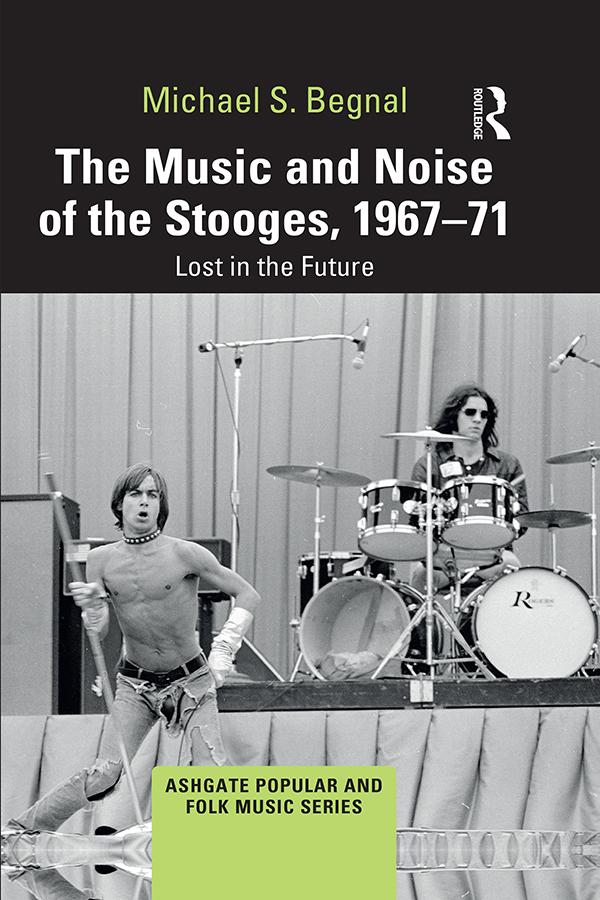
The Stooges have come to be considered one of the most important rock bands, especially in regard to the formation of punk. By emphasizing their influence on later developments, however, critics tend to overlook the significance of the band in their own context and era. The Music and Noise of the Stooges, 1967-71 addresses such oversights.
Utilizing the lenses of cultural criticism and sound studies (drawing on the thinking of Theodor Adorno, Jacques Attali, and Pierre Bourdieu, among others), as well as contemporary and archival texts, this extensively researched study analyzes the trajectory and musical output of the original Stooges. During the late 1960s and early 70s, a moment when the dissonant energy of rock’n’roll was more than ever being subsumed by the record industry, the Stooges were initially commercial failures, with the band’s "noisy" music and singer Iggy Pop’s "bizarre" onstage performances confusing their label, Elektra Records. As Begnal argues, the Stooges embodied a tension between market forces and an innovative, avant-garde artistic vision, as they sought to liberate audiences from passivity and stimulate an immanent joy in the rock’n’roll moment.
This book offers a fresh perspective on the Stooges that will appeal both to rock fans and scholars (especially in the fields of cultural studies, the long Sixties, musicology, punk studies, and performance studies).
Betal nemt med kort, Klarna, Apple Pay eller Google Pay. Ikke tilfreds? Du har altid 14 dages fortrydelsesret. Læs mere i vores vilkår. Har du spørgsmål, så send os en mail på hello@memmo.org.
Memmo gør det nemmere at studere – uanset hvor du er i verden. Hos os samler du dine kursusbøger og smarte studieværktøjer ét sted: resuméer, quizzer, podcasts og flashcards. Og så er der Ted, din studieven, der svarer på alt, du undrer dig over. Over 50 000 studerende studerer allerede her – bygget til at hjælpe dig med at lære hurtigere og stresse mindre.