
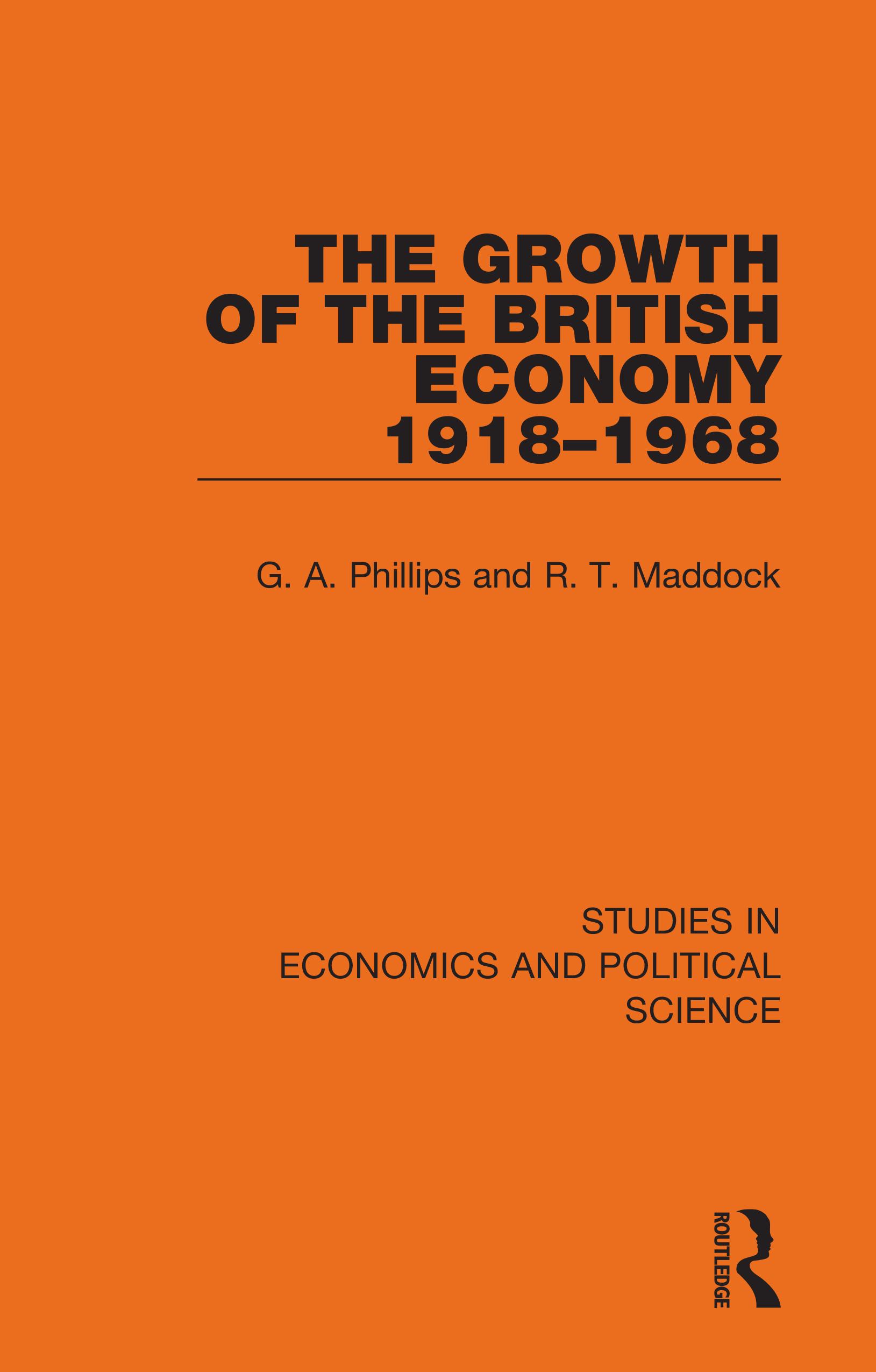
Originally published in 1973, the aim of this work was to discuss the various factors governing the rate of growth of the British economy since the First World War. It endeavours to explain – or at least to provide the groundwork for an explanation of – the movements of aggregate production and productivity in this period. In so doing it examines two particular, and partly antithetical questions: why Britain exceeded the predictions of economic theorists who, until at least the Second World War, had forecast a retardation of growth in all mature industrial economies; and why, especially since 1950, the economy has expanded less quickly than many professional economists, and almost all politicians, thought possible.
The authors look, in turn, at the changing trends in effective economic demand, both domestic and foreign; the supply of labour and capital; and the role of management and the state in fostering growth. Their object is to produce a balanced mixture of the available historical and statistical evidence and the relevant economic theory. They introduce their readers, at the same time, to the more specialized works of both disciplines.
The book is the product of a fruitful collaboration between an economist and a historian, both with considerable experience in teaching students, combining their two subjects. It marries, accordingly, the qualities of apt and informative use of evidence, wide-ranging theoretical discussion, and clarity of exposition.
Betal nemt med kort, Klarna, Apple Pay eller Google Pay. Ikke tilfreds? Du har altid 14 dages fortrydelsesret. Læs mere i vores vilkår. Har du spørgsmål, så send os en mail på hello@memmo.org.
Memmo gør det nemmere at studere – uanset hvor du er i verden. Hos os samler du dine kursusbøger og smarte studieværktøjer ét sted: resuméer, quizzer, podcasts og flashcards. Og så er der Ted, din studieven, der svarer på alt, du undrer dig over. Over 50 000 studerende studerer allerede her – bygget til at hjælpe dig med at lære hurtigere og stresse mindre.