
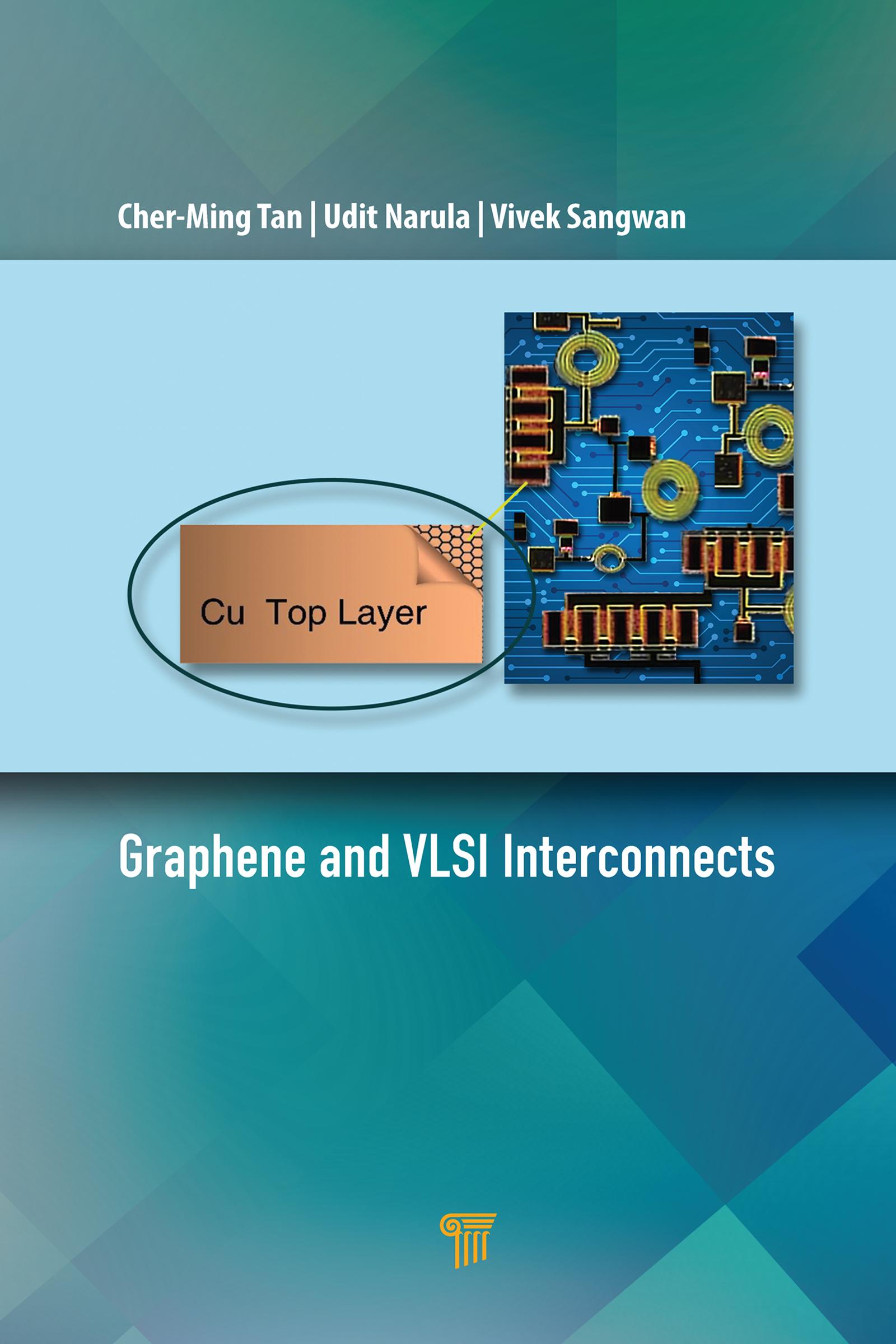
Copper (Cu) has been used as an interconnection material in the semiconductor industry for years owing to its best balance of conductivity and performance. However, it is running out of steam as it is approaching its limits with respect to electrical performance and reliability. Graphene is a non-metal material, but it can help to improve electromigration (EM) performance of Cu because of its excellent properties. Combining graphene with Cu for very large-scale integration (VLSI) interconnects can be a viable solution. The incorporation of graphene into Cu allows the present Cu fabrication back-end process to remain unaltered, except for the small step of “inserting” graphene into Cu. Therefore, it has a great potential to revolutionize the VLSI integrated circuit (VLSI-IC) industry and appeal for further advancement of the semiconductor industry. This book is a compilation of comprehensive studies done on the properties of graphene and its synthesis methods suitable for applications of VLSI interconnects. It introduces the development of a new method to synthesize graphene, wherein it not only discusses the method to grow graphene over Cu but also allows the reader to know how to optimize graphene growth, using statistical design of experiments (DoE), on Cu interconnects in order to obtain good-quality and reliable interconnects. It provides a basic understanding of graphene–Cu interaction mechanism and evaluates the electrical and EM performance of graphenated Cu interconnects.
Betal nemt med kort, Klarna, Apple Pay eller Google Pay. Ikke tilfreds? Du har altid 14 dages fortrydelsesret. Læs mere i vores vilkår. Har du spørgsmål, så send os en mail på hello@memmo.org.
Memmo gør det nemmere at studere – uanset hvor du er i verden. Hos os samler du dine kursusbøger og smarte studieværktøjer ét sted: resuméer, quizzer, podcasts og flashcards. Og så er der Ted, din studieven, der svarer på alt, du undrer dig over. Over 50 000 studerende studerer allerede her – bygget til at hjælpe dig med at lære hurtigere og stresse mindre.