
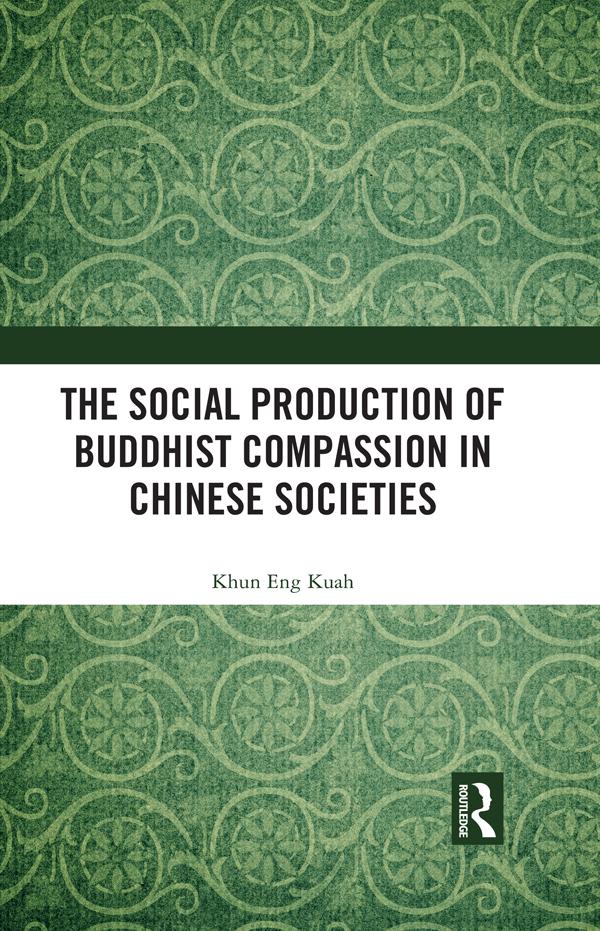
This book investigates and establishes a theoretical framework for the study of the social production of religious compassion in the era of shale modernity among Chinese communities in Hong Kong, Singapore and Taiwan. It argues that the production of Buddhist compassionate fields in the 21st century is a response to the rising social inequality and social needs of modern society. Religious compassion serves as an emotive force that propels the religious self and socio-religious groups to commit to the performance of acts of philanthropy that includes the delivery of welfare and care services, medical care, education and humanitarian aid. Through a combination of documentation analysis and anthropological research, the book examines the interconnectivity of reformist Buddhist teachings of compassion, charisma, gender and state in influencing the attitudes and actions of the sangha and Buddhist individuals in the production of Buddhist compassionate fields in a changing socio-economic landscape. It will be of interest to scholars from anthropology, sociology, religious studies and Asian studies.
Betal nemt med kort, Klarna, Apple Pay eller Google Pay. Ikke tilfreds? Du har altid 14 dages fortrydelsesret. Læs mere i vores vilkår. Har du spørgsmål, så send os en mail på hello@memmo.org.
Memmo gør det nemmere at studere – uanset hvor du er i verden. Hos os samler du dine kursusbøger og smarte studieværktøjer ét sted: resuméer, quizzer, podcasts og flashcards. Og så er der Ted, din studieven, der svarer på alt, du undrer dig over. Over 50 000 studerende studerer allerede her – bygget til at hjælpe dig med at lære hurtigere og stresse mindre.