
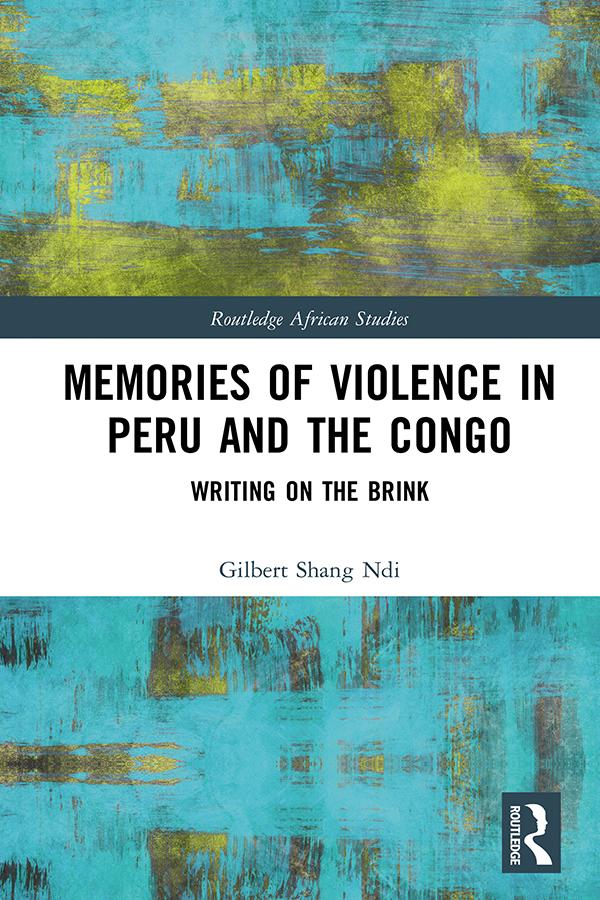
The book presents an intertextual and comparative analysis of memories of violence in Peruvian and Congolese Literature.
Examining a variety of novels that offer insightful representations of violence in their respective historical settings, the author argues that similar historical experiences between Latin America and Africa engender ethical/aesthetic responses and enhance trans-continental critical dialogues in comparative literary studies. In the same way that the drama of the Congo has become the symbolic open wound of (post)colonial dispensation in Africa, Spanish conquest in Latin America also produced spaces where the legacy of colonialism is strongly visible and memorable, providing fertile ground for the reproduction of violence. This book explores the concept and reality of violence beyond its most obvious manifestations, demonstrating how in the colonial contexts of Peru and the Congo, violence was a function of (post)colonial power dynamics and deeply engrained socio-political, economic and cultural ordering and othering. From this perspective, the work considers and re-examines theoretical contributions from authors such as John Galtung, Michel Foucault, Immanuel Wallerstein, Anibal Quijano, Frantz Fanon, Achille Mbembe, Eboussi Boulaga, Pierre Nora, Susan Sontag, Stevan Weine, Cathy Caruth and Nelson Maldonado-Torres.
This book will be of interest for scholars working on how violence is explored and represented in literature and other art forms.
Betal nemt med kort, Klarna, Apple Pay eller Google Pay. Ikke tilfreds? Du har altid 14 dages fortrydelsesret. Læs mere i vores vilkår. Har du spørgsmål, så send os en mail på hello@memmo.org.
Memmo gør det nemmere at studere – uanset hvor du er i verden. Hos os samler du dine kursusbøger og smarte studieværktøjer ét sted: resuméer, quizzer, podcasts og flashcards. Og så er der Ted, din studieven, der svarer på alt, du undrer dig over. Over 50 000 studerende studerer allerede her – bygget til at hjælpe dig med at lære hurtigere og stresse mindre.