
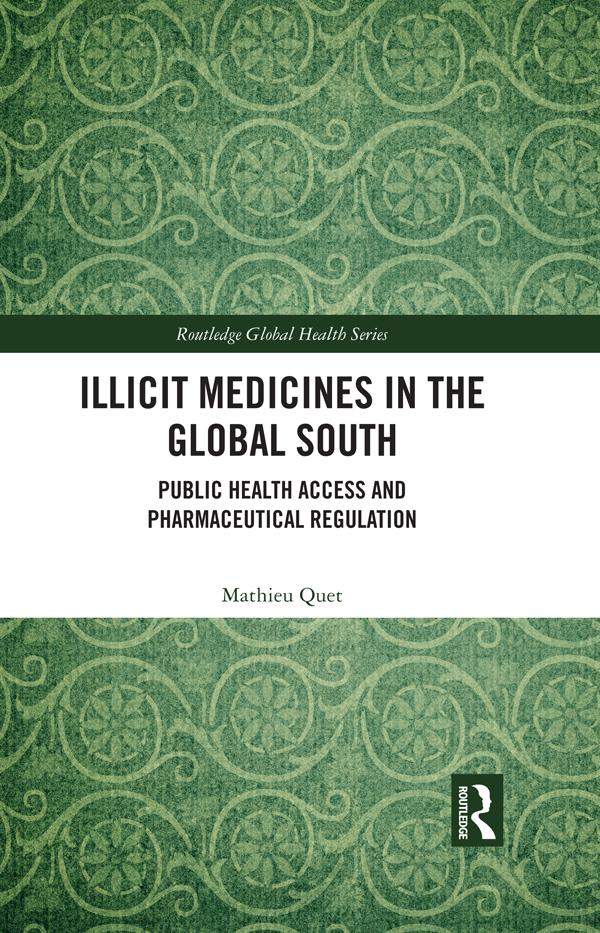
This book investigates pharmaceutical regulation and the public health issue of fake or illicit medicines in developing countries.
The book analyses the evolution of pharmaceutical capitalism, showing how the entanglement of market and health interests has come to shape global regulation. Drawing on extensive fieldwork in India, Kenya, and Europe, it demonstrates how large pharmaceutical companies have used the fight against fake medicines to serve their strategic interests and protect their monopolies, sometimes to the detriment of access to medicines in developing countries. The book investigates how the contemporary dynamics of pharmaceutical power in global markets have gone on to shape societies locally, resulting in more security-oriented policies. These processes highlight the key consequences of contemporary "logistical regimes" for access to health.
Providing important insights on how the flows of commodities, persons, and knowledge shape contemporary access to medicines in the developing countries, this book will be of considerable interest to policy makers and regulators, and to scholars and students across sociology, science and technology studies, global health, and development studies.
Betal nemt med kort, Klarna, Apple Pay eller Google Pay. Ikke tilfreds? Du har altid 14 dages fortrydelsesret. Læs mere i vores vilkår. Har du spørgsmål, så send os en mail på hello@memmo.org.
Memmo gør det nemmere at studere – uanset hvor du er i verden. Hos os samler du dine kursusbøger og smarte studieværktøjer ét sted: resuméer, quizzer, podcasts og flashcards. Og så er der Ted, din studieven, der svarer på alt, du undrer dig over. Over 50 000 studerende studerer allerede her – bygget til at hjælpe dig med at lære hurtigere og stresse mindre.