
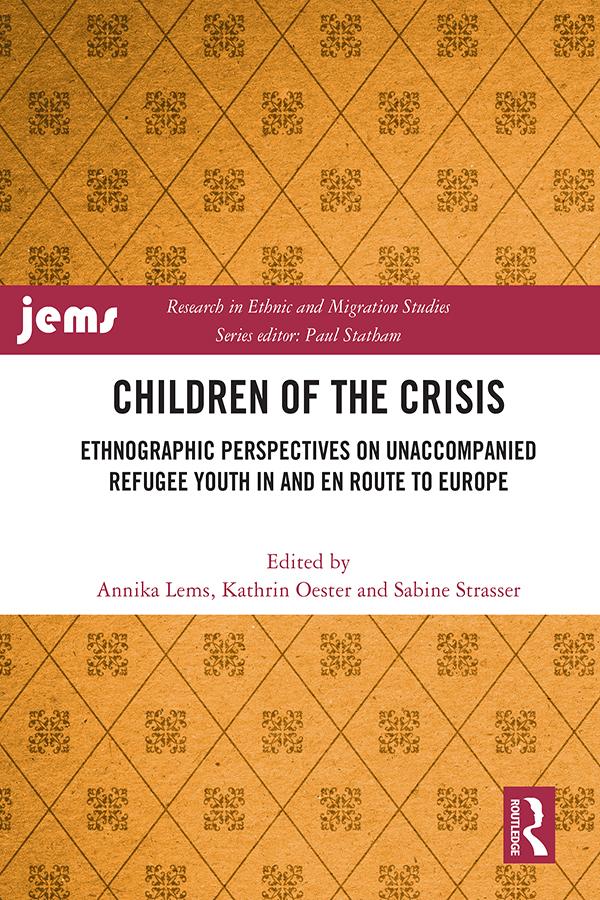
Every year, thousands of young people on the run from war and persecution, or escaping poverty and chronic instability, make their way to Europe without their parents. Embarking on long and often dangerous journeys, they have either become separated from their families on the way or set out on their own. In recent years, the number of unaccompanied minors arriving in Europe has risen drastically. It has led to a major shift in perception in European countries, initiating a wealth of policies and infrastructures targeted specifically at unaccompanied child refugees.
This book investigates the emergence of the unaccompanied child refugee as a ‘crisis figure’. It shows how the sense of exceptionality attached to this figure translates into ambiguous and at times extremely contradictory social practices that have far-reaching effects on the lives of refugee youth. By bringing together ethnographically driven research on unaccompanied minors in some of the core arrival and transit countries in or into Europe, it shows the divergent ways ideas on childhood, deservingness and vulnerability are interpreted, lived, and grappled with on the ground. By laying the focus on young people’s own experiences and perspectives, it establishes a deeper understanding of the ways unaccompanied asylum seekers live and make sense of shifting social terrains.
The chapters in this book were originally published as a special issue of the Journal of Ethnic and Migration Studies.
Betal nemt med kort, Klarna, Apple Pay eller Google Pay. Ikke tilfreds? Du har altid 14 dages fortrydelsesret. Læs mere i vores vilkår. Har du spørgsmål, så send os en mail på hello@memmo.org.
Memmo gør det nemmere at studere – uanset hvor du er i verden. Hos os samler du dine kursusbøger og smarte studieværktøjer ét sted: resuméer, quizzer, podcasts og flashcards. Og så er der Ted, din studieven, der svarer på alt, du undrer dig over. Over 50 000 studerende studerer allerede her – bygget til at hjælpe dig med at lære hurtigere og stresse mindre.