
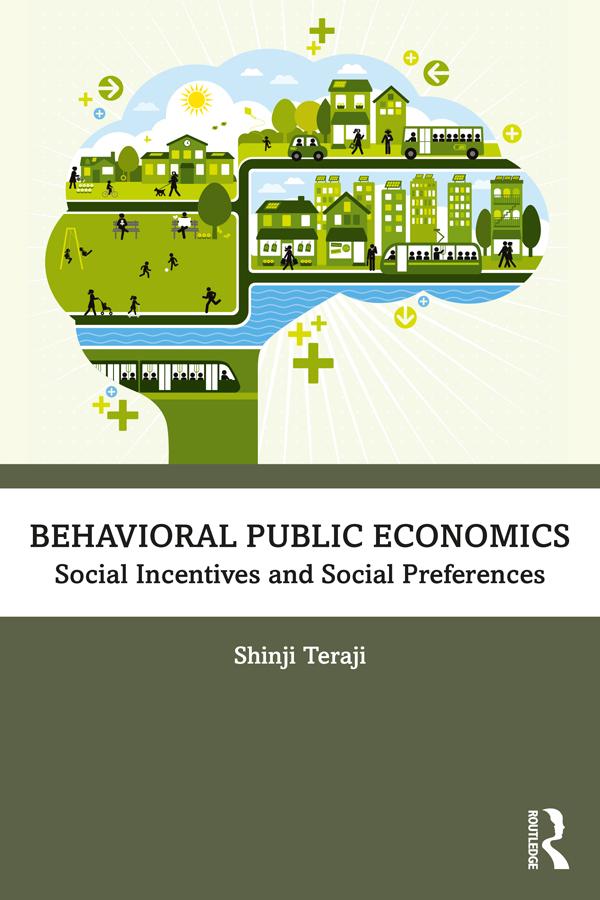
Behavioral Public Economics shows how standard public economics can be improved using insights from behavioral economics. Public economics typically lists four market failures that may justify government intervention in markets—imperfect competition (or natural monopoly), externalities, public goods, and asymmetric information. Under the rational choice paradigm (‘agents choose what is best for them’), public economics has examined the welfare effects of policy. Recent research in behavioral economics highlights a fifth market failure—individuals may make mistakes in pursuing their own well-being. This book calls for a rethinking of assumptions of individual behavior and provides a good foundation for public economic theory.
Key features:
- Introduces behavioral perspectives into public economics.
- Explains why economic incentives often undermine social preferences.
- Reveals that social incentives matter for public policy.
This book will be an invaluable resource for researchers and postgraduate students in public economics, behavioral economics, and public policy.
Betal nemt med kort, Klarna, Apple Pay eller Google Pay. Ikke tilfreds? Du har altid 14 dages fortrydelsesret. Læs mere i vores vilkår. Har du spørgsmål, så send os en mail på hello@memmo.org.
Memmo gør det nemmere at studere – uanset hvor du er i verden. Hos os samler du dine kursusbøger og smarte studieværktøjer ét sted: resuméer, quizzer, podcasts og flashcards. Og så er der Ted, din studieven, der svarer på alt, du undrer dig over. Over 50 000 studerende studerer allerede her – bygget til at hjælpe dig med at lære hurtigere og stresse mindre.