
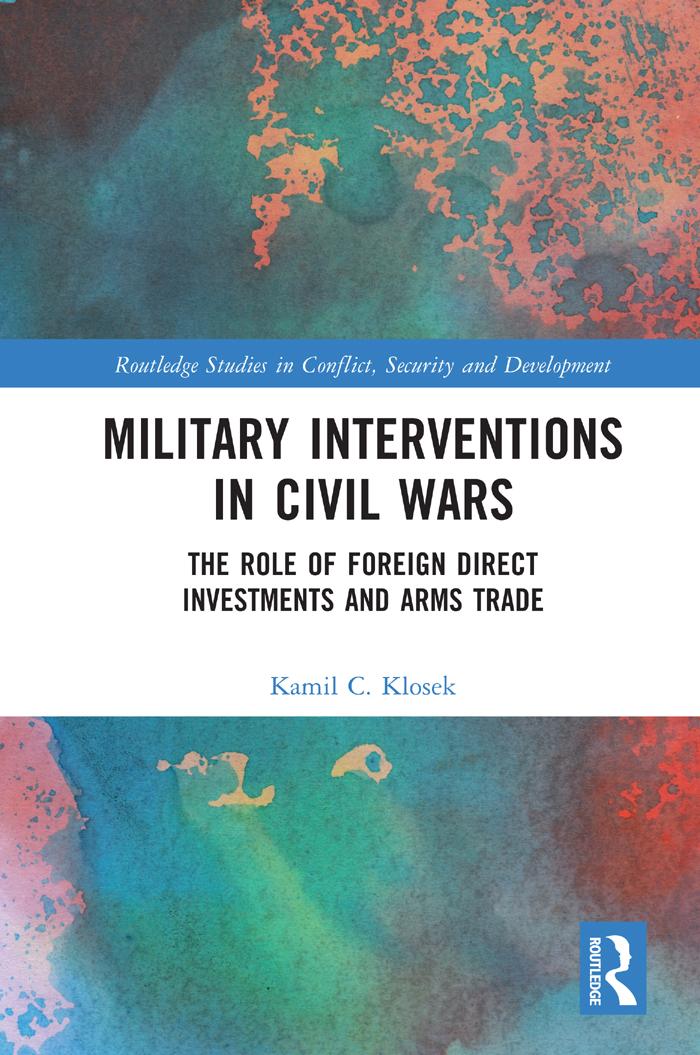
This book examines the motivations of military interventions in civil wars, with a focus on the role of foreign direct investment (FDI) and the arms trade.
The book assumes a state-centric view of international relations, whereby states remain the dominant actors on the world stage. It breaks away from the conventional wisdom that military interventions for economic interests are a product of domestic corporate lobbying and instead argues that states intervene to protect (but not advance) existing corporate investments for national strategic interests. The work introduces new concepts of military interventions – proxy interventions and indirect interventions – which are determined by arms trade relationships between the permanent members of the United Nations Security Council (UNSC) and recipient countries, and utilizes insights from principal-agent theory, whereby the permanent members of the UNSC delegate military interventions in civil wars to other countries. The book concludes by examining the transformative effect of FDI on the willingness of a state to intervene militarily in a civil war, focusing on the case of China in Sub-Saharan Africa. Provided that the current positive trends in FDI and arms trade persist, we are likely to see more and not fewer military interventions in the future.
This book will be of much interest to students of civil wars, military interventions, security studies and International Relations.
Betal nemt med kort, Klarna, Apple Pay eller Google Pay. Ikke tilfreds? Du har altid 14 dages fortrydelsesret. Læs mere i vores vilkår. Har du spørgsmål, så send os en mail på hello@memmo.org.
Memmo gør det nemmere at studere – uanset hvor du er i verden. Hos os samler du dine kursusbøger og smarte studieværktøjer ét sted: resuméer, quizzer, podcasts og flashcards. Og så er der Ted, din studieven, der svarer på alt, du undrer dig over. Over 50 000 studerende studerer allerede her – bygget til at hjælpe dig med at lære hurtigere og stresse mindre.