
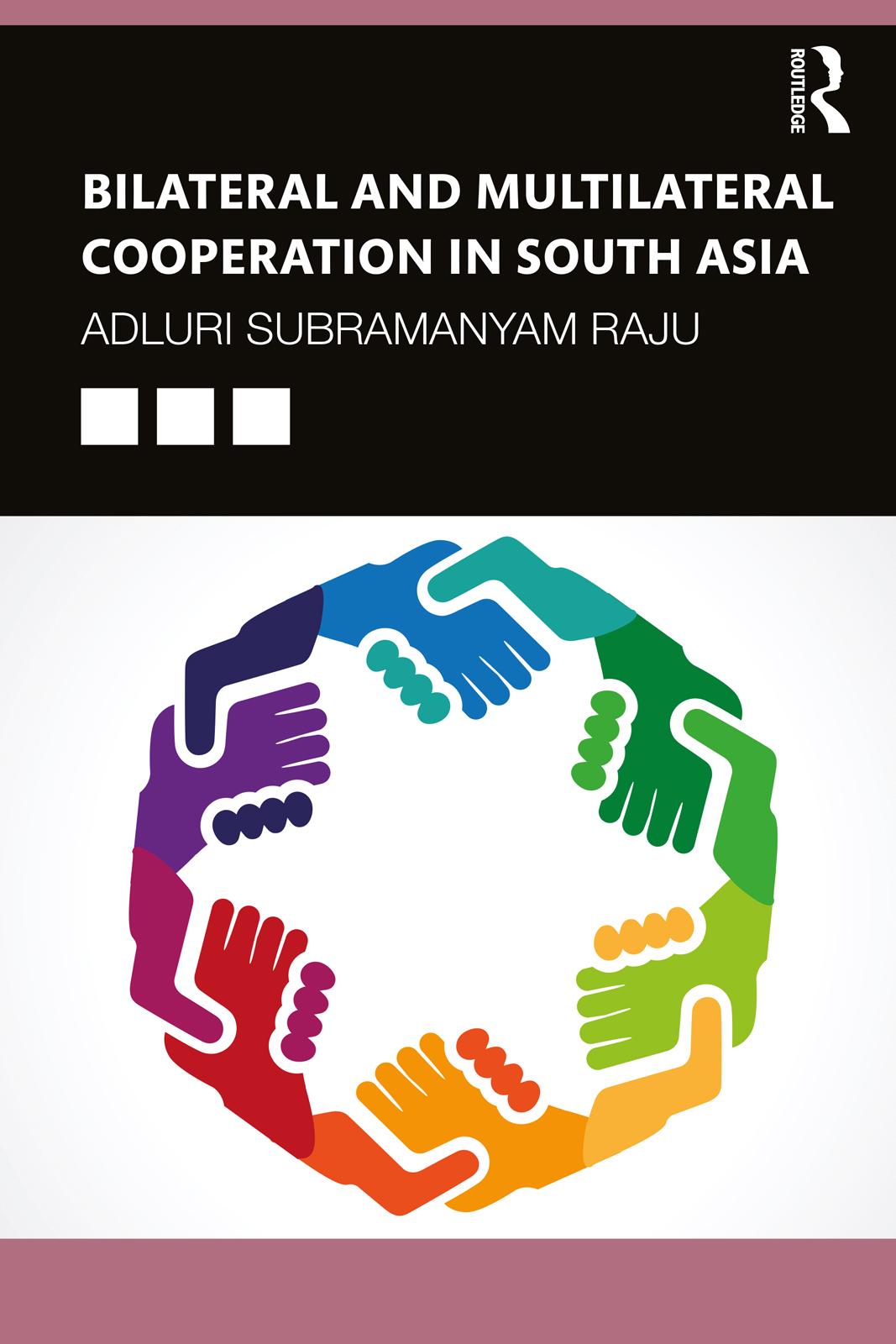
This book examines how bilateralism and multilateralism serve as cornerstones in bringing countries together to enhance regional cooperation. It explores the unfolding dynamics of bilateral and multilateral relationships in South Asia and looks at how factors like the absence of shared identities or common threats from external sources, a lack of trust, and suspicion are manifesting as obstacles for regional cooperation.
With case studies from various constituent countries, the volume studies themes such as economic cooperation in South Asia, connections through sub-regional initiatives, migration and refugee problems in the region, SAARC and terrorism, the Pashtun factor in Afghanistan–Pakistan relations, India’s interests in ASEAN and BIMSTEC, the nuclear dynamics of India–Pakistan relations, India–Bangladesh connectivity issues, Sri Lanka as a troubled island nation, and Afghanistan’s relations with the Kashmir Valley. It discusses the implications of these long-standing issues that have stood as impediments to regional cooperation and bringing new perspectives to enable greater understanding and probable solutions.
A comprehensive and accessible volume, it will be useful for scholars and researchers of international relations, international trade, South Asian studies, SAARC, regional development, international and multilateral trade, political studies, geo-politics, strategic and defence studies, and peace and conflict resolution.
Betal nemt med kort, Klarna, Apple Pay eller Google Pay. Ikke tilfreds? Du har altid 14 dages fortrydelsesret. Læs mere i vores vilkår. Har du spørgsmål, så send os en mail på hello@memmo.org.
Memmo gør det nemmere at studere – uanset hvor du er i verden. Hos os samler du dine kursusbøger og smarte studieværktøjer ét sted: resuméer, quizzer, podcasts og flashcards. Og så er der Ted, din studieven, der svarer på alt, du undrer dig over. Over 50 000 studerende studerer allerede her – bygget til at hjælpe dig med at lære hurtigere og stresse mindre.