
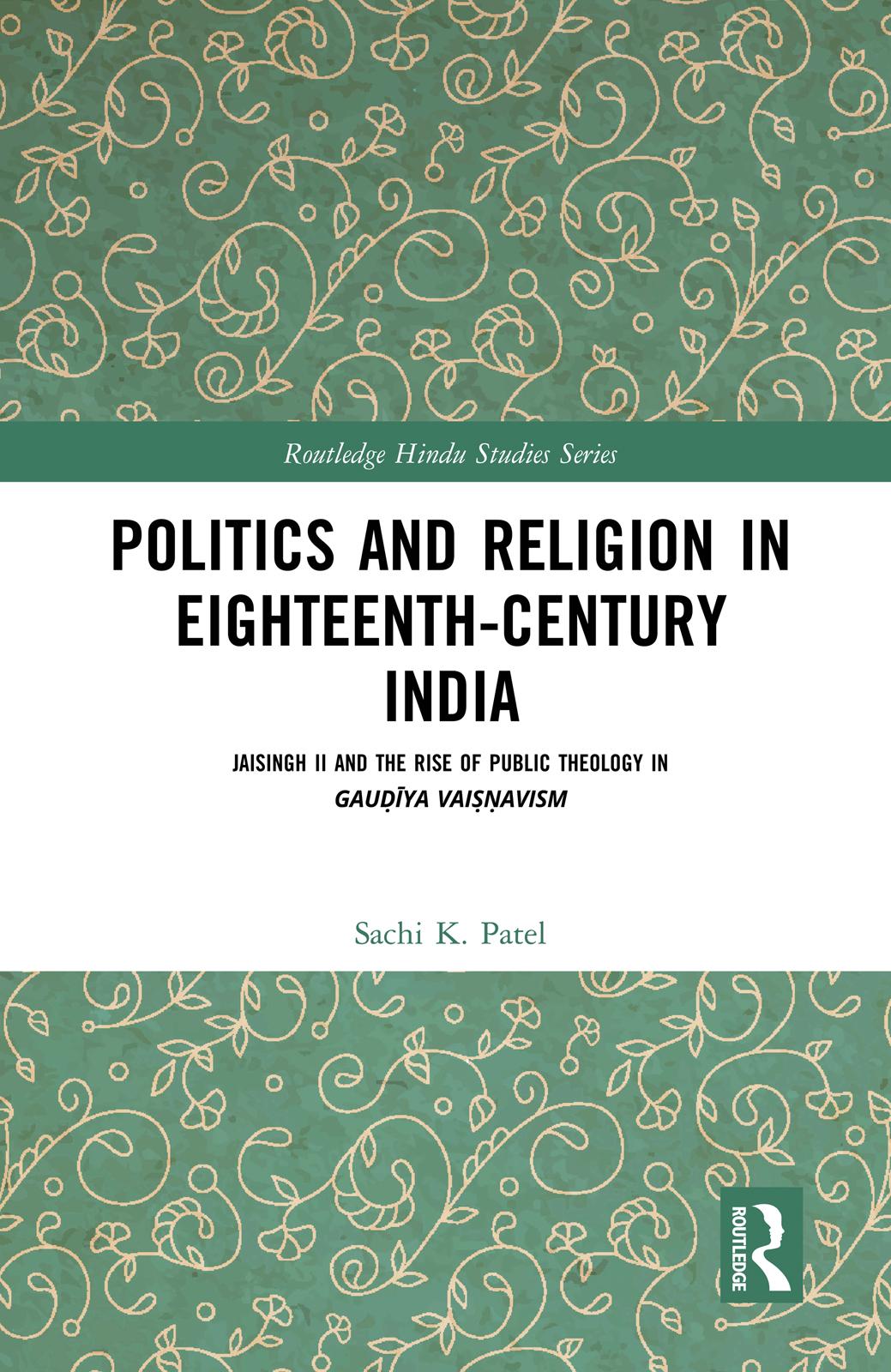
This book explores the contribution of Gauḍīya Vaiṣṇava theology to polity and public engagement during the reign of Jaisingh II in the early eighteenth century in North India.
The book analyses specialised treatises produced by the Gauḍīya Vaiṣṇavas which provide theological foundations to endorse and encourage responsible public conduct. Using a two-fold approach, the book offers a close reading and examination of Sanskrit primary sources combined with an exploration of the key themes in these works in light of the wider political context. These works were born in a precise historical context; thus, to fully appreciate these works, this book adopts an approach that smudges the boundaries between history, religion and politics. It provides a historical account of the rise of the Kachvāhā clan to become the chief partners of the Mughal regime, exploring the effects, reign and governance of the celebrated Kachvāhā King Jaisingh II and examines the Gauḍīya Vaiṣṇava community’s trials and tribulations as they entered an intensely political world.
A detailed analysis of a fascinating period within Gauḍīa Vaiṣṇva history, this book will be of interest to scholars in the fields of South Asian Studies, Indology, Religious Studies, South Asian History and Hindu Studies.
Betal nemt med kort, Klarna, Apple Pay eller Google Pay. Ikke tilfreds? Du har altid 14 dages fortrydelsesret. Læs mere i vores vilkår. Har du spørgsmål, så send os en mail på hello@memmo.org.
Memmo gør det nemmere at studere – uanset hvor du er i verden. Hos os samler du dine kursusbøger og smarte studieværktøjer ét sted: resuméer, quizzer, podcasts og flashcards. Og så er der Ted, din studieven, der svarer på alt, du undrer dig over. Over 50 000 studerende studerer allerede her – bygget til at hjælpe dig med at lære hurtigere og stresse mindre.