
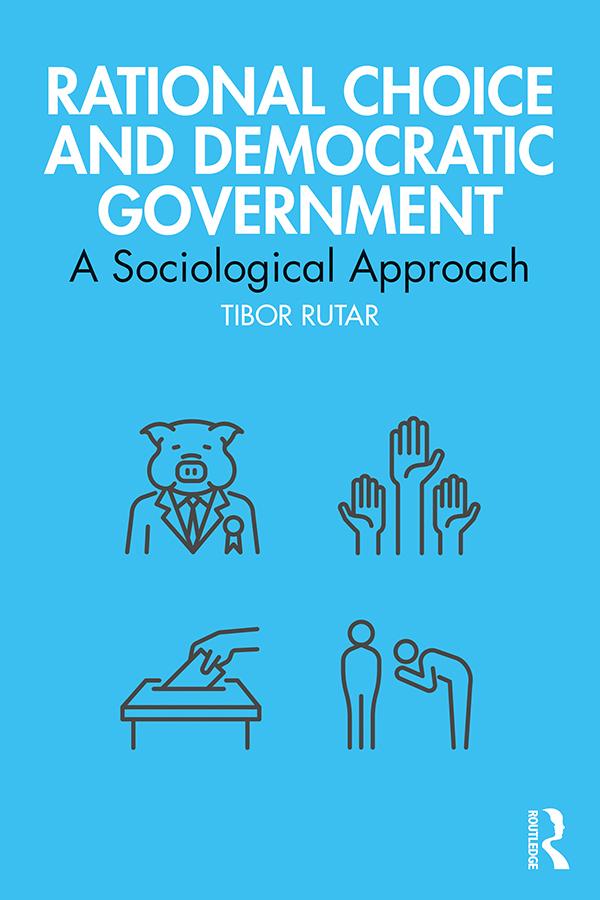
Drawing on a range of data from across disciplines, this book explores a series of fundamental questions surrounding the nature, working and effects of democracy, considering the reasons for the emergence and spread of democratic government, the conditions under which it endures or collapses – and the role of wealth in this process – and the peaceful nature of dealings between democracies. With emphasis on the ‘ordinary’ voter, the author employs rational choice theory to examine the motivations of voters and their levels of political knowledge and rationality, as well as the special interests, incentives and corruption of politicians. A theoretically informed and empirically illustrated study of the birth and downfall of democracies, the extent of voters’ political knowledge and ignorance, the logic of political behaviour in both open and closed regimes, and the international effects of democratic rule, Rational Choice and Democratic Government: A Sociological Approach will appeal to scholars with interests in political sociology, political psychology, economics and political science.
Betal nemt med kort, Klarna, Apple Pay eller Google Pay. Ikke tilfreds? Du har altid 14 dages fortrydelsesret. Læs mere i vores vilkår. Har du spørgsmål, så send os en mail på hello@memmo.org.
Memmo gør det nemmere at studere – uanset hvor du er i verden. Hos os samler du dine kursusbøger og smarte studieværktøjer ét sted: resuméer, quizzer, podcasts og flashcards. Og så er der Ted, din studieven, der svarer på alt, du undrer dig over. Over 50 000 studerende studerer allerede her – bygget til at hjælpe dig med at lære hurtigere og stresse mindre.