
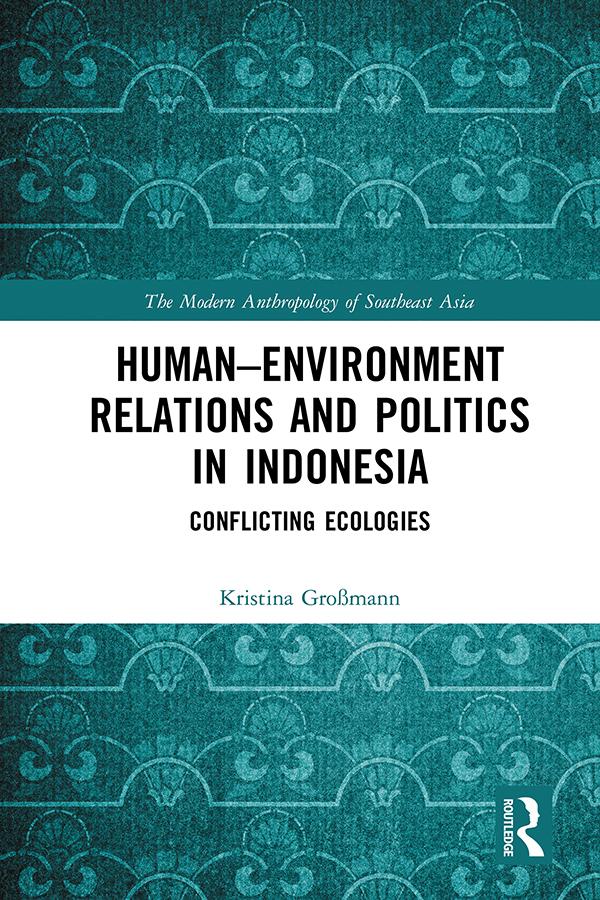
This book analyses how people in Kalimantan, the Indonesian part of the island of Borneo, relate to their environment in different political and historical contexts.
Drawing on multi-sited ethnographic studies of Dayak people, the indigenous inhabitants of Borneo, the book examines how human-environment relationships differ and collide. These "conflicting ecologies" are based on people's relation to the "environment", which encompasses the non-human realm in the widest sense, including forests, rivers, land, natural resources, animals and spirits. The author argues that relationality and power are decisive factors for the understanding and analysis of peoples’ ecologies. The book integrates different theoretical approaches, sheds light upon the environmental transformation taking place in Indonesia, as well as the social exclusion it entails, and highlights the conceptual shortcomings of universalistic concepts of human-environment relations.
An exploration of evolving human-nature relations, this book will be of interest to academics studying political ecology, environmental anthropology, sustainability sciences, political sciences, development studies, human geography, human ecology, Southeast Asian studies, and Asian studies.
Betal nemt med kort, Klarna, Apple Pay eller Google Pay. Ikke tilfreds? Du har altid 14 dages fortrydelsesret. Læs mere i vores vilkår. Har du spørgsmål, så send os en mail på hello@memmo.org.
Memmo gør det nemmere at studere – uanset hvor du er i verden. Hos os samler du dine kursusbøger og smarte studieværktøjer ét sted: resuméer, quizzer, podcasts og flashcards. Og så er der Ted, din studieven, der svarer på alt, du undrer dig over. Over 50 000 studerende studerer allerede her – bygget til at hjælpe dig med at lære hurtigere og stresse mindre.