
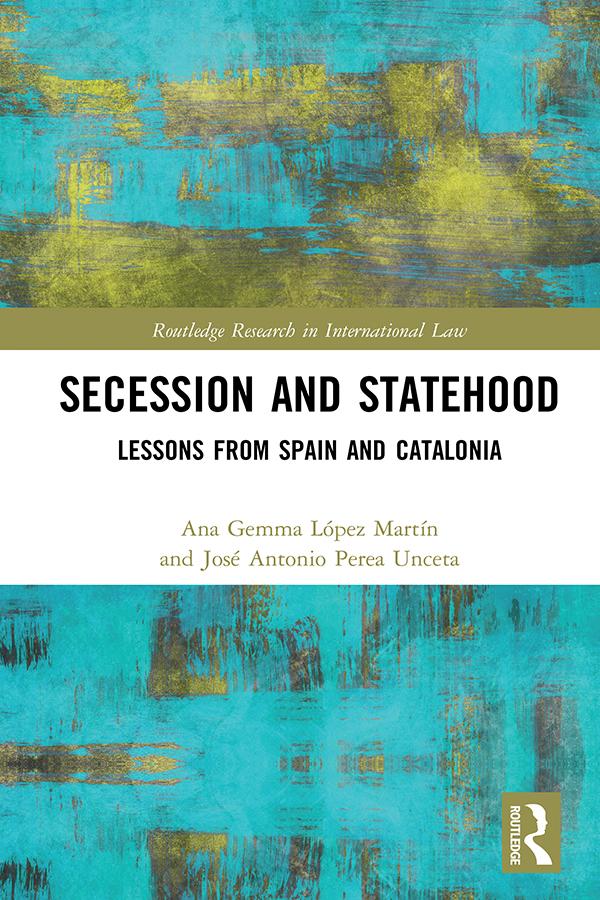
This book analyses the complex phenomenon of secession as a form of creation of States from the perspective of international law. As opposed to other approaches based on the analysis of the political foundation of the secessionist processes or on the construction of a legal basis that justifies the existing practice, the aim is to provide an explanation of secession as a practice covered neither by the legal regime of the United Nations for the self-determination of colonial peoples nor by the regulations and guidelines relating to the human rights of minorities and indigenous populations, both in the UN and in regional organisations (Organization of American States, Council of Europe or African Union).
It is stated that secession is a practice that does not comply with international peremptory norms – such as those that prohibit going against the territorial integrity of the States, the use of force or intervention in the internal affairs of other States. Even being aware of the inevitable consequences of the effective creation of States and other de facto entities on trade relations, communications and the rights of individuals, among other matters, secession is a practice that should lead to an obligation of nonrecognition by States and by international organisations. As an example of this practice, the secessionist process in Catalonia since 2014 is explained and studied.
Betal nemt med kort, Klarna, Apple Pay eller Google Pay. Ikke tilfreds? Du har altid 14 dages fortrydelsesret. Læs mere i vores vilkår. Har du spørgsmål, så send os en mail på hello@memmo.org.
Memmo gør det nemmere at studere – uanset hvor du er i verden. Hos os samler du dine kursusbøger og smarte studieværktøjer ét sted: resuméer, quizzer, podcasts og flashcards. Og så er der Ted, din studieven, der svarer på alt, du undrer dig over. Over 50 000 studerende studerer allerede her – bygget til at hjælpe dig med at lære hurtigere og stresse mindre.