
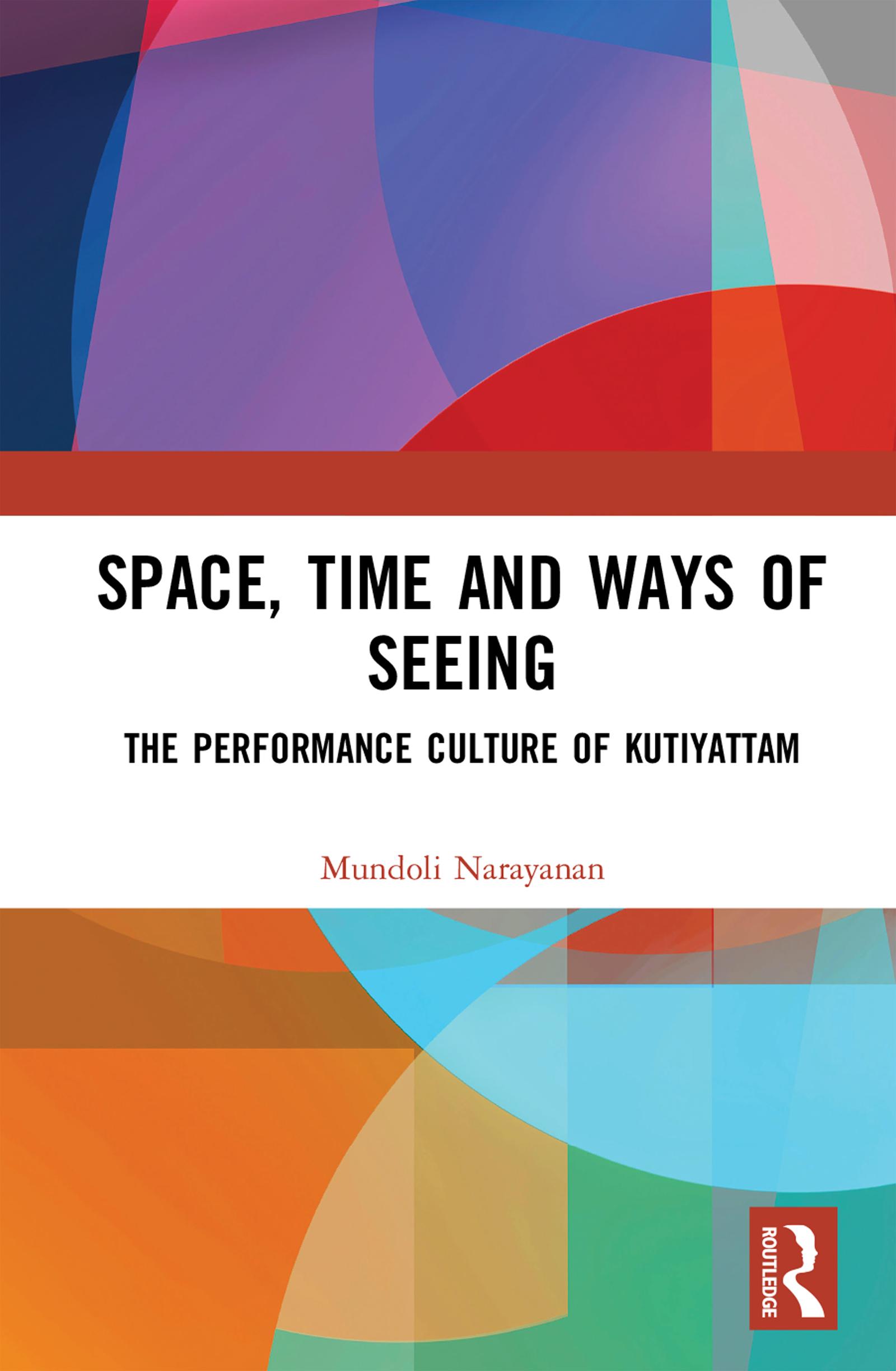
This volume explores the constitutive role played by space in the performance of Kutiyattam. The only surviving form of Sanskrit theatre, Kutiyattam is distinctive in terms of its performance conventions and its unique culture of extensive elaboration and interpretation. Drawing upon the concepts of phenomenology on the processes of perception, particularly on the works of Edmund Husserl, Martin Heidegger and Maurice Merleau-Ponty, it analyses the role of space in the communicative structures of performance of Kutiyattam and its contribution to the production of meaning in theatre, especially in the context of contemporary theatre.
The book explores the theatrical event as a phenomenon that comes into existence through a triangular relationship among the ‘ways of being’ of the performers, the ‘ways of seeing’ of the audience, and the space which brings them together. Based on this formulation, Kutiyattam is approached as a ‘theatre of elaboration,’ made possible by the ‘intimate,’ ‘proximal’ ways of seeing of the audience, in the particular theatrical space of the kūttampalaṃs, the temple theatres, where Kutiyattam has customarily been performed for more than five centuries.
This volume will be of great interest to scholars and researchers of cultural studies, theatre and performance studies, cultural anthropology, phenomenology and South Asian studies.
Betal nemt med kort, Klarna, Apple Pay eller Google Pay. Ikke tilfreds? Du har altid 14 dages fortrydelsesret. Læs mere i vores vilkår. Har du spørgsmål, så send os en mail på hello@memmo.org.
Memmo gør det nemmere at studere – uanset hvor du er i verden. Hos os samler du dine kursusbøger og smarte studieværktøjer ét sted: resuméer, quizzer, podcasts og flashcards. Og så er der Ted, din studieven, der svarer på alt, du undrer dig over. Over 50 000 studerende studerer allerede her – bygget til at hjælpe dig med at lære hurtigere og stresse mindre.