
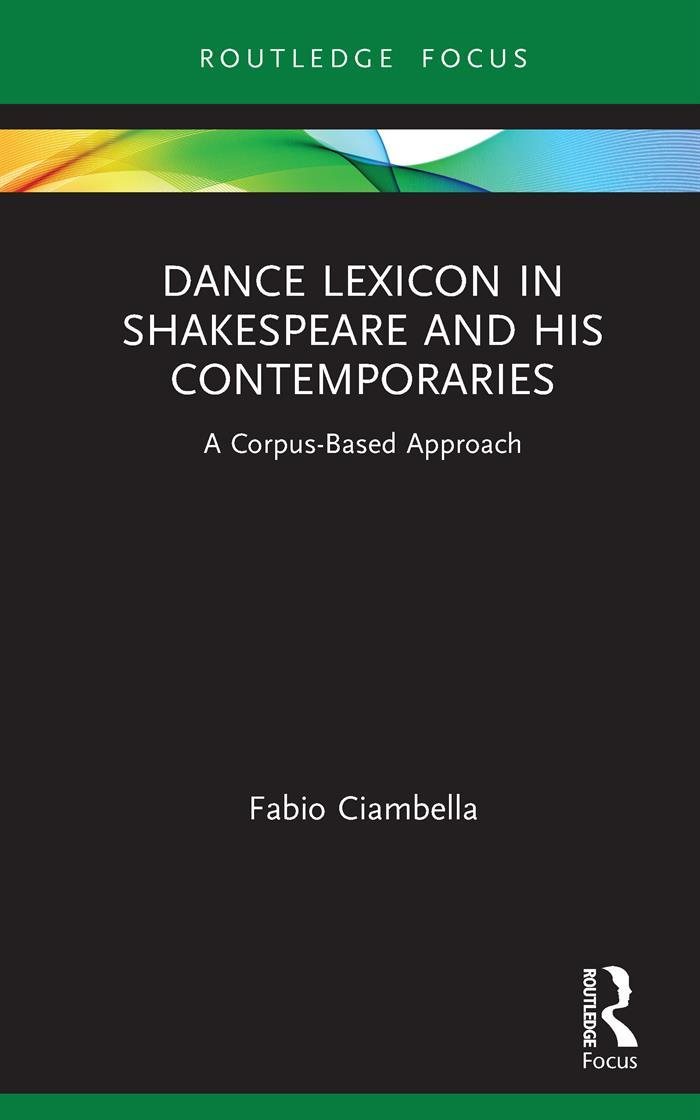
This book provides a thorough analysis of terpsichorean lexis in Renaissance drama. Besides considering not only the Shakespearean canon but also the Bard’s contemporaries (e.g., dramatists as John Marston and Ben Jonson among the most refined Renaissance dance aficionados), the originality of this volume is highlighted in both its methodology and structure.
As far as methods of analysis are concerned, corpora such as the VEP Early Modern Drama collection and EEBO, and corpus analysis tools such as #LancsBox are used in order to offer the widest range of examples possible from early modern plays and provide co-textual references for each dance. Examples from Renaissance playwrights are fundamental for the analysis of connotative meanings of the dances listed and their performative, poetic and metaphoric role in sixteenth- and seventeenth-century drama.
This study will be of great interest to Renaissance researchers, lexicographers and dance historians.
Betal nemt med kort, Klarna, Apple Pay eller Google Pay. Ikke tilfreds? Du har altid 14 dages fortrydelsesret. Læs mere i vores vilkår. Har du spørgsmål, så send os en mail på hello@memmo.org.
Memmo gør det nemmere at studere – uanset hvor du er i verden. Hos os samler du dine kursusbøger og smarte studieværktøjer ét sted: resuméer, quizzer, podcasts og flashcards. Og så er der Ted, din studieven, der svarer på alt, du undrer dig over. Over 50 000 studerende studerer allerede her – bygget til at hjælpe dig med at lære hurtigere og stresse mindre.