
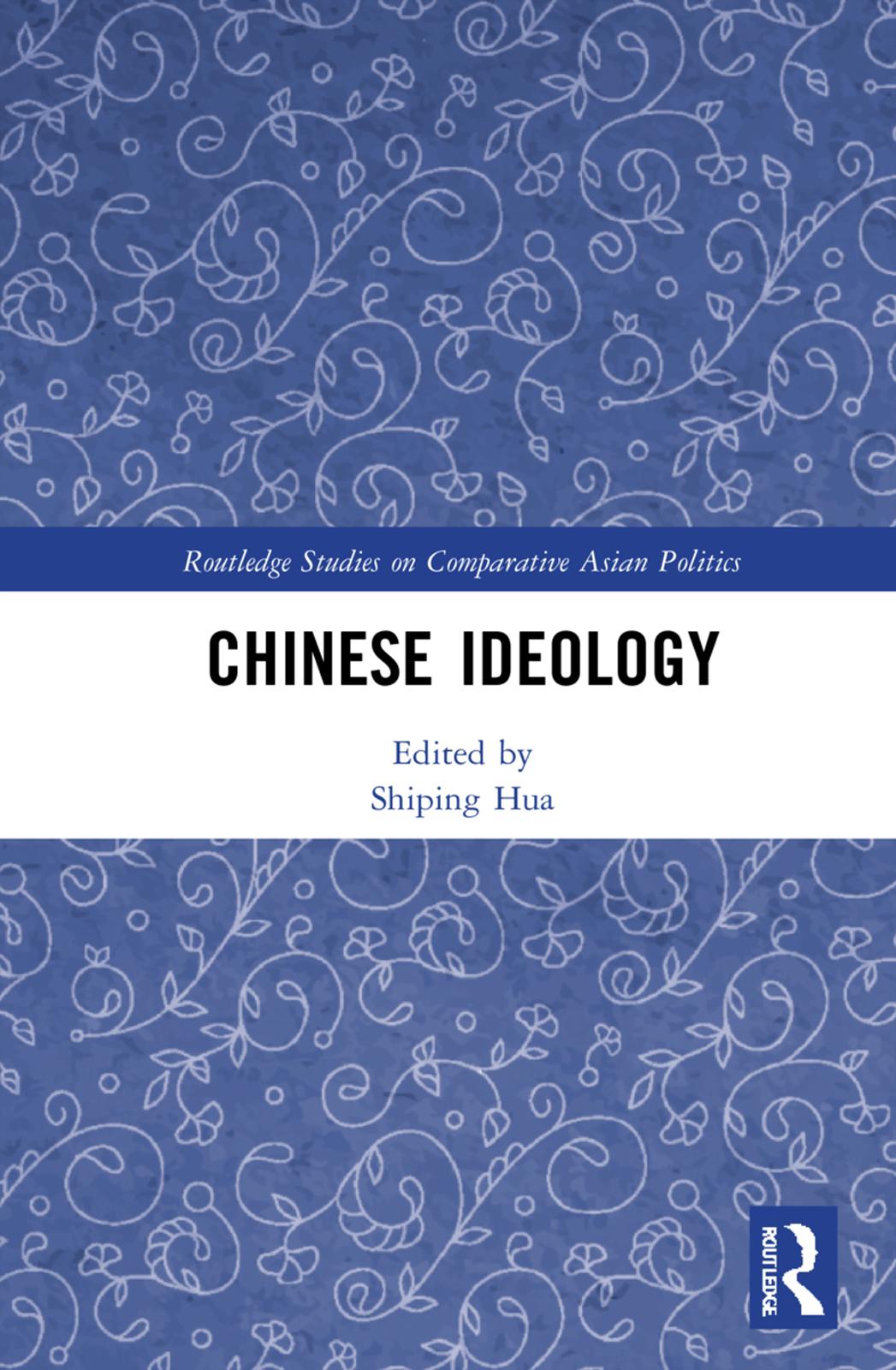
This book traces ideological trends in China through a range of historical and comparative perspectives, spanning the ancient belief systems of Confucianism, Legalism, and Taoism to political ideologies of the present day.
Chapters in this edited volume are divided into four parts: traditional Chinese ideology, ideology of the Republic, Maoism as an ideology and post Mao ideology, zoning in on specific historical periods from the Qing and Republic periods to the reform era, as well as the period after the founding of the PRC – through which Mao Zedong’s political thought is notably discussed from the perspective of epistemology and the global impact of Maoism. Key topics include Sun Yat-sen as the Father of the Republic, Li Dazhao, the early Marxist theoretician, Chiang Kai-shek and his nationalist Fascism, Liang Qichao’s emotional appeals through liberal political discourse, Jiang Zemin’s theory of ‘Three Represents’ de-emphasising the Marxist concept of class, Hu Jintao’s theory of ‘Harmonious Society’ and Xi Jinping’s political thought. Contributions from world-leading scholars take both comparative and critical approaches, examining not only how studies of ideology are relevant, but how Chinese ideologies have retained their own characteristics distinct to the West.
As the first comprehensive study of this subject in the English language, Chinese Ideology will appeal to students and scholars of philosophy, political science, history, and Asian studies more broadly.
Betal nemt med kort, Klarna, Apple Pay eller Google Pay. Ikke tilfreds? Du har altid 14 dages fortrydelsesret. Læs mere i vores vilkår. Har du spørgsmål, så send os en mail på hello@memmo.org.
Memmo gør det nemmere at studere – uanset hvor du er i verden. Hos os samler du dine kursusbøger og smarte studieværktøjer ét sted: resuméer, quizzer, podcasts og flashcards. Og så er der Ted, din studieven, der svarer på alt, du undrer dig over. Over 50 000 studerende studerer allerede her – bygget til at hjælpe dig med at lære hurtigere og stresse mindre.