
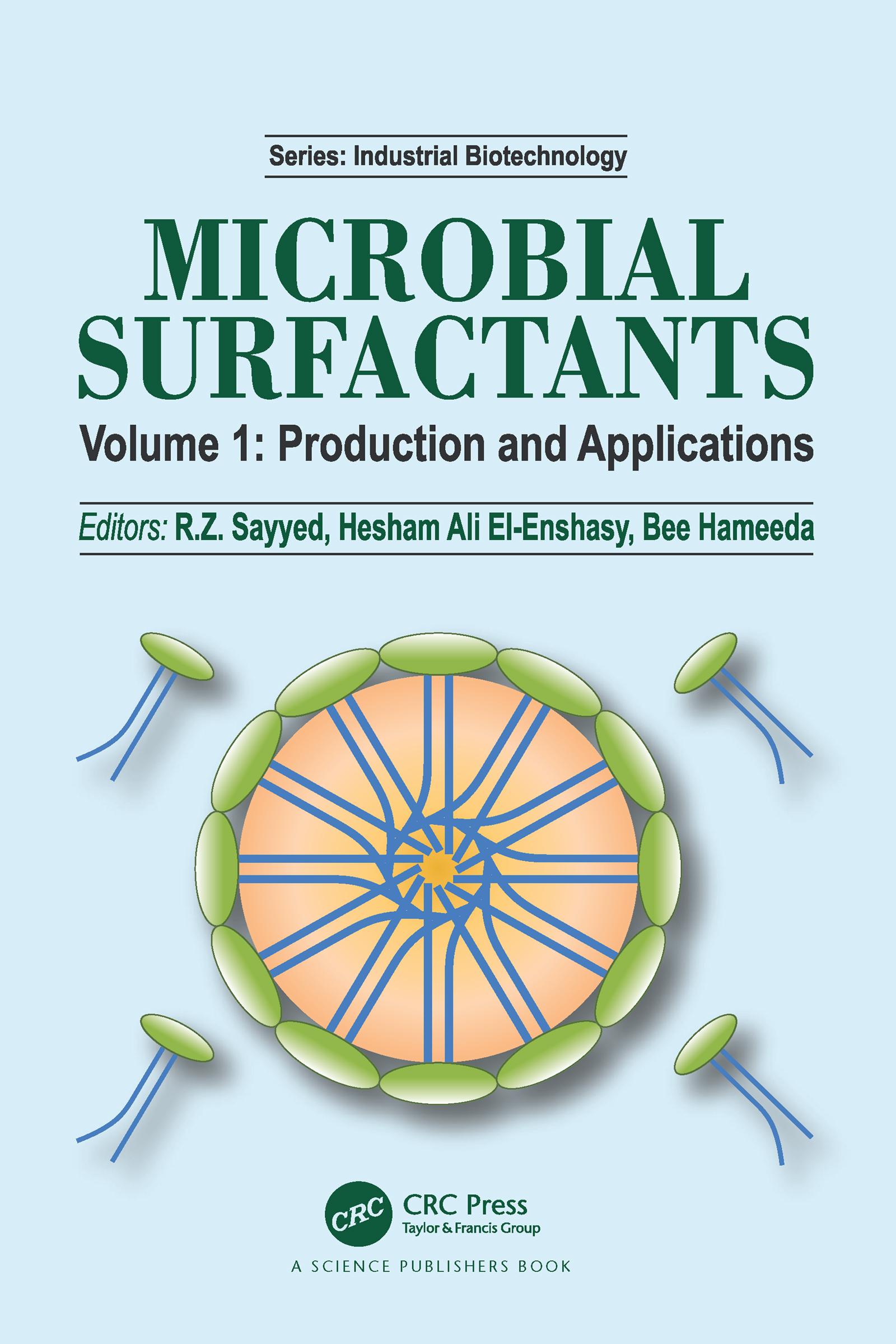
Biosurfactants are the surface-active biomolecules produced by microorganisms. Biosurfactants have gained commercial significance due to their unique properties, such as high surface activity, high specificity, low toxicity, tolerance to pH, temperature and ionic strength, biodegradability, excellent emulsifying and demulsifying ability, antimicrobial activity, ability to work under extreme conditions, and relative ease of preparation. Biosurfactants are used in several industries, including organic chemicals, petroleum, petrochemicals, mining, metallurgy (mainly bioleaching), agrochemicals, fertilizers, foods, beverages, cosmetics, pharmaceuticals and many others.
The aim of this book is to highlight key aspects from basics to advanced concepts, classifications, production and applications in various fields such as agriculture, health, bioremediation, industries, pharmaceutical, oil recovery, environment, and nanotechnology. It also serves as an excellent and expansive literature on fermentation, recovery, genomics, and metagenomics of biosurfactant production. The book focuses on the biosurfactant production from bacteria, the diversity of biosurfactant producing bacteria, and industrial need of biosurfactant.
Betal nemt med kort, Klarna, Apple Pay eller Google Pay. Ikke tilfreds? Du har altid 14 dages fortrydelsesret. Læs mere i vores vilkår. Har du spørgsmål, så send os en mail på hello@memmo.org.
Memmo gør det nemmere at studere – uanset hvor du er i verden. Hos os samler du dine kursusbøger og smarte studieværktøjer ét sted: resuméer, quizzer, podcasts og flashcards. Og så er der Ted, din studieven, der svarer på alt, du undrer dig over. Over 50 000 studerende studerer allerede her – bygget til at hjælpe dig med at lære hurtigere og stresse mindre.