
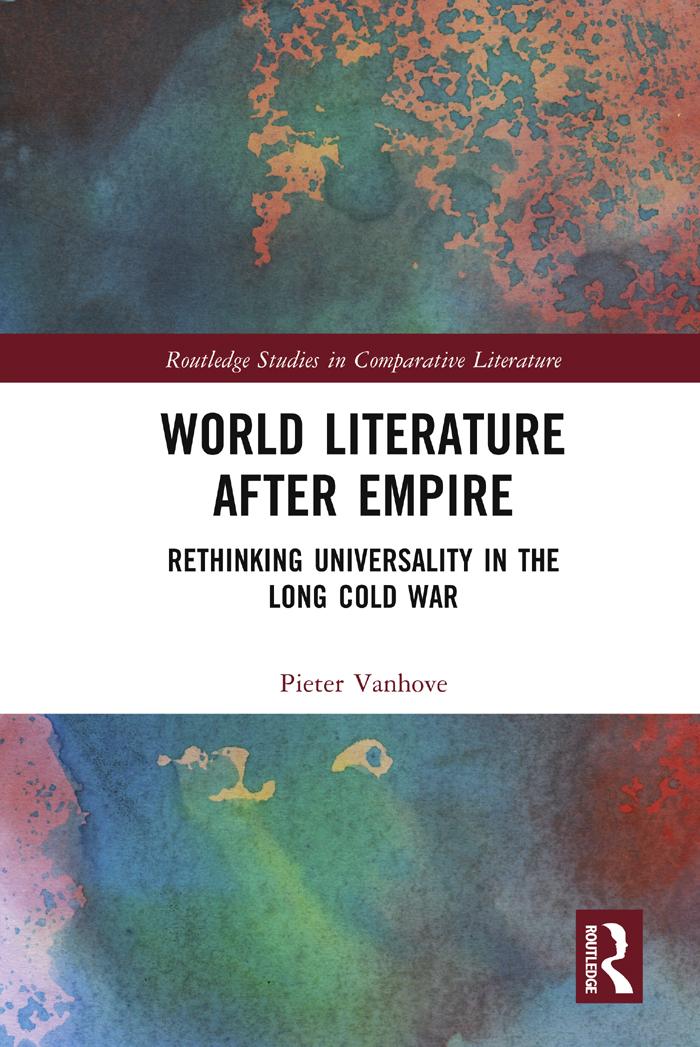
This book makes the case that the idea of a "world" in the cultural and philosophical sense is not an exclusively Western phenomenon. During the Cold War and in the wake of decolonization a plethora of historical attempts were made to reinvent the notions of world literature, world art, and philosophical universality from an anticolonial perspective. Contributing to recent debates on world literature, the postcolonial, and translatability, the book presents a series of interdisciplinary and multilingual case studies spanning Europe, the United States, and China. The case studies illustrate how individual anti-imperialist writers and artists set out to remake the conception of the world in their own image by offering a different perspective centered on questions of race, gender, sexuality, global inequality, and class. The book also discusses how international cultural organizations like the Afro-Asian Writers’ Bureau, UNESCO, and PEN International attempted to shape this debate across Cold War divides.
Betal nemt med kort, Klarna, Apple Pay eller Google Pay. Ikke tilfreds? Du har altid 14 dages fortrydelsesret. Læs mere i vores vilkår. Har du spørgsmål, så send os en mail på hello@memmo.org.
Memmo gør det nemmere at studere – uanset hvor du er i verden. Hos os samler du dine kursusbøger og smarte studieværktøjer ét sted: resuméer, quizzer, podcasts og flashcards. Og så er der Ted, din studieven, der svarer på alt, du undrer dig over. Over 50 000 studerende studerer allerede her – bygget til at hjælpe dig med at lære hurtigere og stresse mindre.