
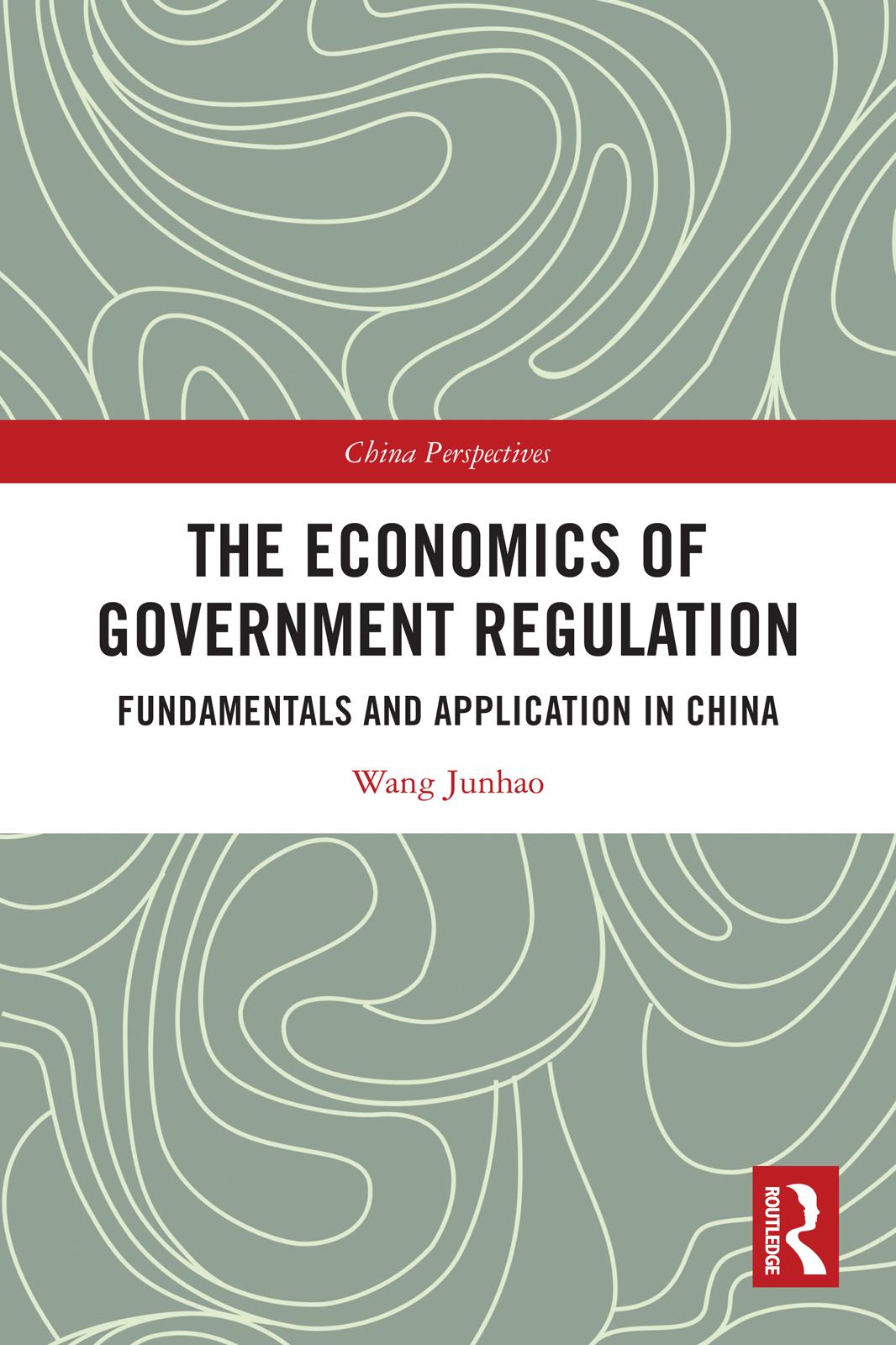
Regulation is a public policy approach closely related to calculations of the equilibrium of supply and demand and to cost-benefit analyses. Governments combine a variety of incentives and restrictions on behavior, including laws and regulations, in order to guide enterprises and smaller entities within the economy toward pursuing policies in the public interest.
This book offers an in-depth and systematic review of the economic theory of regulation, with particular emphasis on the Chinese context. The basic concepts cover economic and social regulation, regulatory process, regulation under asymmetric information, and capture theory. Drawing on a broad range of cases from across the telecommunications, electric power, and water sectors since the founding of the People’s Republic of China in 1949, the author explores economic regulation in China with reference to natural monopoly, investment, price level and price structure, entry, and competition. In addition, he discusses theories of externalities and asymmetric information, which are analyzed in the light of China’s environmental and product quality regulation. The author argues that the Chinese government has deregulated its economy to a large extent in the past and proposes that the Chinese government will enforce more social regulation in the future.
Students and scholars of government regulation, economics, and industrial organization will find this volume to be an essential guide.
Betal nemt med kort, Klarna, Apple Pay eller Google Pay. Ikke tilfreds? Du har altid 14 dages fortrydelsesret. Læs mere i vores vilkår. Har du spørgsmål, så send os en mail på hello@memmo.org.
Memmo gør det nemmere at studere – uanset hvor du er i verden. Hos os samler du dine kursusbøger og smarte studieværktøjer ét sted: resuméer, quizzer, podcasts og flashcards. Og så er der Ted, din studieven, der svarer på alt, du undrer dig over. Over 50 000 studerende studerer allerede her – bygget til at hjælpe dig med at lære hurtigere og stresse mindre.