
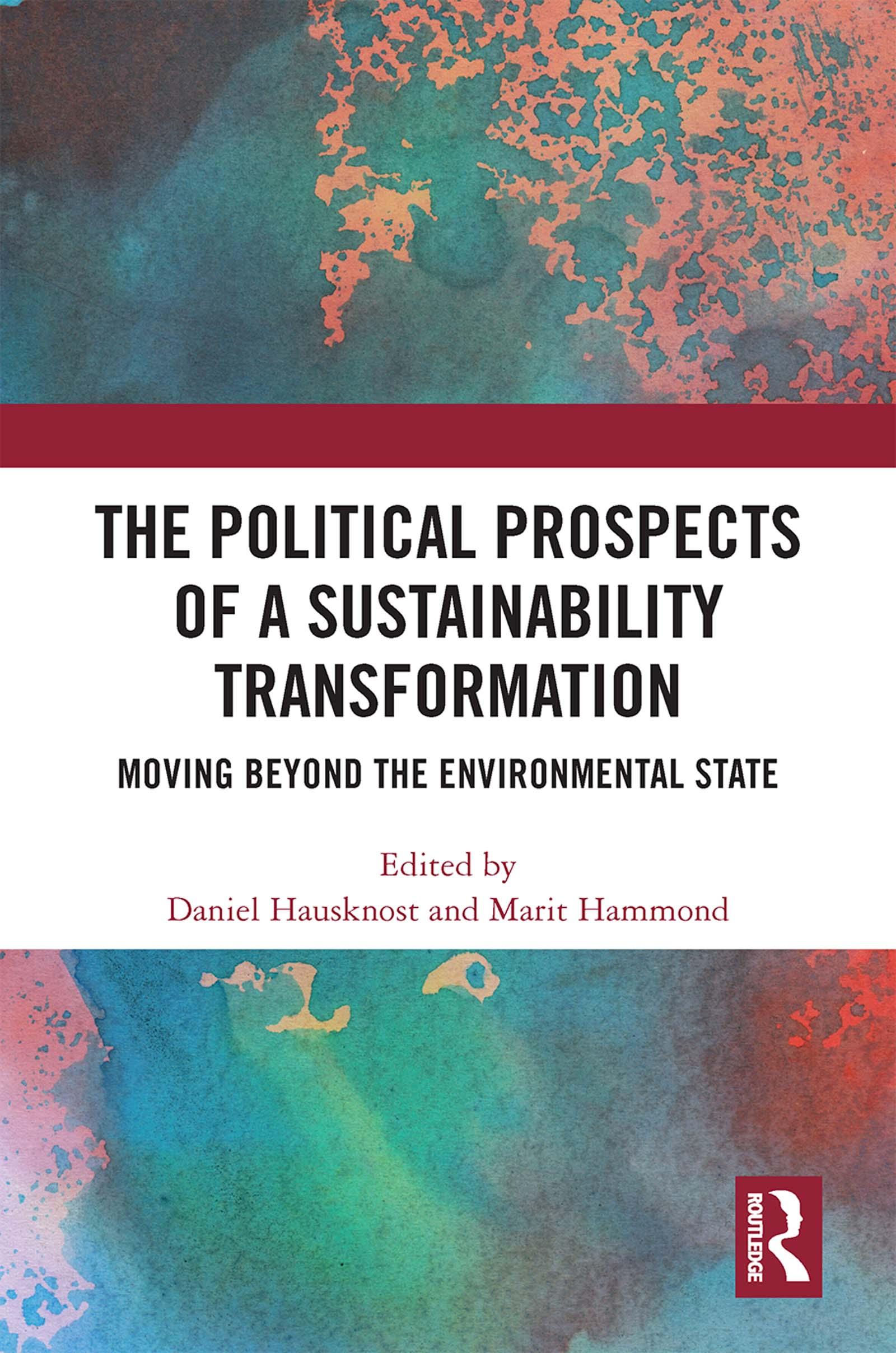
Half a century ago, many democratic states started to respond to environmental pressures that had arisen in the wake of rapid industrialization. They set up environmental ministries and agencies and issued legislation to control the pollution of air and water and to manage industrial processes, wastes and toxic substances. This was the birth of the environmental state. With planetary ecological challenges like climate change spiraling out of control and dwarfing the environmental state’s classical tasks of environmental management, new questions about the transformative capacities of the state are becoming acute today. How large is the state’s capability to transform enhanced industrial societies into sustainable post-carbon societies? Do its new environmental functions empower the state to prioritise ecological goals over economic growth? Can the state’s environmental management capabilities be radicalised to turn it into a ‘sustainability state’? Can democracies be enhanced to enlarge the state’s transformative capacities?
The Political Prospects of a Sustainability Transformation: Moving Beyond the Environmental State explores these and other questions from a variety of theoretical and empirical angles, covering the fields of democratic theory, theories of the state, political economy, political sociology, rhetoric and political philosophy.
The chapters in this book were originally published as a special issue of the journal Environmental Politics.
Betal nemt med kort, Klarna, Apple Pay eller Google Pay. Ikke tilfreds? Du har altid 14 dages fortrydelsesret. Læs mere i vores vilkår. Har du spørgsmål, så send os en mail på hello@memmo.org.
Memmo gør det nemmere at studere – uanset hvor du er i verden. Hos os samler du dine kursusbøger og smarte studieværktøjer ét sted: resuméer, quizzer, podcasts og flashcards. Og så er der Ted, din studieven, der svarer på alt, du undrer dig over. Over 50 000 studerende studerer allerede her – bygget til at hjælpe dig med at lære hurtigere og stresse mindre.