
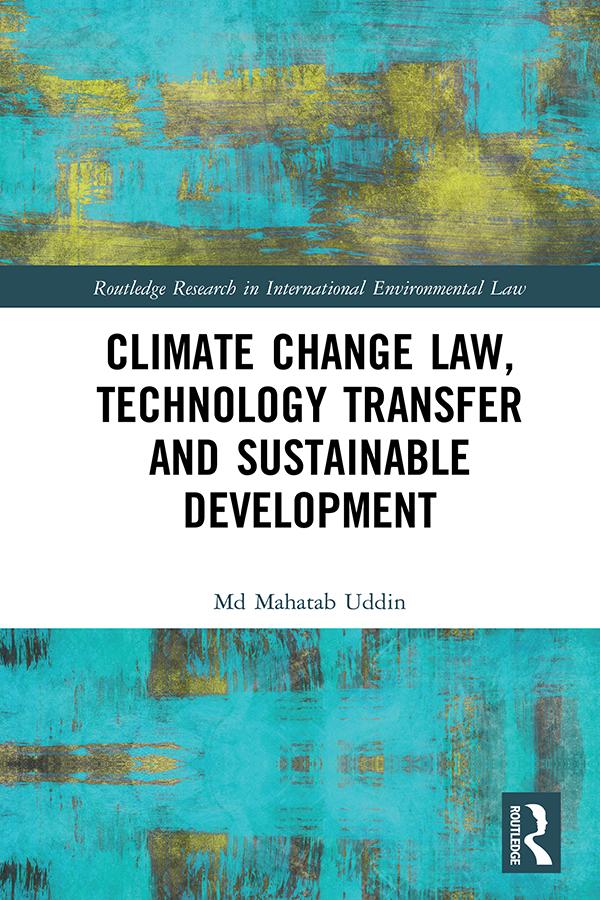
This book explores the possibilities and scope of facilitating innovation and transfer of the environmentally sound technologies in the Post-Paris climate era. The possibilities to be explored by the book will first focus on the roles of the climate finance and technological cooperation mechanisms in innovation and transfer of environmentally sound technologies. Secondly, the book will focus on role of the ‘flexible mechanism’ (i.e. indirect financial mechanisms), which has been re-introduced by the Paris Agreement as ‘voluntary cooperation’ or ‘sustainable development’ mechanism in innovation and transfer of environmentally sound technologies. Thirdly, the book will contain a comparative analysis regarding efficiency of the technology transfer mechanism under global climate regime in comparison with technology transfer mechanism that exists under other multilateral environmental agreements (MEAs).
In addition to the above, since the issues of trans-boundary technology transfer is also a matter of concern for international trade, the book will discuss to what extent the international trade related laws e.g. intellectual property laws, investment related laws governed by the World Trade Organizations (WTO) can play role in facilitating transfer of the environmentally sound technologies.
Another important aspect that this book will cover is potential roles which private sectors can play in innovating and transferring environmentally sound technologies under above-mentioned instruments of international law.
In short, this book will be based on the argument that if global climate regime and the international trade regime collaborate each other in creating enabling environment and attracting private sector to invest in the field of environmentally sound technologies, the global challenges of innovation and transfer of the environmentally sound technologies to the developing and least developed countries can be fulfilled in more efficient manner. From conceptual perspectives, discussions and analyses of the book will be made in the light of the principles of equity and common but differentiated responsibilities and respective capabilities (CBDR-RC) - two main guiding principles of the international laws on climate change.
This book will be of great interest to scholars of climate change, technology transfer, intellectual property and sustainable development. Besides, national and international level policy makers dealing with climate change and sustainable development will be greatly benefitted from this book.
Betal nemt med kort, Klarna, Apple Pay eller Google Pay. Ikke tilfreds? Du har altid 14 dages fortrydelsesret. Læs mere i vores vilkår. Har du spørgsmål, så send os en mail på hello@memmo.org.
Memmo gør det nemmere at studere – uanset hvor du er i verden. Hos os samler du dine kursusbøger og smarte studieværktøjer ét sted: resuméer, quizzer, podcasts og flashcards. Og så er der Ted, din studieven, der svarer på alt, du undrer dig over. Over 50 000 studerende studerer allerede her – bygget til at hjælpe dig med at lære hurtigere og stresse mindre.