
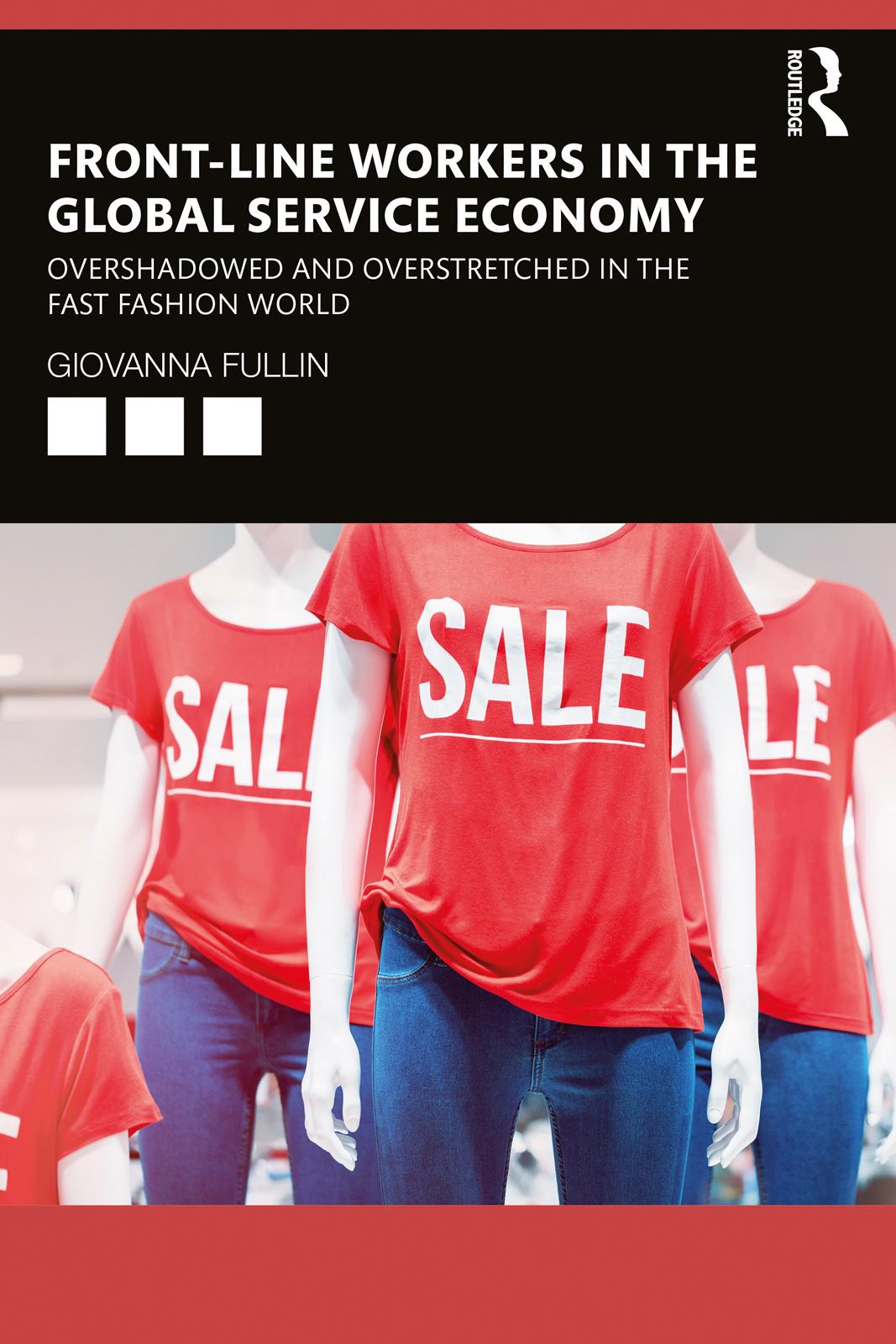
Walking around the commercial streets of New York, San Francisco, Milan, London, or Paris and looking at the succession of multinational chain stores’ windows, you can easily forget what country you are in. However, if you hear the small talk among the employees, you hear very different stories. In New York, a 30-year-old woman is worried because she does not know if she will work enough hours to make a living the following week—whereas, in Milan, a mother of the same age knows she will work 20 hours a week but is concerned about whether her contract will be renewed at the end of the following month.
Following three years of fieldwork, which included 100 in-depth interviews with front-line retail workers and unionists in New York City and Milan, Front-Line Workers in the Global Service Economy investigates both the lived experiences of salespersons in the "fast fashion" industry—a retail sector made of large chains of stores selling fashion garments at low prices—and the possibilities of collective action and structured forms of resistance to these global trends. In the face of economic globalization and vigorous managerial efforts to minimize labor costs and to standardize the retail experience, mass fashion workers’ stories tell us how strong the pressure toward work devaluation in low-skilled service sectors can be, and how devastating its effects are on the workers themselves.
Betal nemt med kort, Klarna, Apple Pay eller Google Pay. Ikke tilfreds? Du har altid 14 dages fortrydelsesret. Læs mere i vores vilkår. Har du spørgsmål, så send os en mail på hello@memmo.org.
Memmo gør det nemmere at studere – uanset hvor du er i verden. Hos os samler du dine kursusbøger og smarte studieværktøjer ét sted: resuméer, quizzer, podcasts og flashcards. Og så er der Ted, din studieven, der svarer på alt, du undrer dig over. Over 50 000 studerende studerer allerede her – bygget til at hjælpe dig med at lære hurtigere og stresse mindre.